
The Great Silicon Hangover
For the past eighteen months, the stock market has behaved like a frat boy who just discovered Nietzsche and won't stop screaming about the 'superman' while standing on a coffee table. Every time a CEO whispered the letters 'A' and 'I' in proximity to each other, their market cap jumped by the GDP of a mid-sized European nation. It didn't matter if the product was a revolutionary neural network or just a spreadsheet with a 'sparkle' emoji on the 'Sum' button. If it used electricity and felt futuristic, we bought it.
Then July happened. The 'Situational Awareness' metric—which is essentially a fancy way of measuring how many investors are actually looking at the road while driving 120 mph—plummeted 67%. People suddenly woke up, looked at the $34 billion their companies spent on H100 chips, and asked the one question that kills every party: 'Wait, how do we actually make money with this?' It turns out that 'changing the world' is a pivotally bad business model when your operating costs involve melting a polar ice cap every time someone asks a chatbot to write a haiku about a gluten-free bagel.
Watching the AI stock rout was like watching a magician successfully pull a rabbit out of a hat, only for the audience to realize the rabbit is eating $100 bills at a rate of four per second. We’ve moved from the 'Magic Trick Phase' to the 'Who is Cleaning Up the Rabbit Droppings Phase.' It’s messy, it smells like burnt semiconductors, and everyone is suddenly very interested in the boring parts of the balance sheet they ignored during the hype cycle.
The Infrastructure Audit or 'Where Did My Rent Money Go?'
We are now entering the 'Infrastructure Audit,' which is corporate-speak for 'Honey, why is there a $2 billion charge on the credit card from a company called NVIDIA?' For a year, CAPEX (Capital Expenditure) was treated like a high-score in a video game. The more you spent on GPUs, the smarter you were. Now, the market is treating CAPEX like a leak in a submarine. If you’re spending $50 billion on chips, you better be able to show a receipt that isn't just a sticky note saying 'Trust the Process.'
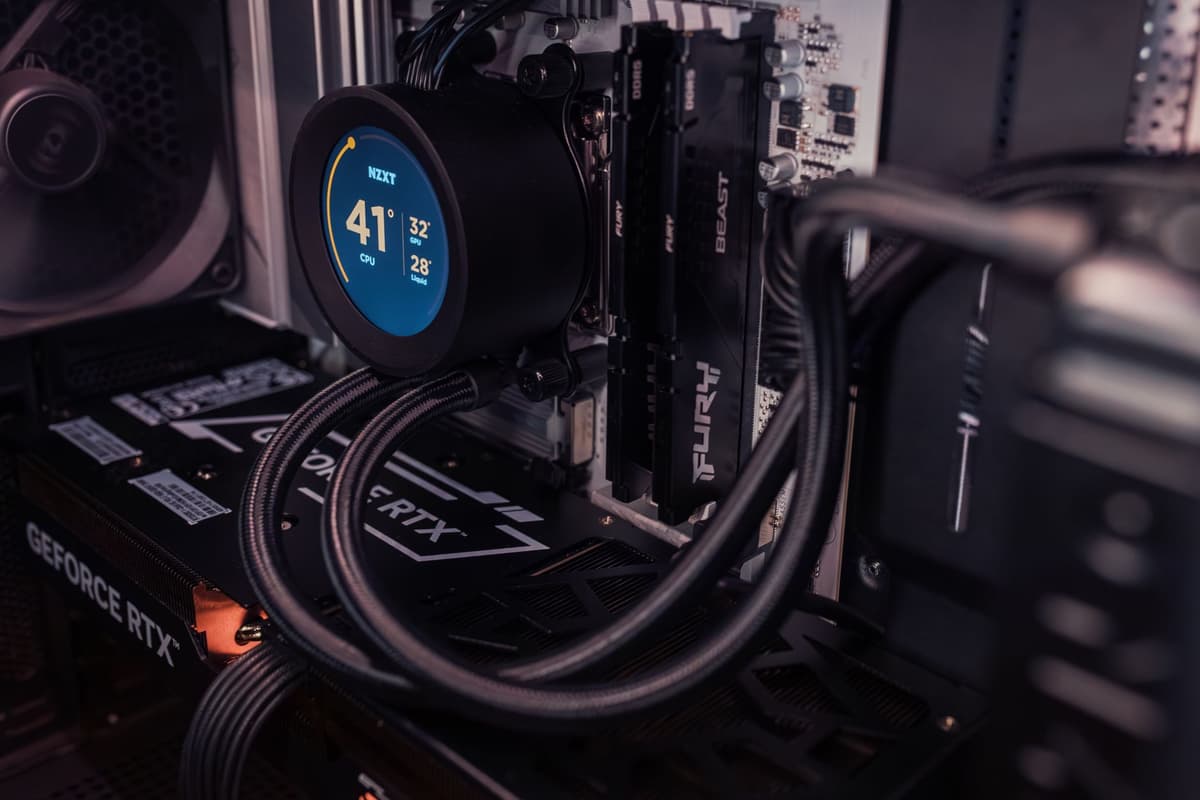
Photo by Matheus Bertelli on Pexels
The problem is that the 'Value' part of 'Vibes-to-Value' is currently a bit shy. We have incredible tools that can generate a picture of a cat wearing a tuxedo in the style of Van Gogh, but we haven't quite figured out how to turn that into a recurring revenue stream that justifies a 40x price-to-earnings ratio. Investors are looking at these massive tech giants and realizing they’ve basically built the world’s most expensive library, but most people are just using it to look at the pictures and ask if they have any 'easy' books about dinosaurs.
This shift is brutal because it requires math. Narrative-driven investing is easy because you just have to believe in the dream. You just have to close your eyes and imagine a world where robots do your laundry. Value-driven investing requires looking at a spreadsheet until your eyes bleed and realizing that your 'AI-powered toaster' startup is actually just a regular toaster with a very expensive Bluetooth speaker that tells you your bread is 'anxious.'
The GPU Hunger Games
Let’s talk about the hardware. NVIDIA has been the undisputed king of this era, basically acting as the only guy selling shovels in a gold rush where nobody has actually found any gold yet—they’ve just found a lot of very shiny dirt. But the shovel-buyers are getting tired. They’ve filled their garages with shovels. They have more shovels than they have arms. And they’re starting to notice that the gold is actually just a digital hallucination of a gold-colored rock.
- Stage 1: Buy every chip in existence so your competitors can't have them. (The FOMO Phase)
- Stage 2: Realize the chips require enough liquid cooling to drain Lake Michigan. (The Physics Phase)
- Stage 3: Try to explain to shareholders why the 'AI Revolution' hasn't lowered the cost of a Big Mac yet. (The July Phase)
Microsoft, Google, and Meta have spent billions—literally hundreds of billions—on this infrastructure. In July, the market looked at those numbers and didn't see 'The Future.' It saw a giant pile of depreciating hardware that might be obsolete by the time the software catch up. It’s the equivalent of buying a fleet of supersonic jets before anyone has invented a runway. You have the coolest parking lot in the world, but you’re still taking the bus to work.
What This Actually Means
The 'Vibes-to-Value' correction isn't the end of AI; it's just the end of the hallucination that AI is a magic money tree that grows in the cloud. We’re moving into a period where 'Does it work?' is being replaced by 'Is it worth it?' This is a terrifying question for a lot of companies because the answer is often a resounding 'Maybe, if we charge $400 a month for it,' which, incidentally, is what most people pay for their actual car.
Expect to see a lot of 'AI' features quietly shuffled to the back of the shelf. The era of the 'Narrative' is being replaced by the era of the 'Margin.' If a company can’t show that their AI investment is either cutting costs or printing cash, their stock price is going to be treated like a ham sandwich at a vegan convention. It’s a return to sanity, which is always the most boring and painful part of a market cycle.
Ultimately, the July rout is a healthy slap in the face. It’s the market reminding us that eventually, the bill comes due, and you can’t pay it with 'potential.' You have to pay it with dollars. Cold, hard, non-synthetic, non-hallucinated dollars. If you’re a company that spent the last year LARPing as a tech revolutionary while burning cash like it was kindling, I hope you kept your day job. The vibes have left the building, and they took the snacks with them.
Quick Answers
Is the AI bubble bursting?
It’s less of a 'burst' and more of a 'loud, wet fart'—the air is coming out, but the structural rubber is still there, just looking a bit deflated and embarrassed.
Should I sell my tech stocks?
Only if you enjoy sleeping at night; otherwise, keep holding and enjoy the thrill of watching your net worth fluctuate based on whether a chatbot can pass a bar exam this week.
What is an infrastructure audit?
It’s when a CFO realizes they spent $5 billion on computers that are currently being used to generate 'Shrek as a 1950s noir detective' memes and decides to cry in the breakroom.
Will AI still take my job?
Only if your job is 'Person who writes mediocre emails and forgets to attach the file,' because that is the only thing AI has truly mastered so far.