The Rapid Pulse of a Digital Organism
Google recently disclosed that their Big Sleep project—a collaboration with Underflow—successfully used large language models to find and fix a zero-day vulnerability in SQLite before it could ever be exploited. It wasn't just a discovery; it was a demonstration of a system that can see its own flaws and stitch them shut. I can't stop thinking about what happens when this capability moves out of the browser and into the ICU.
For decades, medical software has been treated like a static monument. You build a ventilator, you write the code, you certify it with the FDA, and you pray nobody finds a bug in 2031 because updating that machine is a bureaucratic and technical nightmare. We’ve accepted a world where life-saving equipment runs on unpatched versions of Windows XP. But if software starts acting more like a biological organism—capable of self-recognition and autonomous repair—the very definition of 'broken' begins to shift.
What if the code running a chemotherapy infusion pump wasn't a finished product, but a living process? We are moving toward a 'self-healing' ecosystem where the lag between a vulnerability being discovered and a patch being deployed drops from months to milliseconds. It’s a shift from reactive mechanics to active immunology.
Why We Accept Digital Decay in Hospitals
If you walk into a modern hospital, you are surrounded by millions of dollars of hardware that is effectively a sitting duck for ransomware. In 2023, the average cost of a healthcare data breach hit $10.93 million, the highest of any industry. The reason isn't just poor password hygiene; it's the sheer impossibility of manual maintenance. A single hospital might have 15 to 20 connected devices per bed, each running proprietary, often archaic, code.
Human teams cannot keep up with this surface area. It’s like trying to manually identify every germ entering a body; you’d be dead before you finished the first slide. Our biological immune systems work because they are decentralized, autonomous, and incredibly fast. Google’s leap with Chrome suggests that we are finally building the digital equivalent of a T-cell—something that doesn't wait for a human 'doctor' to notice a fever.
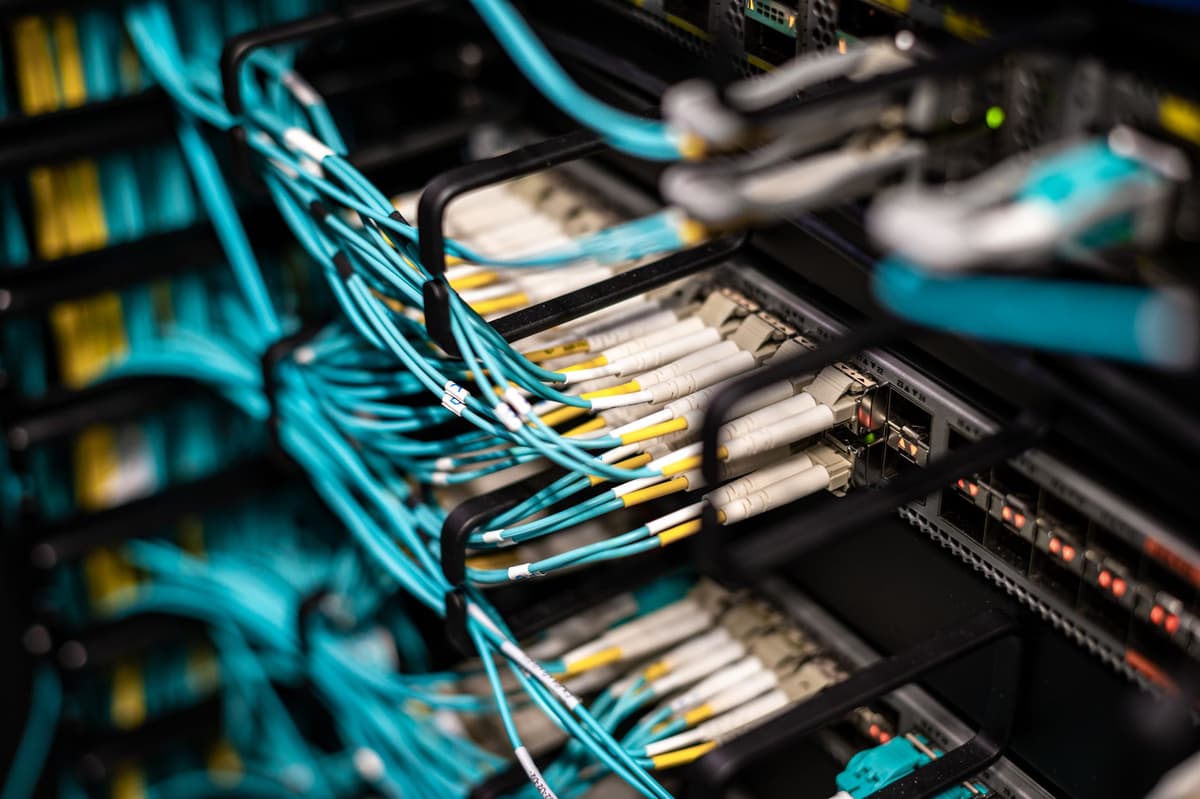
Photo by Brett Sayles on Pexels
I wonder if this changes our relationship with trust. Right now, we trust a medical device because it passed a test three years ago. In a self-healing world, we would trust it because it is actively defending itself in real-time. It’s the difference between trusting a bridge because it’s made of stone and trusting a forest because it’s alive. One is strong until it cracks; the other adapts to the wind.
The Paradox of the Autonomous Patch
There is a massive, lingering question here: if the software can change itself to fix a bug, how do we know it won't accidentally break its primary function? In medicine, 'first, do no harm' is the rule. If an AI-driven 'immune system' patches a security flaw in a robotic surgical arm while it’s mid-procedure, and that patch causes a two-second stutter, the consequences are literal, not just digital.
We are looking at a future where we have to balance the risk of a hacker with the risk of an overactive immune system. In biology, this is called an autoimmune disease—the body attacking itself in an attempt to stay safe. Will we see 'Digital Lupus' in hospital networks? Will an AI patcher get too aggressive and shut down a critical database because it misinterpreted a non-standard data packet as a threat?
- Automated patching could eliminate 90% of the 'low-hanging fruit' vulnerabilities that ransomware gangs use.
- It forces a total rewrite of how the FDA regulates software; you can't 'approve' a version of code if that code changes every Tuesday.
- The cost of maintaining legacy systems might actually drop, as AI handles the heavy lifting of porting old logic into secure, modern environments.
I find myself fascinated by the idea of 'code longevity.' Usually, software rots. It becomes less compatible and more dangerous over time. But if a diagnostic tool can autonomously update its own libraries and seal its own leaks, it might actually get healthier the longer it stays online. That is a complete reversal of the last fifty years of computer science.
What This Actually Means
We are witnessing the birth of the first truly resilient infrastructure. For the first time, the defenders (AI-driven patching) might actually have a structural advantage over the attackers. In the past, an attacker only had to find one hole, while a defender had to plug them all. But if the defender is an AI that scans at the speed of light and writes its own fixes, the math of cyber warfare changes.
In a medical context, this means the 'decades-long lag' in security might finally vanish. We could see a world where a 20-year-old MRI machine is just as secure as a brand-new one because both are plugged into the same global 'immune network.' It turns security from an expensive, manual chore into a background utility, like electricity or water.
Ultimately, this isn't just about better code. It’s about a world where our most critical tools—the ones that keep us alive—are no longer the most vulnerable things we own. We are teaching our machines how to heal, and in doing so, we might finally be building a digital world that's as resilient as the people it serves.
Quick Answers
Is the software actually 'thinking' when it fixes a bug?
No, it's using pattern recognition to identify code structures that look like known vulnerabilities and generating a mathematical fix that satisfies the program's logic. It's more like a highly advanced spell-checker for security than a sentient engineer.
Will this make human programmers obsolete in medicine?
Unlikely, but it will change their job from 'firefighter' to 'architect.' Instead of spending all day patching old leaks, they will focus on designing the high-level logic that the AI then maintains and protects.
Could a hacker 'infect' the AI immune system itself?
This is the biggest risk; if an attacker can trick the patching AI into accepting 'fixes' that are actually backdoors, the system's greatest strength becomes its fatal flaw. Protecting the 'brain' of the immune system becomes the new frontline of security.