The Monoculture of the Gut and the Globe
I spent the morning reading about the 'Carbon-Calorie' conflict, and I can't stop thinking about the weirdly perfect symmetry between a dying field and a dying microbiome. For decades, we treated environmentalism as a 'nature' problem and metabolic health as a 'willpower' problem. But researchers are now showing us that the industrial hyper-processing required to turn a monocrop into a shelf-stable snack is a twin engine of destruction. It turns out that the same processes that strip the fiber and micronutrients out of a grain of corn are the ones stripping the nitrogen and life out of the soil.
It makes me wonder if we’ve been looking at the wrong map this whole time. If you look at a map of a massive industrial soy plantation in Brazil, it looks eerily similar to the simplified, decimated bacterial landscape of a human gut on a high-UPF diet. We are literally terraforming our internal biology to match the external devastation we've inflicted on the planet. Is it possible that biodiversity isn't just something that happens in the Amazon, but something that happens in our small intestines?
The Cost of the 2,000-Year Shelf Life
There is a specific kind of violence involved in making food that never rots. To get a piece of bread to stay soft for three weeks on a truck, you have to kill everything in it that might want to eat it before you do. This requires an immense amount of energy and a chemical arsenal that doesn't just stop working once it hits your stomach. We're talking about a system where 75% of the world’s food supply comes from just 12 plant and five animal species. That is a staggering lack of variety for a planet that used to support thousands of edible crops.
I found a figure that stopped me cold: Ultra-processed foods (UPFs) now account for up to 60% of total energy intake in some high-income countries. To produce that 60% at the necessary scale, we have to prioritize 'throughput' over everything else. Throughput requires heavy machinery, massive amounts of synthetic fertilizer, and high-heat extrusion processes. All of that emits carbon, sure, but it also destroys the soil's ability to sequester carbon. We aren't just eating calories; we're eating the future capacity of the earth to grow anything at all.
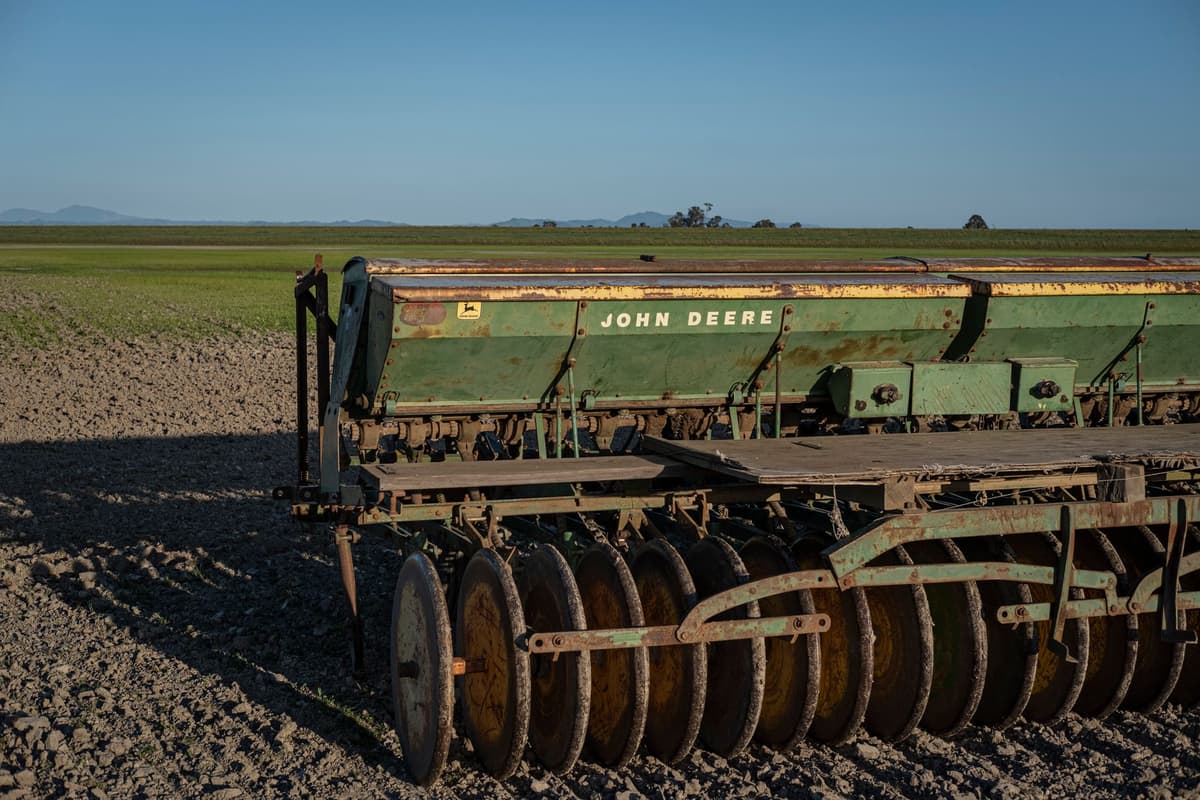
Photo by David McElwee on Pexels
Why Processing is the Silent Polluter
When we talk about 'Big Food' and the environment, we usually focus on the plastic packaging or the food miles. But the real curiosity for me is the energy intensity of the processing itself. Think about the difference between an apple and a fruit rollup. The apple grew with sunlight and water. The rollup required a refinery-grade factory to fractionate corn into syrup, extract pectin, synthesize dyes, and dehydrate the slurry into a plasticized sheet. The 'processing' part of the equation is a massive, hidden carbon tax that we pay for the convenience of food that doesn't require a knife.
This convergence of legislative battles is fascinating because it’s finally forcing us to look at the system as a whole. In the UK and parts of Latin America, lawmakers are pushing for front-of-package labels that highlight high processing levels. At the same time, environmentalists are pushing for regenerative agriculture. These two groups used to sit at different tables. Now, they're realizing they're fighting the same giant. If we stop subsidizing the hyper-processing of four specific crops—corn, soy, wheat, and sugar—we might accidentally save the soil and our insulin sensitivity at the same time.
What This Actually Means
We are moving toward a world where 'healthy for me' and 'healthy for the planet' are no longer separate categories. For a long time, the advice was to just 'eat less,' which is a very individualistic, lonely way to look at a systemic collapse. But if the very structure of our food—the industrial hyper-processing—is the common denominator for both a 30% rise in global obesity and a 68% drop in wildlife populations since 1970, then the solution isn't a better diet plan. It’s a complete divorce from the industrial calorie.
I’m curious to see if this realization changes how we vote and how we shop. If a snack bar is marketed as 'carbon neutral' but is made of highly refined pea protein isolate and maltodextrin, is it actually green? Probably not. True sustainability might actually look a lot like a return to complexity—complex soils, complex gut microbiomes, and complex ingredients that haven't been shattered into their molecular components in a factory. We need to start valuing the things that rot, because things that rot are, by definition, part of a living cycle.
Quick Answers
Is all processed food bad for the environment?
Not necessarily, but 'ultra-processed' foods—those with ingredients you wouldn't find in a home kitchen—require significantly more energy and chemical inputs than minimally processed foods like frozen vegetables or canned beans.
How does UPF production destroy soil?
UPFs rely on massive monocultures of corn, soy, and wheat, which require heavy tilling and synthetic fertilizers that kill the microbial life in the soil, leading to erosion and carbon release.
Can we feed the world without industrial processing?
It’s the big question, but many experts argue that diversifying our crops and moving toward regional food systems would be more resilient and nutrient-dense than our current fragile, centralized system.