Reagan’s Giant Space Nightlight
Imagine it is 1984. Everyone smells like Drakkar Noir, the hair is high enough to interfere with FAA flight paths, and apparently, some guy in a thin tie was pitching a satellite constellation to turn the night sky into a permanent Lite-Brite set. These recently unearthed 'Luminous Heritage' proposals prove that we’ve been trying to kill the dark for decades. We didn't just want to light up our streets; we wanted to provide the moon with a backlight so we could see our own hubris from the lunar surface.
Back then, the plan wasn't about high-speed internet for rural farmers or whatever PR spin Elon is using this week. It was about 'architectural illumination' from low-earth orbit. They literally wanted to build a giant, orbital lamp so that cities didn't have to pay for streetlights. It’s the ultimate 80s move: why solve a local infrastructure problem with bulbs and wires when you can just launch a $50 billion mirror into the cold vacuum of space and hope for the best?
If this had actually happened, the 90s would have been even weirder. Imagine trying to have a romantic moment under a sky that looks like the ceiling of a Spencer’s Gifts. You’re trying to propose to your girlfriend, but you have to wait for the 'Coca-Cola Presents: The Big Dipper' satellite to pass so you can actually see her face. We dodged a bullet, but only because we were too busy spending that money on shoulder pads and cocaine.
The Sky is Now a Giant Spreadsheet
Because urban planners in the 80s failed to designate the sky as a 'protected architectural zone,' we are now living in a world where the stars have been replaced by a very slow, very expensive game of Pong. Modern low-earth orbit (LEO) satellites are basically just floating routers that occasionally ruin a telescope's day. If you look up tonight, you aren't seeing the ancient light of Alpha Centauri; you’re seeing a billionaire's tax write-off reflecting a sunrise that happened three hours ago.
Urban planning usually stops at the roofline, which is a massive oversight. We protect 'historic facades' on buildings that smell like damp carpet, but we let the literal cosmos get paved over by a digital parking lot. It’s like being very careful not to scratch the paint on your 1998 Honda Civic while someone is currently setting your entire house on fire. We have 'Dark Sky Reserves' on Earth, which are basically just places where people are allowed to be afraid of the woods, but we have zero protection for the view looking up.
- The number of active satellites has increased by over 400% since 2019.
- Astronomers estimate that 1 in 15 'stars' you see soon will actually be a hunk of metal.
- We are reaching a point where the sky will have more 'Terms and Conditions' than a software update.

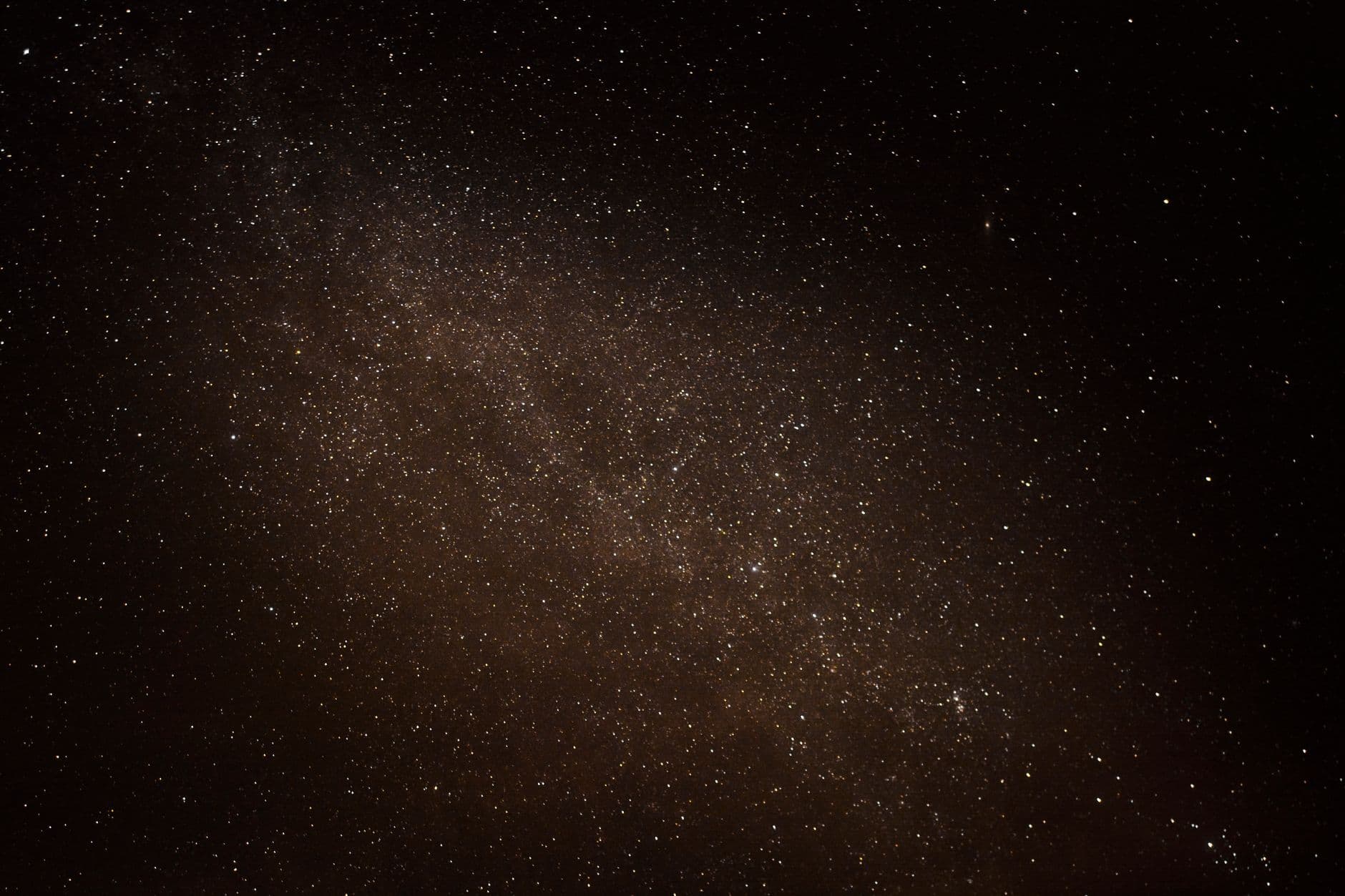
Photo by Luis Quintero on Pexels
Why Nature Needs a Dimmer Switch
We’ve reached the point where light pollution is so bad that 'seeing the stars' is now a luxury vacation package. You have to drive six hours into a desert where the scorpions live just to see a faint smudge that might be a galaxy or might just be a smudge on your glasses. Meanwhile, back in the city, the sky is a consistent shade of 'Vomited Orange' thanks to a combination of LED streetlights and 4,000 Starlink nodes trying to tell us about a sale at The Gap.
This isn't just about aesthetics; it’s about the fact that humanity has used the stars as a navigation tool for 50,000 years, and now we’ve replaced them with a system that exists primarily so we can watch Netflix in a yurt. If Odysseus were trying to get home today, he’d get distracted by a blinking satellite and end up in a Denny’s parking lot in New Jersey. We’ve traded the infinite majesty of the universe for a slightly faster way to check our email while camping.
Every time a new batch of 60 satellites goes up, an angel loses its wings, and an astrophysicist develops a twitch in their left eye. We are essentially wrapping the Earth in a shiny tinfoil ball. It’s the orbital equivalent of your neighbor who leaves their Christmas lights up until July, except your neighbor is a private corporation and the Christmas lights are moving at 17,000 miles per hour.
What This Actually Means
What this actually means is that we’ve fundamentally broken our relationship with the 'up' direction. For the entirety of human history, looking at the sky made you feel small, insignificant, and full of wonder. Now, looking at the sky makes you wonder if your internet bill is due. We’ve successfully gentrified the vacuum of space, turning a shared human heritage into a commercial real estate opportunity for people who think Mars is a 'backup drive' for Earth.
If those 1984 planners had succeeded, we’d at least have some cool retro-neon aesthetics to complain about. Instead, we have a sterile, functional grid of metal that serves no purpose other than connectivity. We are building a cage of light, and we're doing it so efficiently that within two generations, kids will think the 'Milky Way' is just a brand of candy bar and that the sky is supposed to have a 'Skip Ad' button.
We need to start treating the night sky like we treat a historic cathedral or a national park. Just because you can put a billboard on the moon doesn't mean you should. If we don't start regulating orbital light now, the only way to see a real star in 2050 will be to look at a high-res photo on the very internet that blocked them out in the first place. It’s the ultimate irony: we’re using the stars to power the screens that hide the stars.
Quick Answers
Can I still see the Milky Way from a city?
No, unless you are currently experiencing a total power grid failure or have wandered into a planetarium. In most cities, the brightest thing in the sky is the local IKEA sign.
Are the 1984 proposals real?
Yes, the 'Luminous Heritage' documents suggest that architects genuinely thought orbital mirrors were a better idea than just making better lightbulbs. The 80s were a wild time for everyone's frontal lobe.
Is Starlink actually ruining astronomy?
Yes, it's basically like trying to take a beautiful landscape photo while someone keeps running in front of the camera waving a flashlight and screaming about low-latency gaming.