I spent three hours yesterday looking at a server bill that totaled exactly $0.31 for the month, and I can’t stop thinking about what that means for the rest of the internet. For years, we’ve been conditioned to believe that 'online' either costs $20 a month for a polished site builder or 'free' in exchange for our privacy and sanity on social media. But there is a third door opening, and it’s guarded by people who treat low-latency networking like a form of digital gardening.
This isn't just about saving a few bucks on a subscription. It feels like a genuine architectural shift. If you can host a personal hub, a photo gallery, and a blog for the price of a gumball, the entire 'rent-seeking' model of the modern web starts to look incredibly fragile. Why do we give our data to platforms that sell it back to us when the alternative is becoming cheaper than the electricity required to charge your phone?
The Math of the Digital Homestead
To understand why this is happening now, you have to look at the massive gap between what cloud providers charge and what hardware actually costs in 2024. Companies like AWS or Google Cloud are built for high-availability enterprise scaling, and they charge a premium for that 'never-goes-down' promise. But your personal blog doesn't need 99.999% uptime or global load balancing.
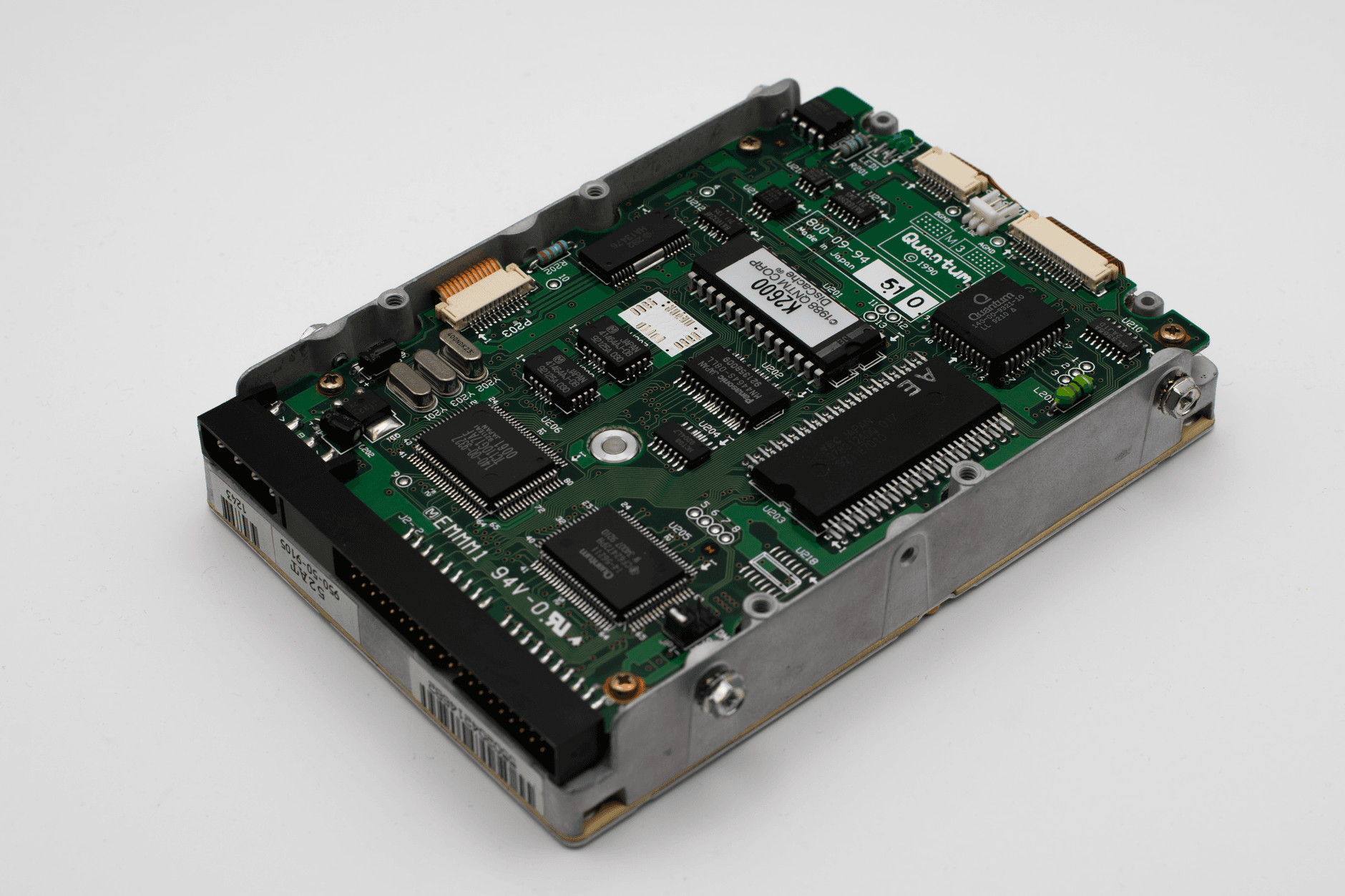
A Raspberry Pi or a low-end Virtual Private Server (VPS) from a provider like Hetzner or RackNerd can sit in a corner and serve traffic for pennies. We are seeing a 'Decentralization Arbitrage' where savvy users are realizing they can buy raw compute power for $10 or $15 a year. When you break that down, you're looking at roughly $0.027 to $0.04 per day.

Photo by Miguel Á. Padriñán on Pexels
This price point is a psychological threshold. At $20 a month, a website is a commitment you have to justify. At $0.30 a month, a website is an ornament. It’s a digital porch where you can sit without a landlord breathing down your neck. I wonder if this price drop will finally kill the 'social media as a home' era, because the cost of exit has effectively dropped to zero.
Why We Stopped Owning Our Dirt
Somewhere around 2012, we collectively decided that managing a server was too hard. We traded the 'Digital Homestead' for 'Digital Apartments.' It was easier to move into a Facebook profile or a Squarespace template because the plumbing was handled for us. But apartments come with rules. You can't paint the walls, you can't see how the data is being used, and the landlord can evict you if the algorithm decides your face doesn't fit the current ad-friendly aesthetic.
The Hardcore IndieWeb movement is a reaction to that loss of agency. They’re using tools like Hugo, Jekyll, or even raw HTML to build sites that are so lightweight they can run on a toaster. These 'static' sites don't need massive databases or heavy processors. They just sit there, serving files.
It’s a form of minimalism that feels strangely radical. By stripping away the bloat of modern web design—the tracking scripts, the heavy JavaScript frameworks, the auto-playing videos—these creators have discovered that the internet is actually very cheap to run. We’ve been paying a 'bloat tax' for years without realizing it.
The Economic Ripple of $0.01 Hosting
If the cost of independent existence drops this low, what happens to the 'Free-with-Ads' economy? Most social platforms justify their existence by claiming they provide a service we couldn't afford otherwise. But if the actual cost of hosting a person’s digital life is less than the price of a postage stamp per month, that argument falls apart.
We might be entering an era where 'small' is the new 'stable.' These $0.01/day sites aren't trying to reach a billion people. They are built for communities of fifty, or a hundred, or just for the creator themselves. It’s a move away from the 'attention economy' toward a 'presence economy.' You aren't there to be seen by the world; you're there because you have a place to be.
Photo by ready made on Pexels
I’m curious about the social implications of this. If everyone has their own $0.01 homestead, how do we find each other? The 'Hardcore IndieWeb' answer is usually 'webrings' or RSS feeds—tech from the 90s that worked perfectly well before we optimized it for profit. It’s a slower, more intentional way of browsing. You don't 'scroll' a homestead; you visit it.
What This Actually Means
This movement represents a decoupling of 'value' from 'scale.' For the last two decades, the tech world has insisted that something is only valuable if it can scale to millions of users. The $0.01/day movement proves that something can be incredibly valuable precisely because it doesn't scale. It is a custom-built, hand-coded space that exists purely because someone wanted it to exist.
We are seeing the birth of a genuine digital middle class—people who aren't tech moguls and aren't just 'users,' but owners. By bypassing the high-margin cloud providers, these digital homesteaders are clawing back a sense of sovereignty. They are proving that the 'rent-seeking' architecture of the modern web is a choice, not a technical necessity.
Ultimately, this is a bet on human agency. It’s the belief that we would rather spend $0.30 a month to own our small corner of the woods than live for free in a high-rise owned by a billionaire. I suspect that as the 'big' web continues to feel more cluttered and expensive, the quiet, cheap, independent homestead is going to look less like a hobby and more like a sanctuary.
Quick Answers
Is it actually hard to set up a $0.01/day site?
It requires some terminal knowledge, but tools like 'Static Site Generators' have made it significantly easier than it was five years ago. It's more about a willingness to learn than a PhD in computer science.
Where do people even find hosting that cheap?
LowEndBox and similar forums track 'budget' VPS providers that offer yearly deals for $10-$15, which works out to pennies a day. Alternatively, many use an old computer at home and a service like Tailscale to put it online.
Doesn't cheap hosting mean slow speeds?
Actually, no. Because these sites are often just text and small images without trackers or ads, they frequently load faster than major news sites or social platforms.