The Ghost in the Equations
It feels almost like a plot from a Cold War thriller: a mid-level Soviet scientist publishes a dense, theoretical paper titled Method of Edge Waves in the Physical Theory of Diffraction in 1962, and nobody in the USSR cares. They let it circulate. They let it be translated. They basically handed over the keys to the kingdom because they didn't think the math was practical. Pyotr Ufimtsev had figured out how to calculate the radar cross-section of a flat, triangular surface, but back then, nobody could build a plane out of flat triangles that would actually stay in the air.
I keep coming back to the irony of this. We usually think of progress as a straight line moving toward more complexity, more pixels, more data. But the F-117 Nighthawk—the famous 'Wobblin' Goblin'—was a masterpiece of subtraction. It was designed with facets because 1970s computers couldn't handle the math for curved surfaces. To make something invisible, they had to make it ugly. They had to simplify the universe down to what a limited processor could understand, and in doing so, they stumbled upon a fundamental truth about wave physics that we are still unpacking today.
The Paradox of the Facet
When you look at a modern F-22 or a B-21 Raider, they are sleek and organic. They look like birds or sea creatures. But the F-117 looked like a crumpled piece of black paper, and that’s because Lockheed’s 'Echo' program was working with the absolute bare minimum of geometric data. They weren't simulating airflow in the way we do now; they were solving Ufimtsev’s equations for every single flat panel on the aircraft. If the panel was angled just right, the radar wave didn't bounce back to the source; it scattered into the void.
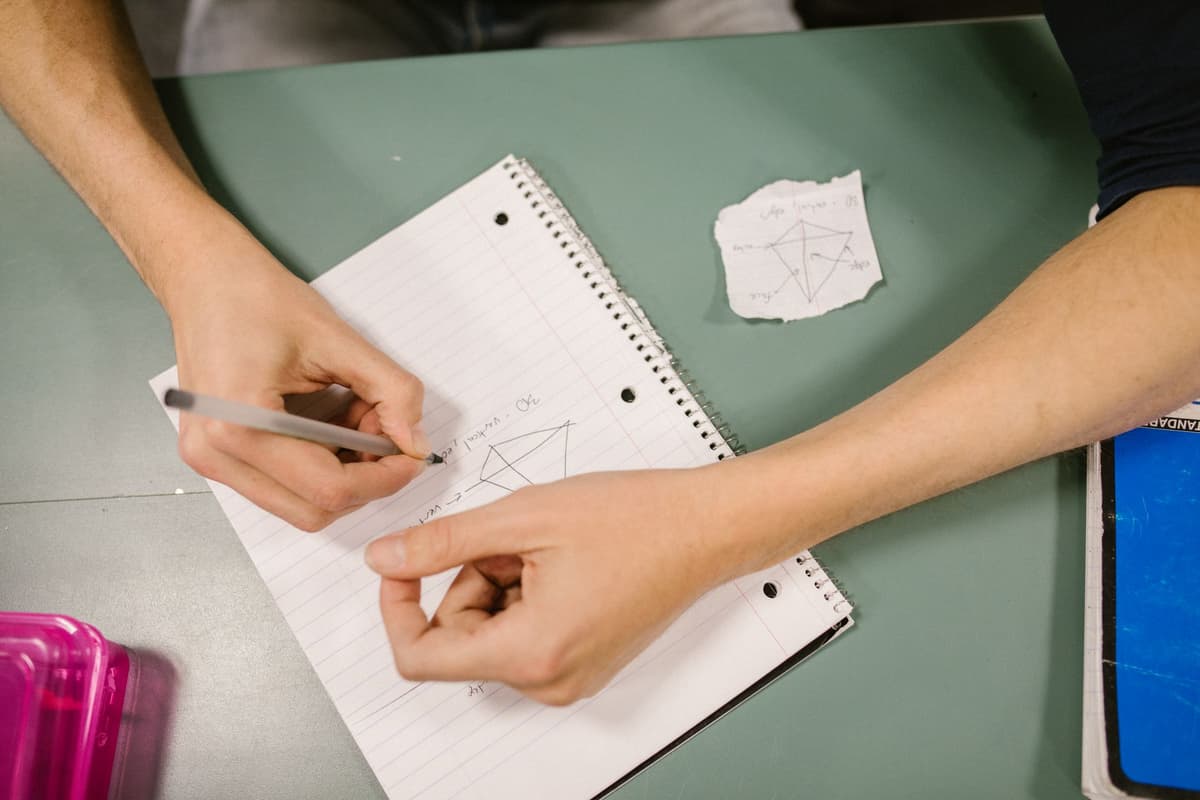
Photo by RDNE Stock project on Pexels
What fascinates me is that this 'limit' actually created a more robust solution. Modern AI-driven modeling is incredible, but it's often a black box. We throw trillions of data points at a supercomputer and it spits out a shape that works. In 1975, Denys Overholser at Lockheed’s Skunk Works didn't have that luxury. He had to understand the why of the diffraction. He had to live inside the geometry. There is a specific kind of clarity that comes when you are forced to work within the constraints of a slide rule and a primitive mainframe.
- The F-117 had a radar cross-section of about 0.001 square meters.
- For context, a bird is about 0.01 square meters.
- This means a giant metal jet was ten times harder to see on radar than a sparrow.
Why We Are Looking Backward
Lately, researchers are digging back into these 1960s 'geometric' physics papers, and it’s not just for a history lesson. As we try to develop hypersonic craft and new forms of electromagnetic shielding, our current models are hitting walls. We have so much computing power that we’ve become lazy with the underlying theory. We simulate everything but sometimes understand nothing. By revisiting 'Analytic Stealth'—the pure math of how a single wave hits a single edge—we are finding shortcuts that even the most powerful AI missed.
I wonder if we’ve lost something by moving away from these rigid, geometric constraints. There’s a certain purity in Ufimtsev’s work that modern computational fluid dynamics (CFD) lacks. He wasn't guessing; he was defining the behavior of the universe. When I read about engineers today 'rediscovering' these equations to reconcile them with modern AI models, it feels like we’re finally admitting that the old masters knew something about the bones of the world that we’ve covered up with digital skin.
What This Actually Means
The rediscovery of analytic stealth is a reminder that the best technology isn't always the most 'advanced' in terms of raw power. It’s the technology that uses the most elegant logic. The F-117 was an 'impossible' aircraft that only flew because the flight control computers were constantly correcting its unstable shape, yet its invisibility was based on math that a human could do with a pencil.
We are entering an era where we have to merge these two worlds: the raw, intuitive 'geometric' physics of the 20th century and the massive, data-hungry simulations of the 21st. If we can do that, we aren't just building better planes; we’re learning how to see the world with the same terrifying clarity that Ufimtsev did in 1962.
Ultimately, the 'Analytic Stealth' paradox proves that a lack of resources is often the greatest engine for innovation. When you can’t afford to be complex, you are forced to be brilliant. I hope we don't lose that drive as our computers get faster and our own thinking gets slower.
Quick Answers
Was the Soviet Union's math actually better?
In this specific niche of wave-diffraction theory, yes, because they prioritized pure theoretical physics over practical application, whereas the US was focused on building things that worked immediately.
Why did the F-117 look so weird?
It was composed of flat facets because 1970s computers could only calculate the radar reflection of flat surfaces; they couldn't handle the complex curves found on modern stealth jets.
Is stealth math still relevant today?
Absolutely—while we have better computers now, the fundamental 'edge wave' equations are being used to refine how we design everything from 6th-generation fighters to silent wind turbines.