The Revenge of the Knobs
For the last decade, the music industry has tried to convince us that we don't need hardware because we have 'plugins.' They told us that a digital recreation of a vintage synth is '99% there,' which is the same lie your dentist tells you when they say the drill will only feel like 'a little pressure.' Using a mouse to turn a virtual knob on a 13-inch laptop screen is about as soul-stirring as filing your taxes in a dark basement. It’s a joyless, flat experience that leaves you with nothing but carpal tunnel and a burning desire to throw your MacBook into a lake.
Enter the Korg PS-3300 FS. This isn't just a synthesizer; it’s a furniture-grade rebellion against the tyranny of the touch screen. It has 48 voices of polyphony, which means you can play a chord with every finger, every toe, and still have notes left over for your cat to walk across the keys. It’s an analog behemoth that screams, "I have three power oscillators per note and I will personally bankrupt your electric company."
We are witnessing the 'Physicality Premium' in its final, most absurd form. People are tired of paying $20 a month to 'rent' software that disappears the moment a company’s server goes down or a CEO decides they need a fourth yacht. They want something heavy. They want something with wood side panels that smells faintly of warm electronics and 1977. If I’m going to spend the equivalent of a house deposit on a hobby, I want to be able to stub my toe on it in the middle of the night.
A Synth the Size of a Small Fridge
The original PS-3300 was released in 1977, and only about 50 were ever made because, back then, you had to be either a rock star or a literal wizard to afford one. It’s essentially three synthesizers stacked on top of each other like a high-stakes game of analog Jenga. If you tried to take this thing on tour today, your roadies would quit before the first soundcheck, and your chiropractor would buy a private island with the proceeds from your weekly adjustments.
Everything about this reissue is gloriously impractical. It’s all-analog, meaning there are no menus, no 'save' buttons, and no 'undo' functions. If you spend six hours dialing in the perfect lead sound and then accidentally bump a slider with your elbow, that sound is gone forever. It has vanished into the ether, leaving you with nothing but a faint buzzing noise and a deep sense of existential dread. That’s not a bug; it’s a feature. It’s the musical equivalent of a sand mandala, if the sand cost thirteen grand and was prone to overheating.

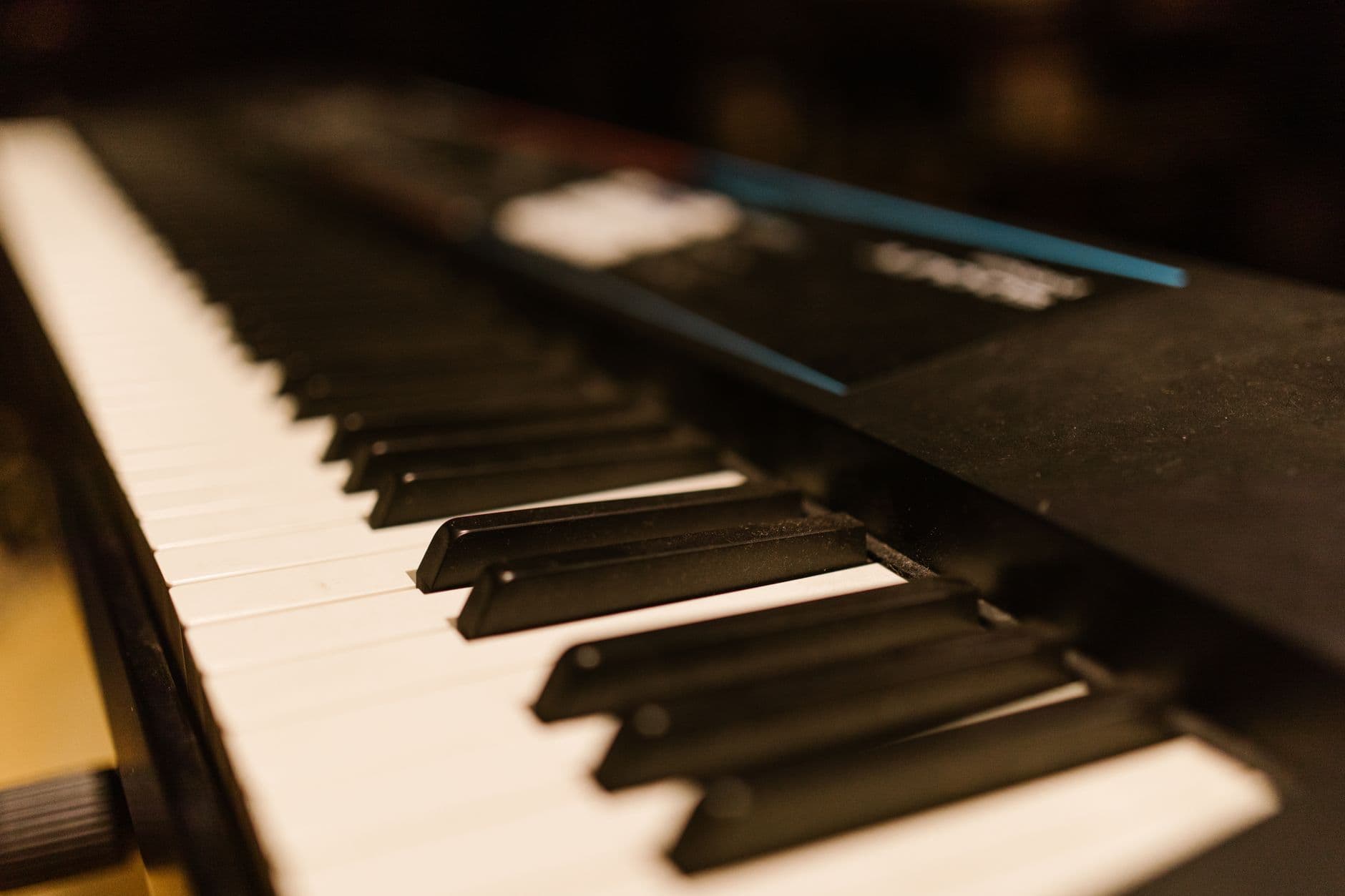
Photo by Brett Sayles on Pexels
Let's talk about the patch cables. The PS-3300 uses actual physical wires to route signals. In 2024, when we have wireless everything, Korg is asking us to go back to the era of the switchboard operator. To get a specific vibrato, you have to manually bridge two points with a cable like you’re trying to hotwire a getaway car in a 70s heist movie. There is something deeply satisfying about physically plugging a cord into a hole. It feels like you’re actually doing something, rather than just clicking 'Update' on a firmware notification.
Why We Need the Thunk
There is a specific psychological phenomenon I like to call 'The Thunk.' It’s the sound a high-end physical switch makes when you flip it. A digital toggle on an iPad goes tink. A PS-3300 switch goes THUNK. That sound tells your brain that you are a serious person doing serious things, even if you are actually just making 'pew-pew' space noises while wearing sweatpants. It justifies the purchase. It validates your life choices.
We have reached peak 'Glass Fatigue.' We spend eight hours a day staring at a glass rectangle for work, two hours staring at a glass rectangle for social media, and another four hours staring at a glass rectangle for Netflix. By the time we get to our hobbies, the last thing we want is more glass. We want wood. We want metal. We want things that have 'heft.' If I can't use my synthesizer as a makeshift barricade during a zombie apocalypse, is it even a real instrument?
- Weight: The PS-3300 weighs roughly the same as a medium-sized mountain goat.
- Interface: 100% tactile. If you can't touch it, it doesn't exist.
- Vibe: Pure, unadulterated 'Mad Scientist' energy.
- Price: If you have to ask, you should probably stick to your GarageBand loops and your dignity.
This isn't about logic. You can buy a software version of this synth for $149 that sounds indistinguishable to anyone who isn't a total snob. But the software version doesn't radiate heat. It doesn't have a dedicated 'Tuning' knob for every single oscillator that you have to adjust by hand like you’re calibrating a telescope. Buying a PS-3300 is an act of decorative insanity, and I am here for it.
What This Actually Means
The return of the PS-3300 is a signal that the 'subscription-ification' of our lives has hit a wall. We are seeing a hard pivot back to the 'Physicality Premium' because ownership feels increasingly fleeting. In a world where your digital movies can be deleted from your library and your car features are hidden behind a monthly paywall, a massive analog synth is a fortress of permanence. You own the electrons. You own the wood. You own the dust that will inevitably settle in the filters.
It’s also a hilarious middle finger to the cult of efficiency. We are told that everything should be smaller, faster, and more integrated. Korg looked at that trend and decided to build something that requires two people to carry and takes twenty minutes to warm up before it stays in tune. It’s a monument to the joy of being difficult. It’s an instrument that demands you sit down, shut up, and actually engage with it.
Ultimately, the PS-3300 isn't for people who want to make music efficiently. It’s for people who want to feel like they are piloting a starship through a nebula of pure voltage. It’s expensive, it’s heavy, and it’s completely unnecessary. That’s exactly why it’s the most exciting thing to happen to music tech in years. Now, if you’ll excuse me, I need to go see if I can trade my left kidney for a pre-order slot.
Quick Answers
Does it sound better than the digital version?
Technically, no, but it feels better, and in the world of high-end audio, 'feeling' is worth approximately $12,851.
Where do I put a synth this big?
Most owners find that getting rid of non-essential items like 'a dining table' or 'a significant other' frees up plenty of space.
Is it easy to use?
Absolutely not; it has the learning curve of a nuclear reactor and requires the patience of a saint who has just had a very large espresso.
Why is Korg doing this now?
Because they know that deep down, we all just want to be the guy in the 70s with the giant wall of knobs and the questionable haircut.