The Sun Has Moved Into My Neighbor’s Garage
I miss the night. I don’t mean the abstract concept of evening; I mean the actual, pitch-black darkness that once allowed humans to look up and realize we are insignificant specks in a cold, indifferent universe. Now, thanks to the mass adoption of ultra-efficient LEDs, I can’t even see the Moon, but I can see a discarded gum wrapper in the gutter three blocks away with terrifying clarity. We’ve entered the era of the Great Glare, where every suburban house is outfitted with enough lumens to guide a Boeing 747 into a safe landing on a standard two-car driveway.
Technically, we did this to save the planet. The logic was sound: LEDs use about 75% less energy than those old, humming sodium bulbs that made everyone look like they had late-stage jaundice. But humans are fundamentally incapable of moderation. Instead of using the energy savings to, you know, save energy, we decided to install ten times as many lights. It’s the lighting equivalent of ordering a Diet Coke so you can eat a second, larger cheesecake in the dark—except now there is no dark.
The Efficiency Paradox Is Just Greed With A Shorter Cord
Economists call this the Jevons Paradox. It’s the annoying phenomenon where increasing the efficiency of a resource actually leads to people using way more of it. Back when lighting a street cost a fortune, cities were stingy. Now that it costs roughly four cents to illuminate a zip code, municipalities are going wild. They aren’t just lighting the sidewalks; they’re lighting the trees, the underside of bridges, and the internal organs of every passing nocturnal animal.
Photo by Erik Karits on Pexels
Consumer gadgets are the worst offenders. Have you bought a flashlight lately? You can’t just get a normal light to find your keys under the couch anymore. You have to buy a "Tactical Photon Cannon" that boasts 15,000 lumens and a strobe setting designed to disorient insurgent forces. I tried to find my slippers last night and accidentally signaled a deep-space probe. My retina still has a permanent ghost image of a bunny slipper burned into it like a haunted Polaroid.
We are obsessed with "Cool White" light, which is just a marketing term for "The Color of a Migraine." These blue-rich LEDs are fantastic if you’re performing open-heart surgery or trying to keep prisoners from sleeping. They are significantly less fantastic when you’re trying to wind down for the night. Your brain sees that blue light and thinks, Ah, yes, high noon in the Sahara! Time to produce zero melatonin and perhaps start a new hobby! This is why you’re staring at your ceiling at 2:00 AM wondering if you could win a fight against a kangaroo.
Your Porch Light Is A Biological Weapon
In 2016, the American Medical Association actually issued a warning about high-intensity LED streetlights because the blue light messes with our circadian rhythms so badly. We’ve essentially turned our entire outdoor environment into one giant, flickering smartphone screen. We know looking at our phones before bed is bad, so our solution was to make the entire street look like a phone. It’s genius, in a "burning down your house to get rid of a spider" kind of way.
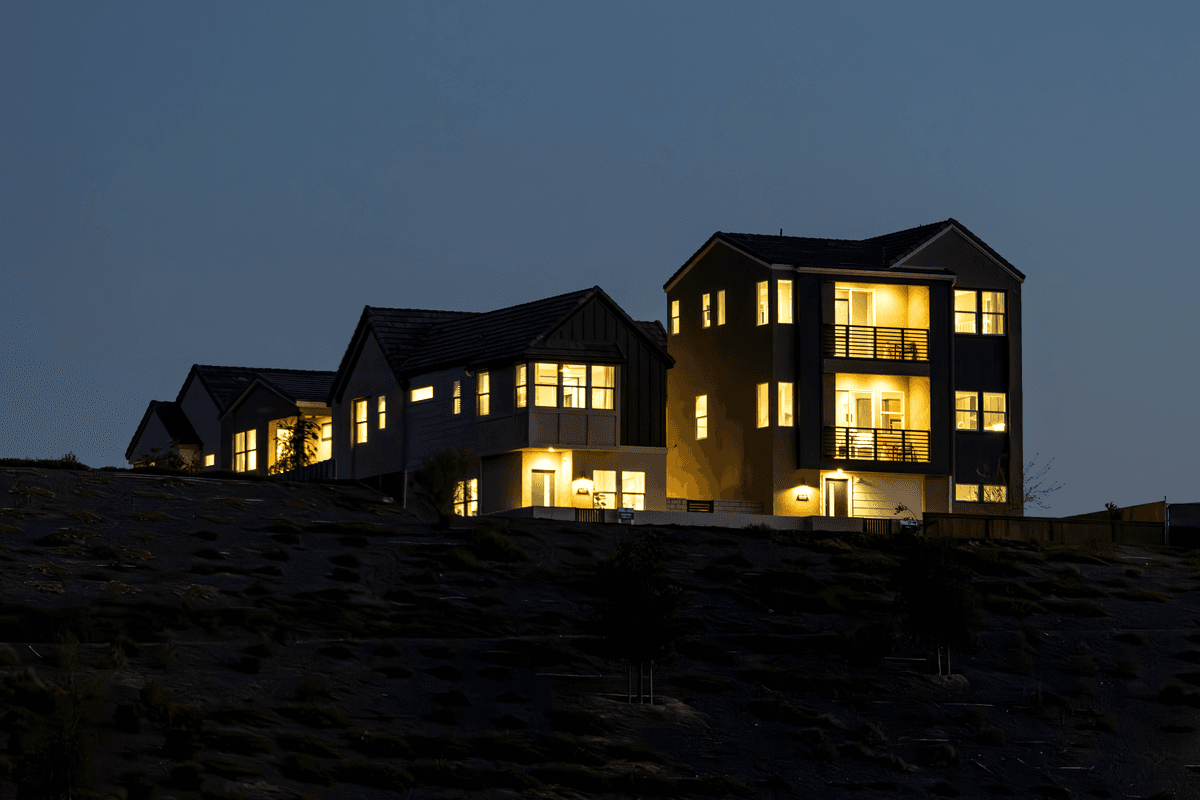
Photo by David Brown on Pexels
It’s not just about us. Insects are basically dying in heaps because they think Mr. Henderson’s 80-watt LED floodlight is the North Star. Millions of years of evolution are being undone because we wanted our backyard patios to be visible from the Andromeda Galaxy. We are creating a world where the only way to see a star is to look at a high-res wallpaper on an OLED TV, which is a level of irony so dense it’s starting to collapse into a black hole.
What This Actually Means
We need to stop treating lumens like a high-score in a video game. The next generation of smart lighting needs to stop bragging about how many miles away it can be seen and start bragging about how quickly it can put me to sleep. I want a "Biological Peace Protocol" on my smart bulbs that shifts the spectrum to a deep, campfire orange the moment the sun goes down. If your outdoor security light doesn't have a cutoff shield to keep the light on the ground and out of my bedroom, you aren't "improving safety," you're just being a lighthouse keeper for a sea that doesn't exist.
Darkness is a finite resource, and we’re spending it like we found a cheat code for infinite money. We’ve optimized for raw output and forgot that the goal of lighting is to see, not to be blinded. Until we prioritize "Dark Sky" certified fixtures—which basically just means "pointing the light down like a sane person"—we’re going to keep living in a permanent, neon-blue purgatory where the stars are just a myth we tell children.
It’s time to lean into the warm, the dim, and the shielded. If I wanted to live in a world where everything was white, sterile, and aggressively bright, I’d move into an Apple Store. Let’s bring back the night before we forget what it looks like entirely.
Quick Answers
Is my LED light really hurting the environment?
Yes, but mostly because you’re pointing it at the sky like you’re searching for the Bat-Signal. Use shielded fixtures that direct light downward and choose "warm" color temperatures (3000K or lower) to stop confusing the local wildlife.
Why does everything look so blue and creepy now?
Blue-rich LEDs are cheaper to manufacture for high brightness, but they scatter more in the atmosphere and ruin your sleep. It’s basically the "cheap fast food" of lighting—satisfyingly bright in the moment, but it leaves the planet with a massive headache.
Can I still have a bright security light?
Sure, just put it on a motion sensor so it only blinds intruders instead of being a 24/7 beacon for every moth within a fifty-mile radius. Your neighbors will thank you, and your electricity bill will finally stop looking like a phone number.