The $500-an-Hour PR Crisis
For decades, football clubs have operated like high-security witness protection programs. They take charismatic young men, put them in a room with a consultant named Julian who wears a vest over a dress shirt, and teach them how to suck the soul out of every sentence. The goal was simple: reach a level of blandness so profound that no sponsor could ever be offended. We ended up with a generation of athletes who speak in a dialect I call 'Post-Match Gray,' a language where 'the lads gave 110 percent' is considered a profound philosophical insight.
Then Lamine Yamal and Nico Williams showed up at Euro 2024 and decided that following the script was for people who don't have unlimited data plans. They didn't wait for a camera crew from the national team's media department to set up three-point lighting and a shotgun mic. They just hit record on a phone, did a dance that makes anyone over the age of thirty feel like their hips are made of dry saltines, and accidentally garnered more engagement than the last five FIFA marketing campaigns combined.
It is truly devastating for the industry. Imagine being a Chief Brand Officer who spent $2 million on a 'Digital Transformation Strategy' only to be outclassed by a 17-year-old who doesn't even have his driver's license yet. Yamal wasn't 'leveraging his platform to synergize with the fan base.' He was just hanging out with his friend. The horror.
Authenticity is the New Script
What makes the 'Gen Z Chemistry' loop so offensive to traditionalists is that it cannot be manufactured. You can almost see the marketing interns at major clubs right now, frantically typing 'how to make 30-year-old defenders look like they have a secret handshake' into ChatGPT. It doesn't work. You can’t hire a creative agency to build 'vibes.' If the chemistry isn't there, it just looks like a corporate team-building exercise at a regional paper company.
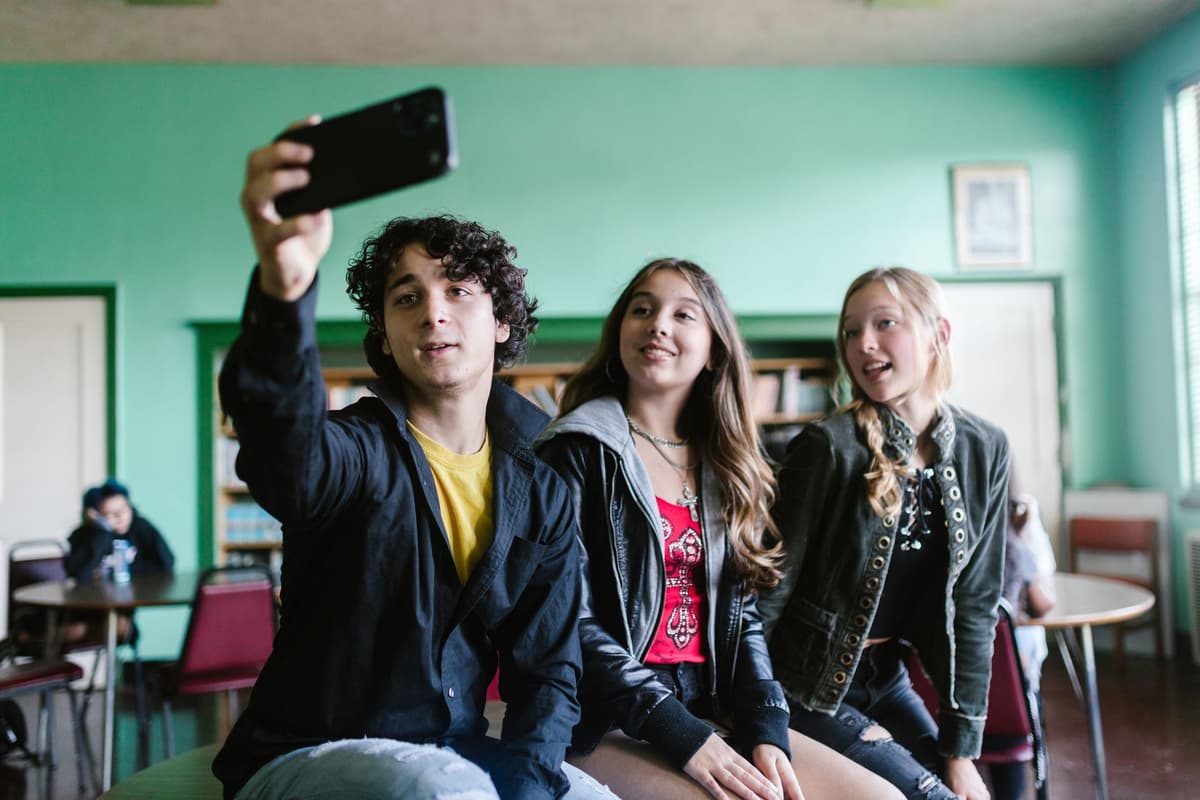
Photo by RDNE Stock project on Pexels
The magic of the Yamal-Williams axis wasn't just the talent on the pitch; it was the realization that the barrier between 'Superstar' and 'Guy I Went to School With' has finally dissolved. We spent years building pedestals for these players, and they used those pedestals as a place to prop up their phones while they filmed a Rock Paper Scissors challenge. It’s a total rejection of the 'Great Man' theory of sports stardom in favor of something much more dangerous to the bottom line: being relatable.
Nike and Adidas are currently scrambling to pivot. The era of the cinematic, high-budget commercial where a player stares intensely into the middle distance while a narrator whispers about 'greatness' is dying. Nobody wants to see a demi-god in a studio. They want to see a teenager bullying his teammate for having a bad haircut. It’s cheaper to produce, but infinitely harder to control, which is why PR departments are currently vibrating with anxiety.
The Algorithm Doesn't Care About Your Trophy Cabinet
We are witnessing the birth of the 'Vibe Economy' in sports. In this new world, a clip of Nico Williams and Lamine Yamal arguing over who is better at a video game is more valuable than a 20-minute tactical breakdown on a major sports network. The algorithm rewards the unpolished. It loves the vertical video, the bad lighting, and the inside jokes that 40% of the audience won't even understand.
- The 'unscripted' moment has become the most scripted goal in marketing.
- If a player doesn't have a 'best friend' on the squad, they are basically invisible to anyone born after 2005.
- Traditional media training is now a competitive disadvantage.
This shift isn't just about fun and games; it's about the cold, hard reality of attention. When Yamal posted a photo on July 13, 2024, it wasn't just a win for Spain; it was a funeral for the 'Press Release.' Brands are realizing that they can either get on board with the chaos or continue paying for 'Brand Awareness' campaigns that people skip after 0.5 seconds. The 'Lamine Effect' is a reminder that the most powerful marketing tool in the world is still just two people actually liking each other.
What This Actually Means
Expect a wave of forced 'authenticity' that will be physically painful to watch. For the next eighteen months, every club in the Premier League and La Liga will try to manufacture a 'viral bromance.' We will see 34-year-old goalkeepers trying to do TikTok trends with the ball boys. It will be grim. It will be the digital equivalent of your dad wearing a backwards baseball cap to pick you up from a party.
But beyond the cringe, the game has changed. The distance between the fan and the athlete has been closed, not by a bridge, but by a 6-inch glass screen. The 'stardom' of the future isn't about being untouchable; it's about being invited into the group chat. If you’re a brand and you’re still trying to tell a story instead of joining a conversation, you’re already irrelevant.
Ultimately, Lamine Yamal and Nico Williams didn't just win a trophy; they proved that the most expensive PR firms in London and Madrid are less effective than a 17-year-old with a sense of humor and a decent front-facing camera. If that doesn't make you want to delete your LinkedIn profile in despair, I don't know what will.
Quick Answers
Is this the end of traditional sports media?
No, but it’s the end of them being the gatekeepers of a player’s personality. The players now own the printing press, and the printing press is an iPhone 15 Pro.
Why is this specifically a 'Gen Z' thing?
Because Gen Z has a biological allergy to being sold to. They can smell a scripted PR line from three miles away, and they find it deeply embarrassing.
Can older players pull this off?
Only if they are willing to look stupid. The problem is that most veterans have spent a decade being told they are gods, and gods don't usually do the 'Orange Juice' challenge.