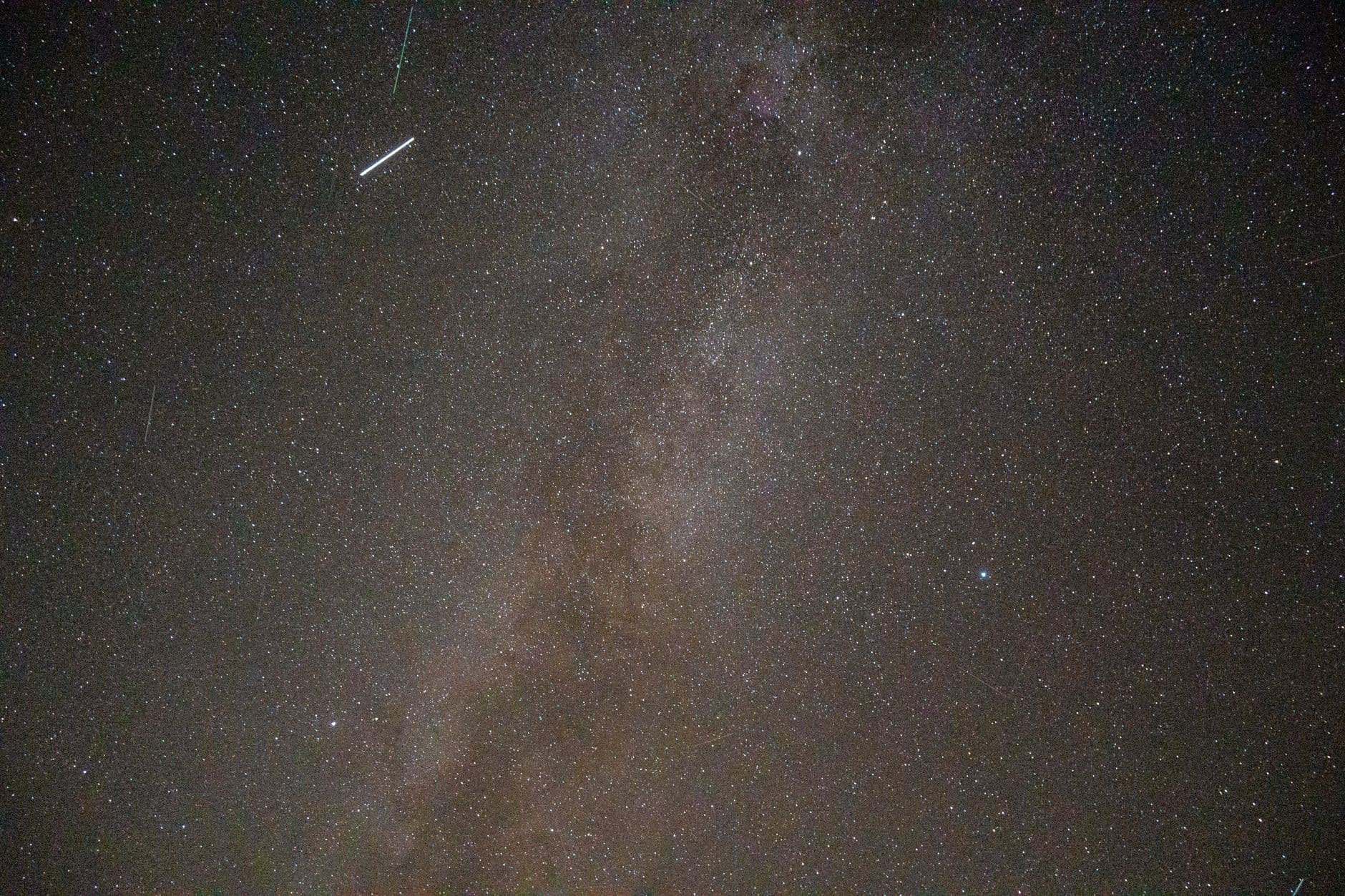
A Timeline With No Room To Breathe
I’ve been staring at the spectroscopic data from the James Webb Space Telescope (JWST) and it feels like looking at a family photo where a fully grown, bearded man is sitting in a high chair. According to the standard Lambda-CDM model—our current rulebook for the universe—the period roughly 500 to 700 million years after the Big Bang should have been a chaotic construction site. We expected to see small, blue, messy clumps of stars slowly finding their footing. Instead, JWST found 'Universe Breakers.'
These are six massive galaxies that appear as mature and chemically evolved as our own Milky Way, but they are chilling in a timeframe where the universe was only 3% of its current age. To get that big, that fast, these galaxies would have had to turn gas into stars with near 100% efficiency, which is physically absurd. It’s like discovering a fully paved Roman highway in the middle of the Jurassic period. It doesn't just change the story; it suggests we might be reading the wrong book entirely.
The Dark Matter Scaffolding Is Creaking
We’ve leaned on Dark Matter for decades as the invisible glue that makes the universe make sense. The theory goes that Dark Matter halos formed first, creating gravitational wells that pulled in gas to form galaxies. It’s a slow, methodical process of cosmic knitting. But the sheer mass of these new discoveries—some estimated at 100 billion times the mass of our sun—happened so quickly that the 'slow' part of the theory is falling apart.
If these galaxies are real and our mass estimates are correct, the dark matter scaffolding didn't just work; it worked at warp speed. Or, perhaps more interestingly, maybe we don't understand gravity as well as we think we do at cosmic scales. Scientists are now whispering about 'Modified Newtonian Dynamics' (MOND) or even more radical ideas like the universe being twice as old as the 13.8 billion years we've agreed upon. Imagine finding out your 30-year-old friend is actually 60. That’s the level of recalculation we are facing.
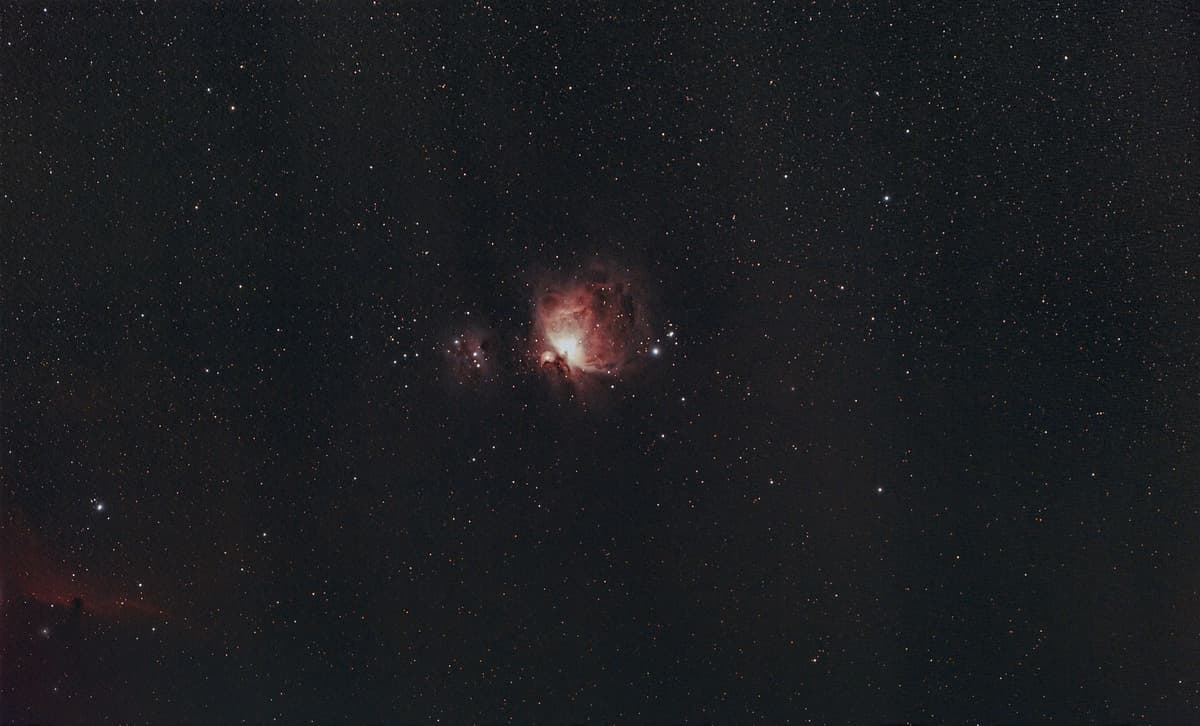
Photo by Alberlan Barros on Pexels
The Light That Lies To Us
There is always the possibility that we are being fooled by the light. When we look at things this far away, we aren't seeing them as they are; we are seeing them as they were, stretched out by the expansion of space into infrared wavelengths. Some researchers argue that these 'massive galaxies' might actually be hidden Quasars—supermassive black holes devouring gas so violently they mimic the light signature of billions of stars.
But even that explanation is a bit of a terrifying mystery. If they are black holes, how did they get so big so fast? You still run into the same brick wall of time. Whether it's a galaxy or a black hole, the early universe was apparently doing a lot more heavy lifting than our simulations ever allowed for. We are currently in a beautiful, uncomfortable period of science where the data is better than the theory.
What This Actually Means
This 'Cosmological Crisis' isn't a failure of science; it’s the most exciting thing to happen to physics in my lifetime. We’ve been living in a period of 'Precision Cosmology' where we thought we were just filling in the decimal points of the universe's biography. Now, the JWST has essentially ripped out the first chapter and told us to start over. It reminds us that our 'laws' of nature are really just our best descriptions based on what we can see, and we just got a much better pair of glasses.
If the universe is older than 13.8 billion years, or if dark matter behaves differently than we modeled, it changes our understanding of everything from the fate of the expansion to the very nature of gravity. We are forced to be humble again. We are looking at light that traveled for over 13 billion years just to tell us that we don't know nearly as much as we thought we did. That’s not a crisis; it’s an invitation to keep looking.
Quick Answers
Is the Big Bang theory dead?
No, the evidence for an expanding universe starting from a hot, dense state is still overwhelming, but the specific timeline and the 'speed' of early evolution are under heavy fire.
Could the JWST just be broken?
The telescope is performing better than its design specifications; the 'impossible' data has been confirmed by multiple instruments and spectroscopic analysis, meaning the mystery is in the stars, not the lens.
How much older could the universe actually be?
Some new models, like those proposed by researchers at the University of Ottawa, suggest the universe could be as old as 26.7 billion years to account for these mature galaxies.