A Forest of Aluminum in the Arctic
I can't stop thinking about the sheer scale of the LA8YB array in Norway. We are living in an era where 'cutting-edge research' usually implies a multibillion-dollar facility with a three-letter acronym and a security gate. Then you look at Finn Jensen’s setup: a massive, sprawling network of antennas that looks more like a high-tech vineyard than a radio station. It sits there, soaking up signals from the ionosphere, doing work that usually requires a government grant and a decade of committee meetings. Why did one man decide his backyard needed to become a gateway to the upper atmosphere?
The ionosphere is essentially a shifting mirror of plasma, roughly 60 to 1,000 kilometers above our heads. It’s the frontier where the Earth’s atmosphere meets the vacuum of space, and it’s constantly being battered by solar radiation. Most people only think about it when their GPS glitches or when they see the Northern Lights, but for Finn, it’s a living map. The LA8YB array isn't just listening to radio stations; it’s measuring how the sun punches holes in our atmosphere and how those holes heal.
What fascinates me isn't just the hardware, but the resolution. This isn't amateur-hour equipment. We are talking about high-gain, narrow-beam capabilities that allow for ionospheric sounding with a precision that makes some professional observatories look like they’re squinting through a foggy window. It makes me wonder how much of our scientific 'bottleneck' is actually just a lack of decentralized hardware.
The Geometry of Listening
Building an array of this size isn't just about buying a lot of wire. It’s a masterclass in phase-shifting and wave geometry. To get the kind of data the LA8YB produces, you have to align dozens of elements so perfectly that they act as a single, massive ear. If one element is off by a fraction of a wavelength, the whole image blurs. Jensen has managed to create a synthetic aperture that can track 'traveling ionospheric disturbances'—basically ripples in the sky—with terrifying accuracy.
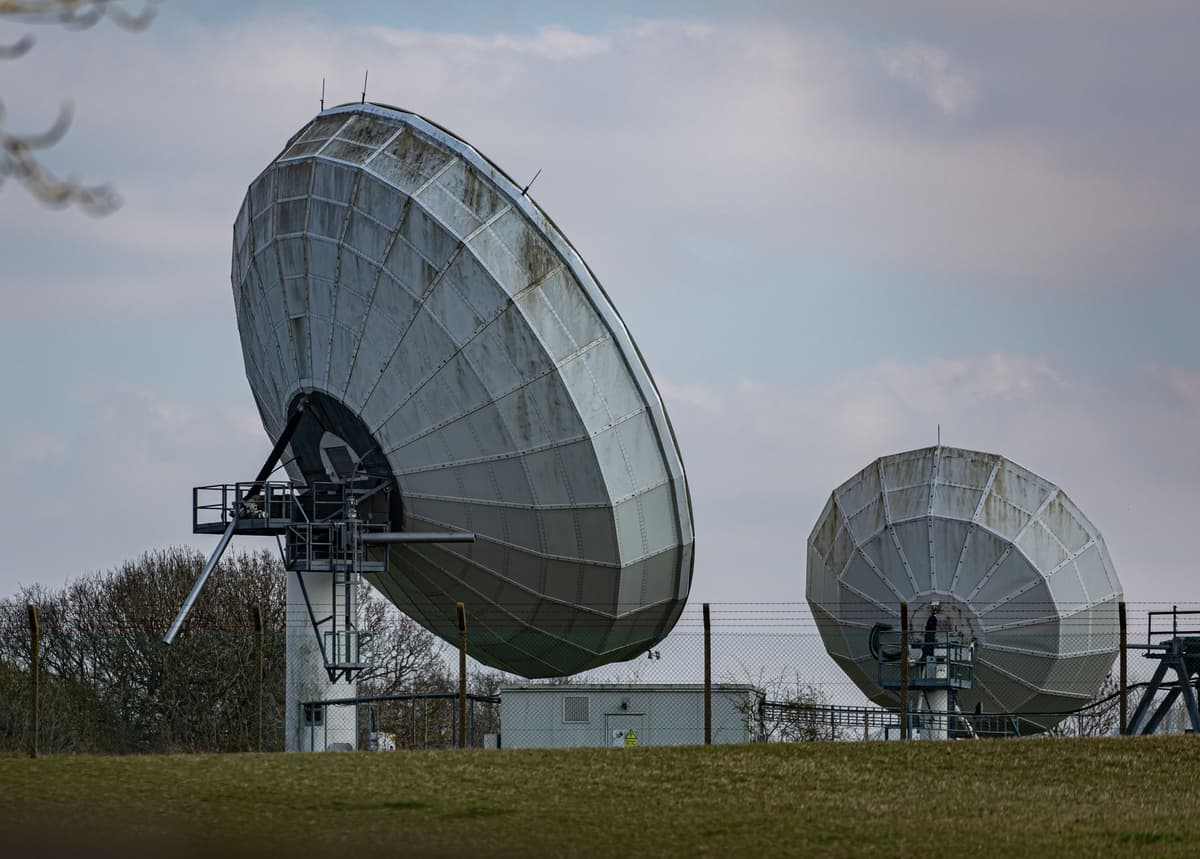
Photo by TheOther Kev on Pexels
Think about the commitment required to maintain this. Norway isn't exactly known for its mild, equipment-friendly winters. You have ice loading, high winds, and the constant degradation of connectors. Yet, this private site is churning out data on the 14 MHz and 28 MHz bands that researchers are drooling over. It’s a reminder that 'amateur' comes from the Latin amare, to love. There is a level of obsessive detail in this array that you rarely see in projects funded by a rotating door of disinterested bureaucrats.
- The array uses multiple Yagi antennas stacked in a specific configuration to create a pencil-thin beam.
- By rotating and phasing these elements, Jensen can 'scan' the sky like a radar.
- The resulting data shows real-time fluctuations in electron density that correlate with solar flares.
I find myself wondering if we’ve spent too much time waiting for 'Big Science' to tell us how the world works. If one guy in Norway can map the plasma density of the upper atmosphere from his property, what else are we missing because we assume the 'professionals' have it covered? The LA8YB isn't just a hobby; it’s a challenge to the institution of research itself.
Why the Ionosphere is the New Backyard
We used to think the ionosphere was a static layer, but projects like this show it’s more like a turbulent ocean. There are tides, waves, and sudden storms that we are only just beginning to categorize. When a solar flare hits on a Tuesday morning, the LA8YB picks up the 'sudden ionospheric disturbance' (SID) immediately. This isn't just cool trivia; it’s vital for understanding how to protect our power grids and satellite networks.
There is a specific kind of beauty in the data plots coming off this array. They look like topographic maps of a mountain range that doesn't exist on Earth. By using 'sounding'—sending a signal up and measuring how it bounces back—Jensen is effectively sonar-mapping the edge of space. The fact that this data is being shared with the global community for free is a testament to the old-school hacker ethos that built the internet.
I keep coming back to the idea of 'Space Weather.' We’re so used to checking the rain forecast on our phones, but we’re largely blind to the radiation storms that determine if our communication systems will stay upright. If we had a thousand LA8YBs scattered across the globe, we wouldn't just have a weather report; we’d have a high-definition movie of the Earth’s shield in action.
What This Actually Means
The existence of the LA8YB array proves that the barrier to entry for 'world-class' science has collapsed. You don't need a PhD and a tenure track to contribute to the global understanding of atmospheric physics anymore; you just need a deep understanding of Maxwell’s equations and a lot of aluminum. It suggests that the future of discovery is going to be decentralized. We’re moving away from a world where a few 'Cathedrals of Science' hold all the data, toward a 'Bazaar' where enthusiasts build the tools they need to answer their own questions.
This shift is vital because government labs are often slow to adapt. They have to justify every cent to taxpayers who might not care about ionospheric refraction. But an enthusiast like Finn Jensen doesn't have to justify anything to anyone. He can experiment, fail, and recalibrate at the speed of light. That agility is exactly what we need to map the complexities of our planet's relationship with the sun.
Ultimately, the LA8YB is a monument to human curiosity. It’s a physical manifestation of the need to know why things work the way they do. When I look at those towers, I don't just see antennas; I see a ladder. We’re finally building our own ways to reach up and touch the sky, and the view from the top is much clearer than we ever imagined.
Quick Answers
What is the LA8YB array actually used for?
It is a high-gain antenna system used for amateur radio and ionospheric sounding, measuring how solar activity affects radio wave propagation.
Is it better than professional government observatories?
In terms of specific local resolution and flexibility, it often rivals them, though it lacks the broad multi-instrument integration of a site like HAARP.
Can anyone build something like this?
Technically yes, but it requires significant land, a deep understanding of RF engineering, and a license to transmit on those frequencies.