I recently learned that the European Union now mandates that all new cars sold in its territory must be equipped with driver-facing cameras. These little lenses are designed to monitor your face for signs of fatigue, distraction, or the general existential dread of being stuck in traffic on the A10. If you blink too long, look away for more than three seconds, or dare to have eyes that naturally droop because of your ancestry, the car will beep, buzz, or vibrate your seat to shake you back into submission.
This is not safety; this is a mandatory, high-stakes acting audition. We are entering the era of the "Attentional Uncanny Valley," where drivers must consciously perform the role of "Person Driving a Car" to appease a piece of plastic glued to the steering column. It turns out that convincing a machine you are awake is actually much harder than just being awake.
The Great Dashboard Pantomime
To satisfy the algorithm, you cannot just look at the road. You must look at the road with enthusiasm. You have to widen your eyes like a cartoon character who just spotted a giant wheel of cheese. If you have a naturally relaxed face—often colloquially referred to as resting b*tch face—your car is going to assume you are either dead or actively plotting a bank heist.
Think about how you act when you see a police cruiser driving next to you. You don't just drive normally. You grip the wheel at exactly ten-and-two, sit up straight like you're being knighted, and stare forward with the dead-eyed intensity of a mannequin. Now imagine doing that for a four-hour road trip because if you relax your jaw for even a second, your Volkswagen will scream at you.
- The Wide-Eyed Psycho: Forcing your eyelids open to 100% capacity so the infrared sensor detects your irises.
- The Rigid Nod: Excessively jerking your head left and right at intersections to prove you are scanning for pedestrians.
- The Performative Yawn Suppression: Clenching your teeth so hard your fillings crack, just to prevent the camera from registering a yawn.
This creates a brand-new psychological phenomenon I like to call surveillance-induced fatigue. You aren't tired from driving; you are tired from the grueling mental labor of pretending to drive. It is like being in a school play for four hours straight where the director is a taser.
The Algorithm Has No Nuance
These systems, legally mandated under the EU's General Safety Regulation that kicked in for all new vehicles in July 2024, are programmed to look for specific facial markers. But human faces do not come in a standard, one-size-fits-all template.
What happens if you have allergies? A double-sneeze is basically a confession of vehicular manslaughter to these cameras. If you cry because a sad song comes on the radio, the car will assume you are undergoing a medical emergency and probably try to steer you into a ditch for your own safety.
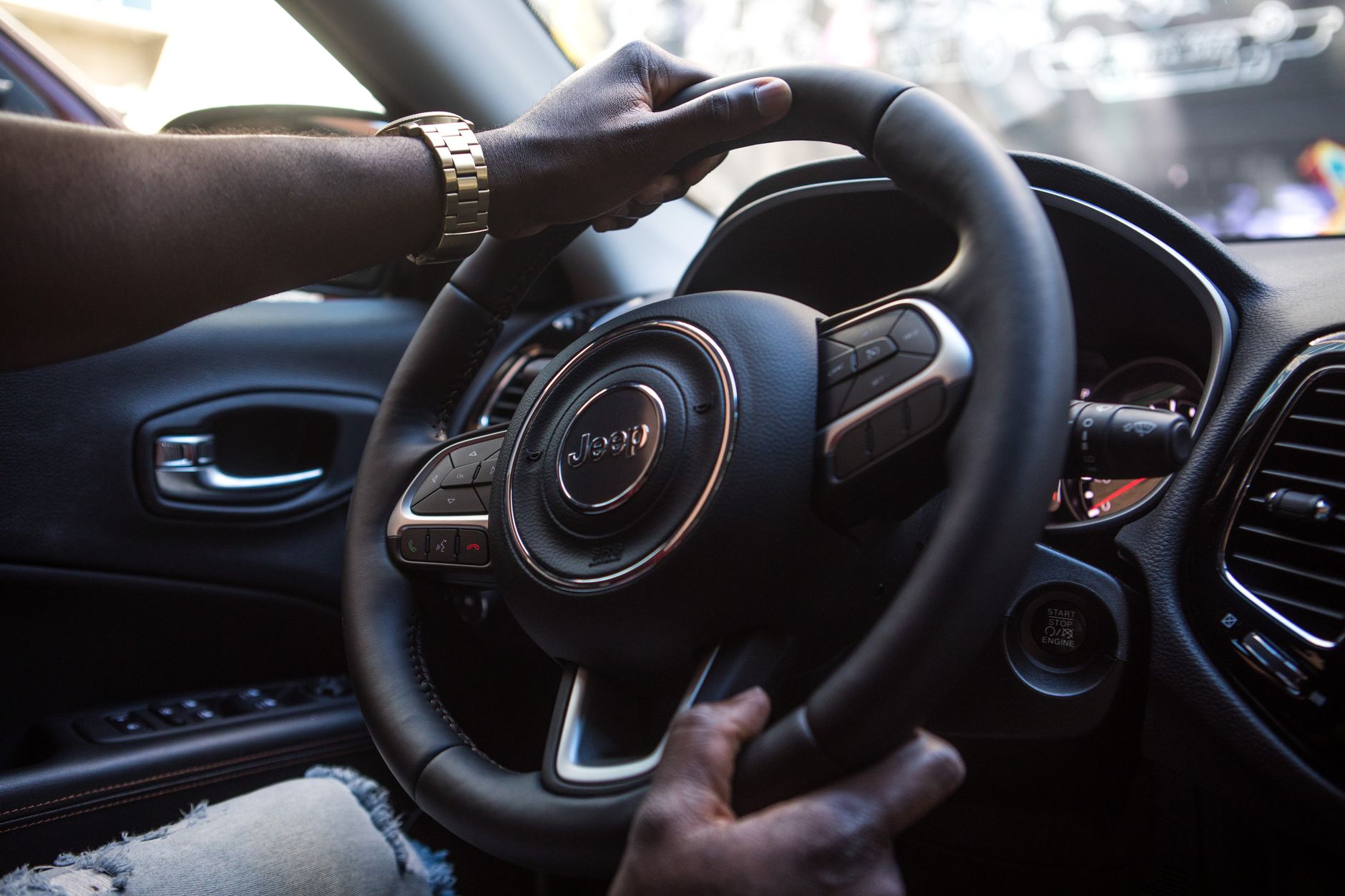
We are handing over the keys of perception to a machine that cannot tell the difference between a tired blink and a passionate sing-along to Queen’s Bohemian Rhapsody. If you hit that high note and close your eyes for a passionate 1.2 seconds, the car is going to treat you like a drunk pirate.
Solving Problems That Didn't Exist
Instead of focusing on actual road safety improvements—like making cars lighter, fixing potholes, or banning people from eating bowl-meals while driving—we have decided to install a tiny, judgmental digital assistant. It is like having a passenger who doesn't help navigate but occasionally yells "HEY!" just to see if you jump.
We are spending billions of Euros to build cars that treat us like untrustworthy teenagers. If I want to glance at a particularly interesting cow in a field for four seconds, that is my right as a semi-autonomous biological entity. I do not need my steering wheel vibrating like a cheap motel bed because the cow was brown and white instead of just brown.
What This Actually Means
Ultimately, this technology will backfire because humans are incredibly creative when it comes to defeating annoying technology. Within six months, there will be a thriving market on Etsy for sunglasses with fake open eyes painted on the lenses. People will glue printed photos of their own awake faces to their foreheads.
By trying to automate attentiveness, we are actually distracting ourselves more. We are looking at the road less because we are constantly checking the dashboard to see if the little green light is happy with our facial structure. It is a feedback loop of anxiety.
If you want people to stay awake on long drives, don't build a car that nags them. Just make the cup holders slightly too small for a standard coffee cup so they have to constantly focus on not spilling hot liquid on their lap. That is natural, organic, gravity-based safety. Leave my eyelids alone.
Quick Answers
Can I turn the driver-monitoring camera off?
In most new European cars, you can turn it off in the settings menu, but it will automatically turn itself back on every single time you start the engine, like a digital herpes.
Does the camera record my face and send it to the government?
No, the data is processed locally in the vehicle and not stored, meaning only your car knows how weird you look when you're singing alone.
What if I wear sunglasses?
Most of these systems use infrared light that can see through standard sunglasses, so you cannot hide your exhaustion behind a pair of cool aviators.