There is a strange sensation that hits you when you step into the Estadio Azteca. It is not just the sheer scale of the place, though a concrete bowl that has held over 119,000 screaming fans is bound to make you feel microscopic. It is the air. Or, more accurately, the lack of it. At 7,200 feet above sea level, the atmosphere is thin, volatile, and weirdly light.
We talk a lot about the legendary matches played here—Pelé in 1970, Maradona in 1986—but we rarely talk about the building itself as an active participant in those games. The Azteca is not just a stage. It is a massive, concrete thermodynamic machine designed to manipulate light, wind, and human lung capacity. As FIFA prepares for the 2026 World Cup, architects are scrambling to retrofit modern stadiums to handle extreme environments, yet they are finding that the intuitive, brutalist genius of the Azteca is nearly impossible to replicate with algorithms.
The Gravity of Thin Air
How do you build a monument where the air itself behaves differently? In 1962, architects Pedro Ramírez Vázquez and Rafael Mijares faced a daunting physical reality. At high altitudes, solar radiation is intense, ball physics change drastically, and human endurance plummets. A soccer ball kicked at 7,200 feet encounters less aerodynamic drag, traveling up to ten percent faster than it would in London or Rio. It curves less. It drops later.
To counter the blinding high-altitude sun, the architects did something radical. They oriented the pitch on a precise north-south axis. This ensured that during the 12:00 PM kickoff times demanded by European television broadcasters, the sun would pass directly overhead rather than blinding one goalkeeper.
Then came the concrete. The Azteca is essentially a massive crater of reinforced volcanic stone and concrete, excavated directly into the ancient lava fields of the Pedregal. By sinking the pitch below ground level, the designers insulated the playing field from the erratic, high-altitude crosswinds that sweep across the Valley of Mexico. They created a microclimate. Inside the bowl, the air is stagnant, heavy with the heat of a hundred thousand bodies, forcing players to battle both their own oxygen-deprived muscles and a suffocating, self-contained atmosphere.
The Thermodynamics of the Roof
Modern stadium design is obsessed with lightweight, translucent membranes. We love ETFE pillows and tensioned fabric roofs that look like glowing clouds. But these materials do very little to manage the harsh thermal realities of high-altitude environments.
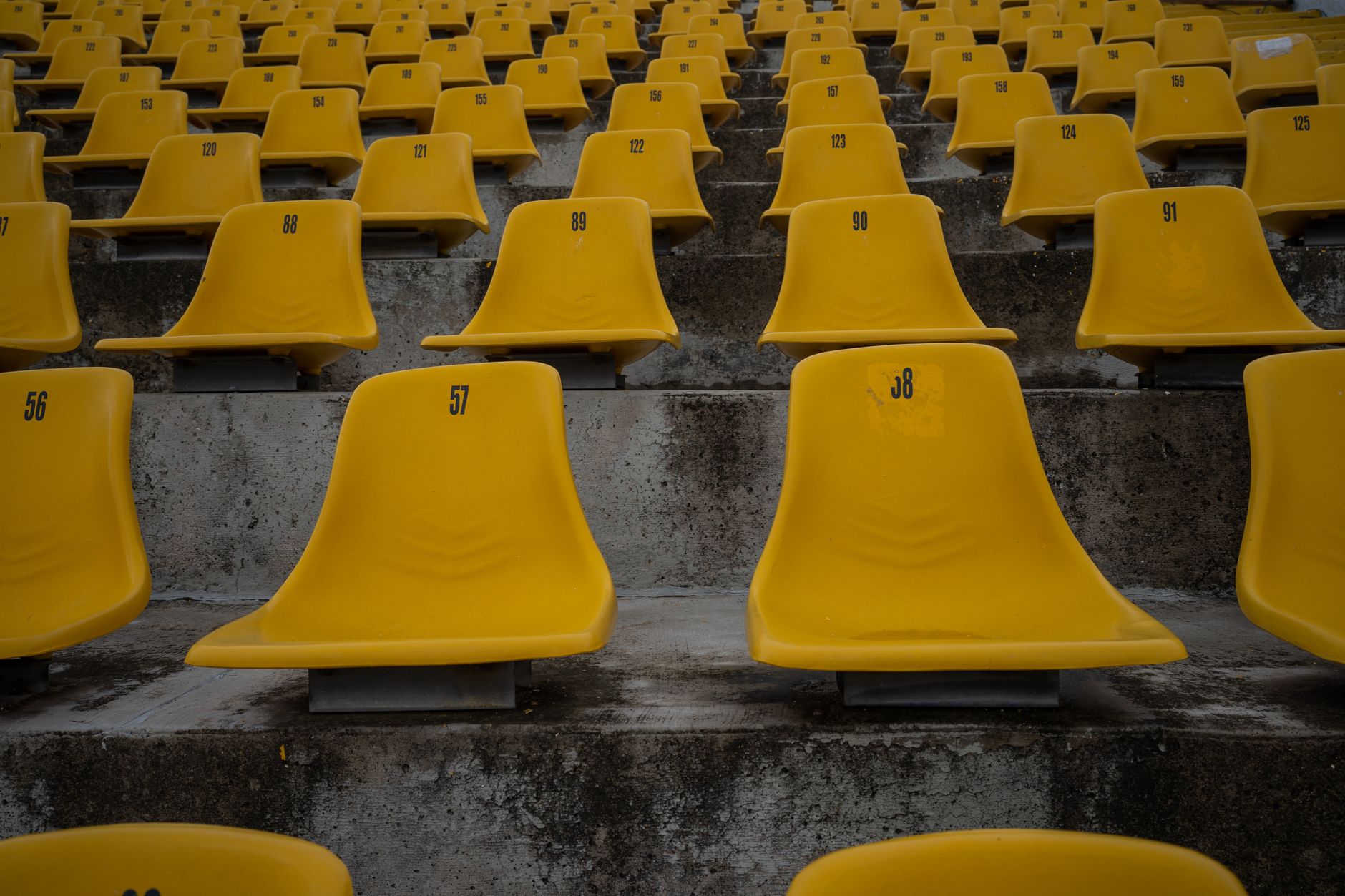
Photo by Amar Preciado on Pexels
The Azteca’s cantilevered roof, added in 1967, is a heavy steel ring that hangs over the stands like a massive collar. It was designed not just to keep the rain off fans, but to manage thermodynamics. High-altitude sun heats up concrete rapidly. Without proper ventilation, a stadium can turn into a literal convection oven.
The gap between the roof and the upper deck of the Azteca acts as a pressure valve. As the hot air rises from the crowd, it escapes through this gap, drawing cooler air down toward the pitch. It is a natural convection cycle that requires zero electricity. When you look at the multi-billion-dollar climate-controlled domes being built today, you have to wonder if we lost some fundamental understanding of physics when we started relying on giant air conditioning units to solve our design problems.
Why Modern Architecture is Struggling
For the 2026 World Cup, matches will be played across North America, forcing teams to travel from sea-level humidity in Miami to the thin air of Mexico City. FIFA is demanding standardization. They want consistent turf, predictable wind speeds, and controlled temperatures.
But you cannot standardize geography. Modern sports architecture is dominated by corporate homogeneity. Stadiums are built as modular entertainment districts first and athletic arenas second. They are wrapped in glass and LED screens, which trap heat and require massive mechanical HVAC systems to keep the interior habitable.
When you try to scale these glass-and-steel boxes to high altitudes, the engineering begins to buckle. Glass facades magnify the intense high-altitude UV rays, turning interior concourses into greenhouses. The mechanical systems required to cool these spaces at 7,000 feet require massive amounts of energy because thin air is an inefficient heat transfer medium. The Azteca succeeded because it did not fight its environment; it used heavy, thermal-mass concrete to absorb the sun's energy during the day and radiate it back out during the cold high-altitude nights.
What This Actually Means
Perhaps the real lesson of the Estadio Azteca is that great architecture is born from limitation, not infinite budgets. Vázquez and Mijares did not have CAD software or thermodynamic wind tunnel simulations in 1962. They had slide rules, a deep understanding of local materials, and a respect for the hostile geology of Mexico City.
We have entered an era where we believe we can build the exact same stadium in Doha, Dallas, or Munich, and simply brute-force the climate control with money and carbon emissions. But there is a soulfulness to a building that is physically anchored to its elevation. The Azteca feels intimidating because the geography itself is intimidating, and the architecture honors that scale.
As we look toward 2026, the matches played in Mexico City will likely be the most unpredictable, chaotic, and dramatic of the tournament. Not because of the players, but because a sixty-year-old concrete crater is still dictating how the ball flies and how the lungs burn. We might have better technology now, but we have yet to build anything that understands the air quite like this.
Quick Answers
Why does the ball fly differently at Estadio Azteca?
At 7,200 feet, the air density is about twenty percent lower than at sea level. This reduction in air resistance means soccer balls travel faster and curve less through the air, making long-range shots incredibly unpredictable for goalkeepers.
How does the stadium's design help players breathe?
It actually doesn't; it makes it harder. By sinking the pitch below ground level to block the wind, the architects created a bowl that traps heat and carbon dioxide, intensifying the physiological challenge of playing at high altitude.
Can modern stadiums replicate this design?
They struggle to do so because contemporary building codes and commercial demands prioritize lightweight materials like glass and fabric over heavy concrete. These modern materials do not possess the thermal mass required to naturally regulate temperature in extreme altitudes.