The narrative of modern farming has long been written by companies like John Deere and Monsanto, who sell a vision of the future where every seed is tracked by a $500,000 machine running closed-source code. They call it 'Precision Ag,' but for the average producer, it functions more like a digital feudal system. You buy the equipment, but you don't own the data it generates, and you certainly aren't allowed to fix the sensors when they inevitably fail in the humidity of a greenhouse or the dust of a central valley summer.
This corporate stranglehold is finally fracturing, not because of regulation or a sudden change of heart in the C-suite, but because of a tiny piece of silicon called the ESP32. This microcontroller, which retails for roughly $4 to $7 depending on the configuration, has become the backbone of a grassroots movement that is building sophisticated agricultural monitoring systems for a fraction of the cost of industrial alternatives. We are witnessing the birth of open-source agronomy, and it is the most significant shift in food production since the advent of the tractor.
The High Cost of Proprietary Ignorance
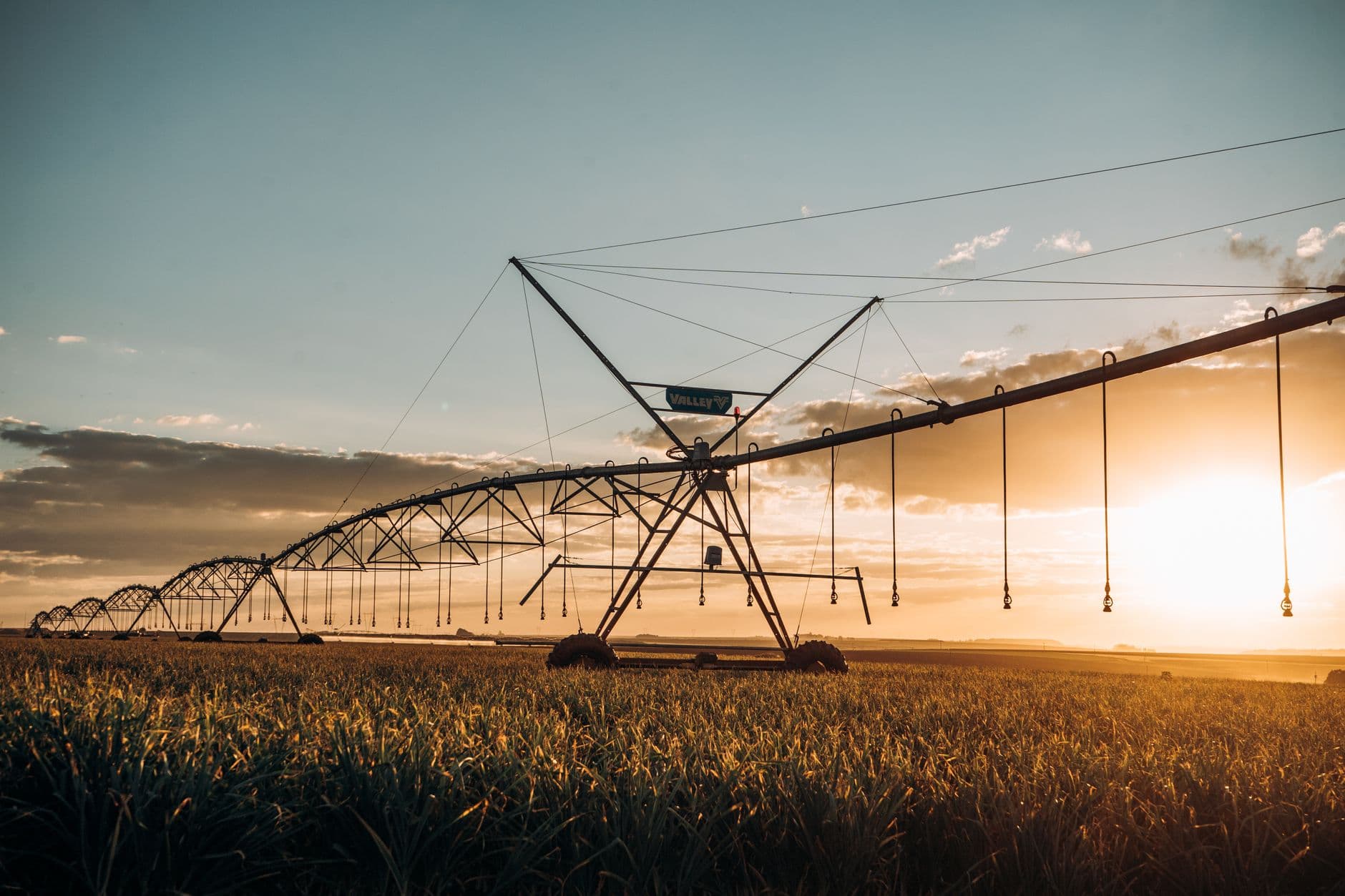
To understand why a $1,600 DIY system matters, you have to look at the predatory pricing of the incumbents. A standard industrial soil moisture and nutrient sensing array can easily cost $15,000 for the hardware alone, plus an annual subscription fee of $2,000 to $5,000 to access the cloud dashboard where that data lives. If a cable snaps or a sensor corrodes, the farmer is legally and technically barred from repairing it. They must wait for a certified technician to drive out, often at a rate of $150 an hour, just to plug in a proprietary diagnostic tool.
This isn't just about money; it's about the erosion of institutional knowledge. When a farmer cannot see the raw data their land produces, they lose the ability to iterate. They become dependent on an algorithm that may or may not have their local microclimate's best interests at heart. The proprietary model views the farmer as a mere operator of a black box, rather than a steward of the land who needs granular, actionable information to survive in an era of increasingly volatile weather patterns.
By contrast, the ESP32 Agriculture movement treats the farm as a laboratory. Because the hardware is so cheap, a farmer can deploy fifty sensors where they previously could only afford one. They can monitor the exact humidity under a specific row of tomatoes or the transpiration rates in the far corner of an orchard. This density of data provides a level of precision that even the most expensive 'Big Ag' systems struggle to match, simply because the cost of those systems prevents them from being deployed at scale within a single field.
Building Sovereignty with Solder and Code
The shift toward open-source hardware is fundamentally an act of reclamation. When a farmer builds a LoRaWAN-connected weather station using an ESP32, they are choosing where their data goes. They aren't uploading it to a corporate server in Moline or St. Louis to be anonymized and sold back to them in the form of 'market insights.' They are keeping it on a local server, perhaps running Home Assistant or a custom Python script, where it remains their private property.
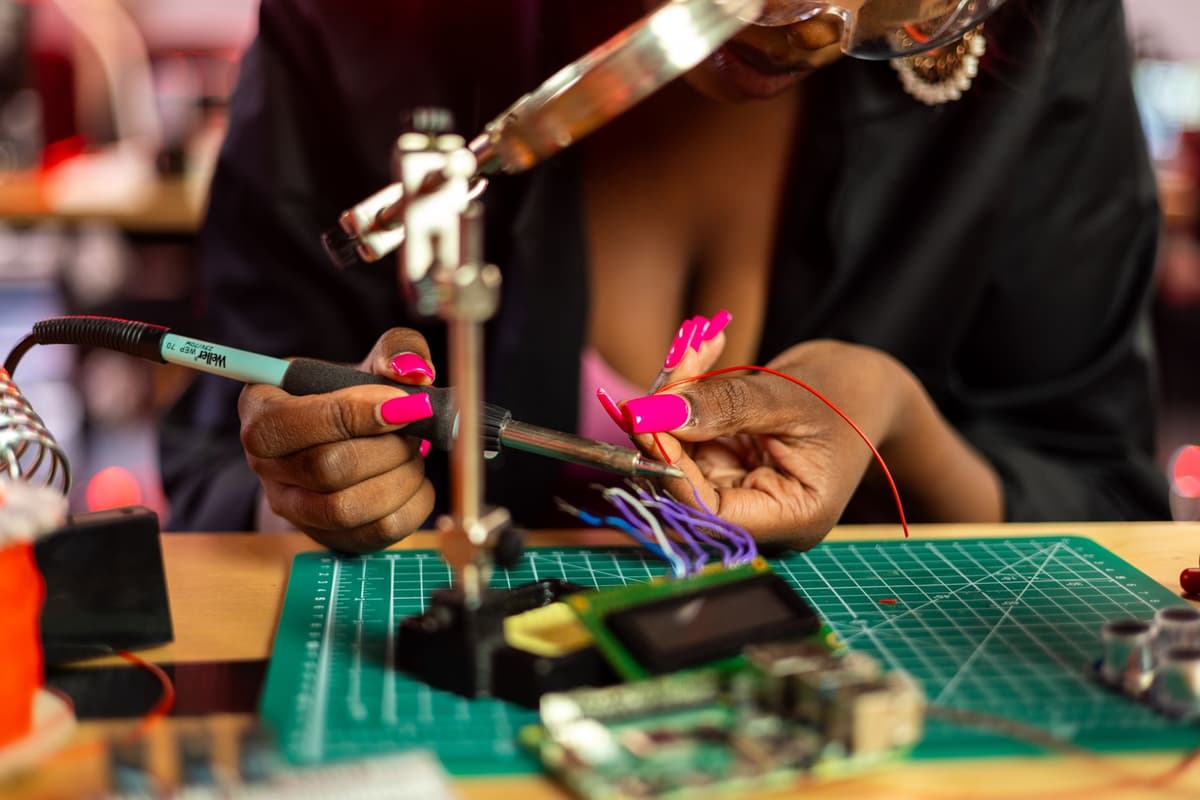
Photo by ThisIsEngineering on Pexels
This data sovereignty is crucial for the survival of small and medium-sized farms. In the current market, the aggregated data from thousands of farms is used by multinational corporations to predict crop yields and manipulate commodity prices. By opting out of these closed-loop ecosystems, independent farmers are protecting themselves from the very entities that seek to consolidate their land. They are building a parallel infrastructure that prizes local resilience over global corporate efficiency.
Furthermore, the repairability of these systems is a game-changer. If an ESP32-based irrigation controller fails at 2:00 AM on a Tuesday, the farmer can swap in a spare part that they keep in a kitchen drawer. There is no waiting for a technician, no software locks, and no planned obsolescence. The ability to maintain one's own tools is the bedrock of agricultural independence, and the digital age had almost stripped that away until the maker movement provided a path back.
The $1,600 Threshold
The magic number currently floating around the open-source community is $1,600. That is roughly the total cost to fully instrument a 10-acre high-intensity vegetable farm with automated irrigation, soil monitoring, and climate tracking using DIY components. For context, a comparable 'turnkey' solution from a major AgTech firm would easily exceed $80,000 when accounting for installation and the first three years of service contracts.
This 50-fold reduction in price democratizes technology that was previously reserved for the largest industrial operations. It allows a young farmer in Appalachia or a cooperative in sub-Saharan Africa to access the same level of environmental insight as a multi-billion dollar corporate farm in Brazil. It levels a playing field that has been tilted in favor of capital for over half a century.
We are moving toward a future where 'High Tech' doesn't mean 'High Cost.' The complexity of a system is no longer a justification for its opacity. As these open-source libraries for soil chemistry and plant health continue to mature, the value proposition of the legacy giants will continue to shrink. The farmer of 2030 won't be a technician for a multinational; they will be a systems architect of their own soil.
What This Actually Means
The rise of ESP32 Agriculture is the first real challenge to the industrialization of the farm's 'brain.' For decades, we accepted that as farming became more digital, it had to become more centralized. We assumed that only massive companies could handle the complexity of the 'Internet of Trees' or automated nutrient delivery. We were wrong. Complexity is becoming cheap, and with that cheapness comes the opportunity to decentralize the food system.
This movement ensures that the most vital data in the world—the data on how we grow our food—remains in the hands of the people actually growing it. It turns the farm back into a place of innovation rather than a mere site of extraction. When you lower the barrier to entry for precision tools, you invite a wider range of people to solve the problems of drought, soil depletion, and pest management.
Ultimately, the $1,600 smart farm is a declaration of independence. It proves that the tools of the future can be built on a workbench rather than bought from a boardroom. It suggests that the most resilient food system isn't one managed by a single massive cloud provider, but one composed of millions of tiny, independent nodes, each one understood and maintained by the person standing in the dirt.
Quick Answers
Is DIY hardware reliable enough for a professional farm?
Yes, provided the electronics are properly housed in IP65-rated enclosures and protected from voltage surges. The industrial-grade versions of the ESP32 are specifically designed to handle the temperature fluctuations common in outdoor environments.
How much technical knowledge does a farmer actually need?
The barrier is dropping rapidly thanks to platforms like ESPHome and Arduino, which allow farmers to configure sensors using simple text files rather than complex C++ coding. A basic understanding of electrical circuits is required, but it is well within the reach of anyone who already maintains modern farm machinery.
Can these systems really compete with John Deere's sensors?
In terms of raw data accuracy, many off-the-shelf sensors used in the DIY community—like the SHT4x for humidity or TDR sensors for soil moisture—are the exact same components used inside the $5,000 proprietary units. The difference is the plastic housing and the logo on the box.