The Failure of the Naked Eye
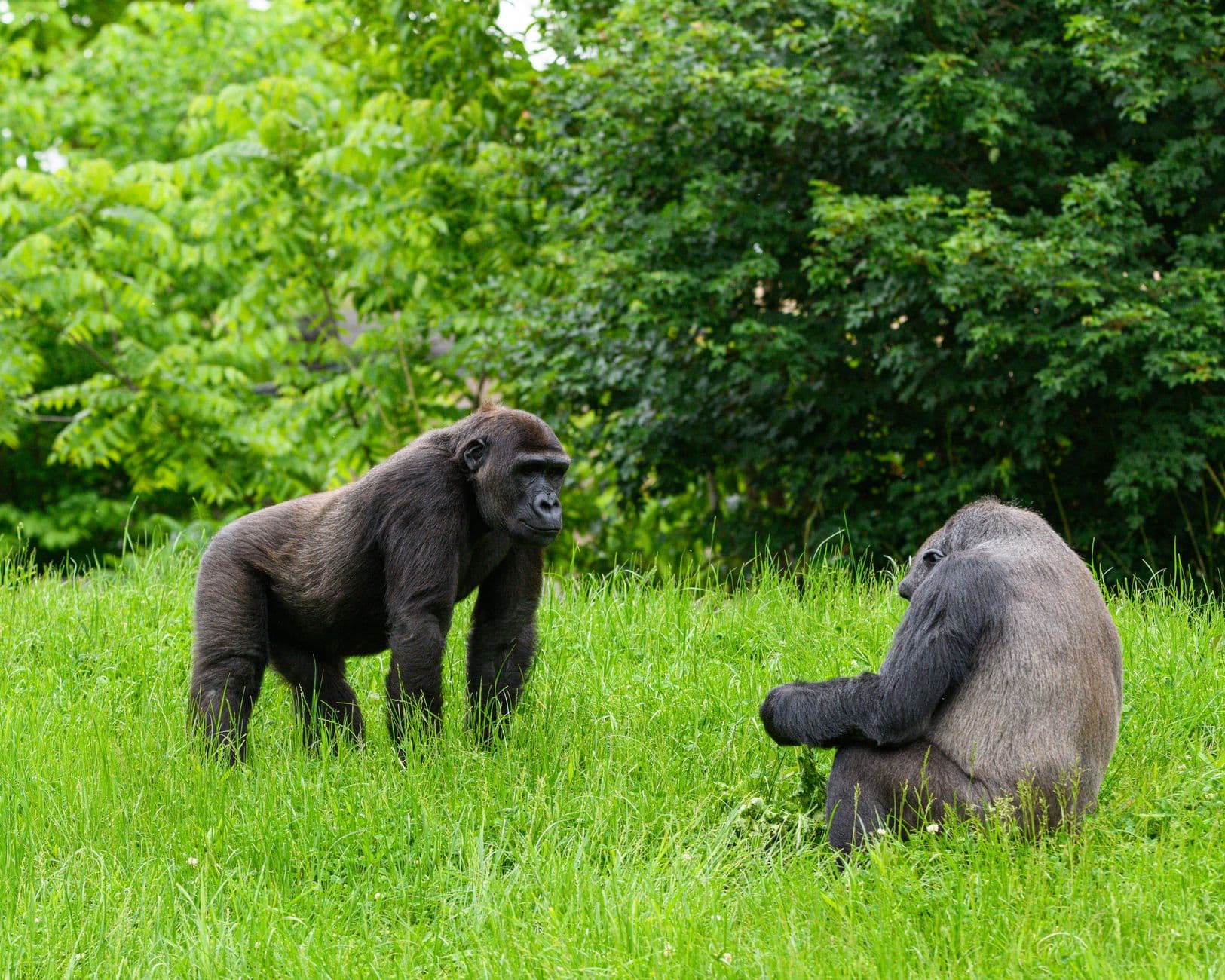
For over a century, the primary metric for biological discovery was the human eye. If an animal looked like a Lesula, we categorized it as a Lesula. The recent identification of Cercopithecus lomamiensis sibling species—locally known as the Likweli—shatters this morphological complacency. In the dense, humid canopy of the Congo Basin, we have discovered a primate that is visually indistinguishable from its cousins but exists in a completely different evolutionary reality. This isn't just a win for taxonomy; it is a profound indictment of our current conservation frameworks.
Cryptic speciation occurs when two distinct species are lumped into one because they share a physical blueprint. It means our biodiversity counts are likely off by orders of magnitude. In the case of the Likweli, the difference isn't in the fur color or limb length, but in the deep architecture of its DNA and the specific frequency of its calls. If we continue to manage forests based on what we can see from a drone or a binoculars-wielding scout, we are effectively managing ghosts.
This discovery demands a pivot from classical natural history to a data-driven biological autopsy of the landscape. We can no longer afford to treat the rainforest as a collection of visible icons. It is an encrypted data set, and we have only just begun to find the decryption keys.
Bioacoustics as the New Standard
The Congo Basin is an acoustic fortress. It is an environment where visibility is often limited to thirty feet, but sound carries for miles. The Likweli was not found because a researcher spotted a unique stripe on its tail; it was identified because its vocalizations didn't match the established library of the Lesula. Bioacoustic fingerprinting is moving from a niche academic interest to the primary frontline of planetary mapping. It allows us to monitor 24 hours a day, 365 days a year, without the intrusive presence of human observers who inevitably bias the behavior of the wildlife they study.
By deploying autonomous recording units (ARUs), researchers can capture the entire soundscape of a drainage basin. This creates a permanent, verifiable record of life. When these recordings are processed through machine learning algorithms, the subtle shifts in pitch and cadence that separate the Likweli from its relatives become glaringly obvious. We are moving toward a reality where the 'map' of a forest is a heat map of frequencies rather than a collection of grainy photographs.
- Acoustic sensors can detect illegal logging and poaching in real-time.
- Non-invasive monitoring reduces the risk of zoonotic disease transmission.
- Long-term audio archives allow us to 'time travel' back to see when a species actually vanished.
Photo by Natur & Urban on Pexels
The Genetic Border Wall
Genetics provides the hard evidence that morphology lacks. While the Likweli and the Lesula might occupy similar niches, their genetic divergence indicates they haven't interbred for hundreds of thousands of years. This separation is vital for conservation law. You cannot protect a species under international treaties like CITES if you cannot prove it is unique. Without the genetic work backing up the bioacoustic clues, the Likweli would remain a footnote or a 'regional variation' rather than a distinct evolutionary lineage deserving of its own protection status.
This shift creates a massive logistical challenge. It requires a level of laboratory infrastructure that is currently absent in many of the world’s most biodiverse regions. To truly map the Likweli and its peers, we need to move the sequencing power from Western universities directly into the field. The 'Cryptic Speciation' challenge is, at its heart, a challenge of resource allocation. We are spending billions on space exploration while the basic inventory of life on Earth remains unfinished and largely misunderstood.
What This Actually Means
The discovery of the Likweli tells us that the 'Extinction Crisis' is likely much worse than the official numbers suggest. If we are accidentally grouping three or four distinct species into one category, we are masking the disappearance of the more vulnerable sub-groups. A population of 10,000 animals looks stable on paper, but if that population is actually four cryptic species of 2,500 each, the risk of total collapse is significantly higher. We are operating with a false sense of security fueled by our own visual limitations.
We must accept that the era of the 'explorer' with a sketchbook is over. The new era belongs to the bioinformatician and the acoustic engineer. We need to stop asking what a species looks like and start asking how it sounds and what its genome tells us about its history. The Likweli is a warning: the forest is full of strangers we think we know, and they are slipping away because we haven't bothered to listen to them correctly.
Ultimately, this is about intellectual humility. We assumed that after centuries of study, we had the 'big' animals figured out. We were wrong. The Congo Basin is not just a carbon sink; it is a library where most of the books are written in a language we are only now starting to translate. If we don't scale up bioacoustic and genetic monitoring by 2030, we will be writing the obituaries for species we never truly met.
Quick Answers
Why does it matter if two species look the same?
It matters because they have different ecological needs, breeding patterns, and vulnerabilities; treating them as one leads to ineffective conservation laws that fail to protect the most at-risk groups.
How does bioacoustics find new animals?
It uses specialized microphones to record every sound in a forest, allowing computers to identify unique vocal patterns that the human ear might miss or mistake for a known species.
Is the Likweli monkey endangered?
While its exact numbers are unknown, its discovery in a limited range of the Congo Basin suggests it faces immediate threats from habitat loss and the bushmeat trade, making its formal recognition a vital step for its survival.