Digital skeuomorphic grief is a very fancy way of saying we are all terrified that our past selves were just as boring as our current selves, and we need the receipts to prove it. We are currently obsessed with 'Copy That Floppy,' a movement that treats a 1.44MB disk with the same reverence Indiana Jones gave the Holy Grail. The problem is that Indiana Jones was looking for eternal life, and we are looking for a pixelated low-res photo of a cat named Barnaby that died in 1997.
There is something fundamentally hilarious about the math of this endeavor. We live in an era where a single high-definition selfie takes up more storage space than the entire life's work of a 1992 graphic designer. Yet, we will spend six hours and forty dollars on eBay for a 'new old stock' Sony drive just to see if we can recover a Word document titled 'Poetry_Draft_Do_Not_Read.doc.' It’s not data recovery; it’s a digital seance.
The Mechanical Heartbeat of a Dead Era
The ritual of the floppy disk is a sensory experience that the cloud just can't replicate. You remember the sound. It wasn't a sleek, silent upload; it was a rhythmic, violent chunk-thwack-whirr that sounded like the computer was trying to chew through a jawbreaker. When that sound stopped, your heart stopped. If the drive made a repetitive clicking noise, you knew your data was being fed into the woodchipper of entropy.
Now, we recreate this struggle as a form of performance art. We buy specialized controllers and write custom Python scripts to bypass bad sectors, all to rescue a file that is literally too small to be used as a thumbnail today. We are curating ghosts. We are the digital equivalent of people who buy old barns just to see if there’s a rusted-out tractor under the hay. Except in this case, the tractor is a MIDI file of 'Smooth' by Santana featuring Rob Thomas.
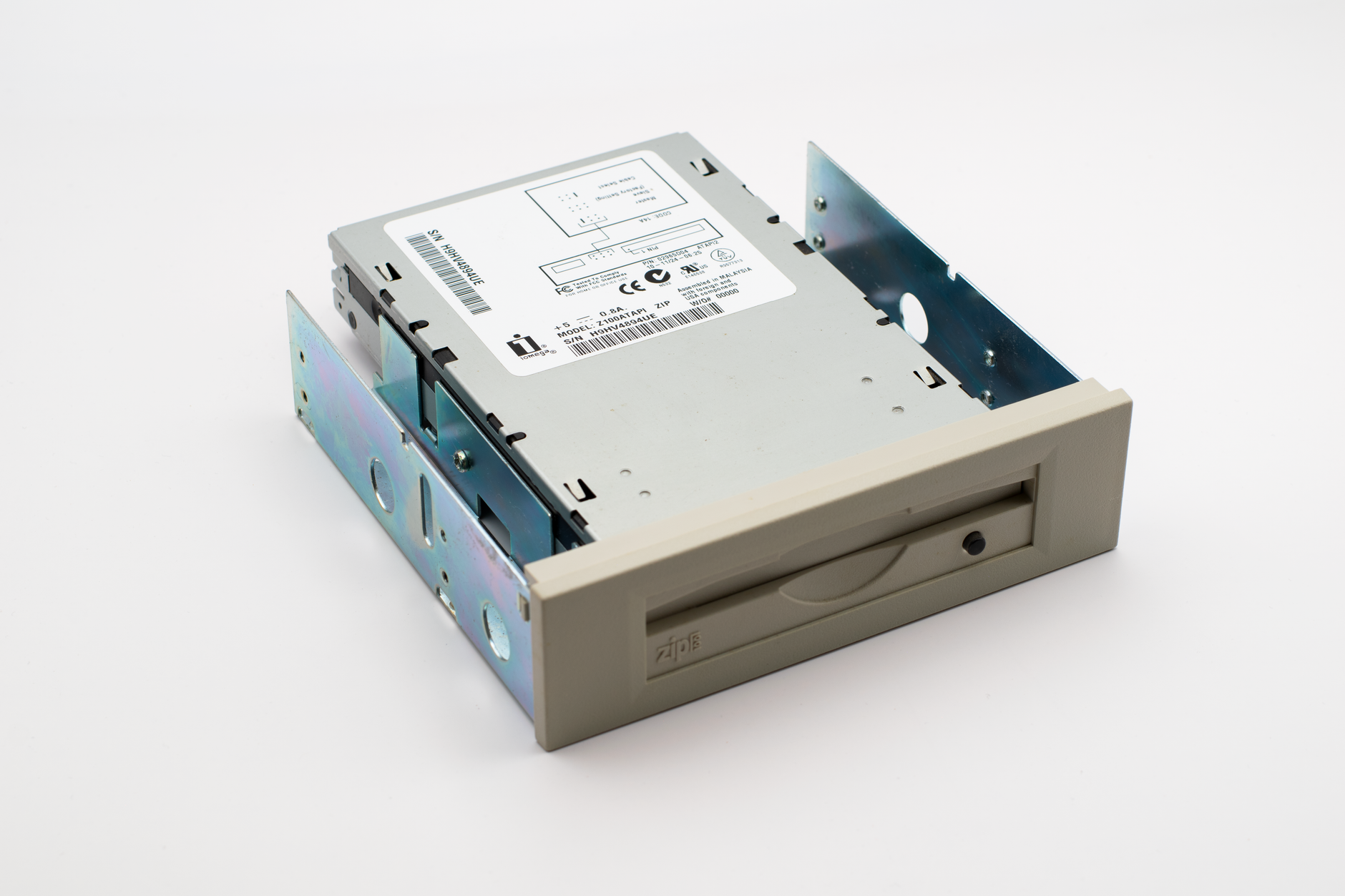
Photo by Nicolas Foster on Pexels
A 1.44 Megabyte Coffin
Let’s be honest about what is actually on these disks. We talk about 'reclaiming personal history,' but history is mostly filler. 90% of the floppy disk preservation movement is dedicated to saving:
- Drivers for a printer that was melted down for scrap metal during the Bush administration.
- Half-finished levels of Doom that are objectively unplayable.
- Spreadsheets tracking the finances of a lemonade stand that went bankrupt in 1994.
- A 'readme.txt' file that just says 'Fixed the bug' without explaining what the bug was.
We are hoarding the digital equivalent of dryer lint. But because it exists on a physical medium that we can hold, we feel a biological imperative to save it. It’s the 'Save' icon come to life. For a generation of kids who grew up thinking the Save icon was just a weirdly shaped vending machine, seeing a real floppy disk is like seeing a unicorn, if unicorns were made of cheap charcoal-colored plastic and held almost no information.
The Ritual of the Magnetic Pulse
There is a specific type of madness that sets in when you realize your entire childhood is stored on a medium that can be destroyed by a refrigerator magnet. The 'Copy That Floppy' crowd isn't just archiving; they are fighting a war against physics. Magnetic storage has a half-life shorter than a TikTok trend. Every year that passes, the bits on those disks are literally drifting away, losing their alignment like a drunk person trying to walk a straight line.
When you successfully extract a file from a decaying disk, you get a rush of dopamine that is entirely disproportionate to the value of the file. You didn't just find a file; you cheated death. You reached into the void and pulled out a 16-color bitmap of a sunset. You are a digital necromancer. It doesn't matter that the sunset looks like it was rendered on a microwave—it’s your sunset, and you rescued it from the silent, cold vacuum of bit rot.
What This Actually Means
This isn't about the data. If it were about the data, we’d realize that 1.44MB is essentially a rounding error in our Google Drive storage. This is about the terrifying realization that our digital lives are more fragile than our physical ones. We can keep a high school yearbook on a shelf for fifty years and the only thing that changes is the smell. But a digital file requires a constant, multi-generational relay race of hardware and software just to stay legible.
We are 'curating ghosts' because we’ve realized that the 'cloud' is just someone else’s computer, and that computer doesn't care about your 1996 GeoCities backup. By ritualistically saving these disks, we are protesting the disposability of the modern world. We are insisting that even the small, stupid, low-resolution parts of our lives deserve to exist. Even if they are stored in a format that requires more effort to open than a bank vault.
Ultimately, the floppy disk preservation movement is a beautiful, hilarious act of defiance. It is a way of saying that even though the world has moved on to terabytes and fiber optics, we still have a soft spot for the clunky, the slow, and the magnetic. We will keep buying those USB floppy drives. We will keep listening for the click-whirr. And we will keep celebrating when we finally, against all odds, recover that one corrupted photo of a sandwich from 1995.
Quick Answers
Is my old floppy disk collection actually worth anything?
No, unless you happen to have the source code for a nuclear silo or a rare version of Space Quest that somehow survived thirty years in a damp basement.
Why is it called 'skeuomorphic grief'?
Because 'sadness about old plastic squares' doesn't get you a grant from a university or a write-up in a tech journal.
Can I just use a magnet to clean my disks?
Yes, in the same way you can use a flamethrower to 'clean' your living room. It will certainly remove the dust, along with every single bit of data and your will to live.