The Ghost in the Machine Refuses to Quit
There is something deeply moving about a machine that outlives its own purpose. In December 2020, Hayabusa2 dropped its precious cargo of Ryugu asteroid dust into the Australian outback and, by all rights, could have just drifted into the silence of a heliocentric graveyard orbit. Instead, JAXA looked at the fuel gauges, saw a bit of xenon left in the tanks, and decided to point the nose toward a tiny, spinning rock called 2001 CC21—now nicknamed Torifune. It makes me wonder if we have fundamentally misunderstood the lifespan of our own creations, treating them as disposable tools when they are actually more like long-distance runners who haven't hit their stride yet.
This isn't just about getting your money's worth out of a multi-billion yen budget. It’s a shift in how we conceive of presence in the solar system. We are moving from a 'launch-and-leave' model to a 'persistent-eye' model. If a probe can survive the radiation and the vacuum for six years, why not sixteen? The engineering hurdle isn't just the hardware; it's the audacity to keep dreaming up new jobs for an old worker.
The Mathematical Ballet of the Second Act
Repurposing a spacecraft isn't as simple as changing the destination in Google Maps. You are dealing with a machine that has already been sandblasted by micrometeoroids and baked by solar flares for half a decade. Every maneuver is a gamble against the degradation of solar panels and the slow decay of batteries. To reach Torifune in 2026 and eventually the fast-rotating asteroid 1998 KY26 in 2031, Hayabusa2 has to execute a series of gravity assists that feel less like physics and more like high-stakes billiards played across years of time.
What fascinates me is the 'why' behind this specific pivot. Torifune isn't just a random rock; it's a window into planetary defense. We are learning how to track and characterize objects that could, in a much worse timeline, be heading for a collision with Earth. By reusing Hayabusa2, we are essentially getting a free planetary defense drill. It’s a form of orbital recycling that feels oddly sustainable in an era defined by waste.
- The probe uses ion engines that generate thrust about as strong as the weight of a single sheet of paper.
- It has already traveled over 5 billion kilometers since its 2014 launch.
- The extended mission relies on 'swing-bys' where the probe steals a tiny bit of momentum from Earth's gravity to catapult itself further into the deep.
Why We Keep Looking at Rocks
I often catch myself thinking: haven't we seen enough asteroids? But every time we get close to one, they turn out to be weirder than the last. Ryugu looked like a pile of rubble; others look like spinning tops or dog bones. Torifune is expected to be a 'type L' asteroid, a rare category that might hold clues to the very early chemical mix of our solar system. There is a specific kind of wonder in the idea that a machine built to study one thing can, with a software patch and a lot of patience, become the key to unlocking an entirely different mystery.
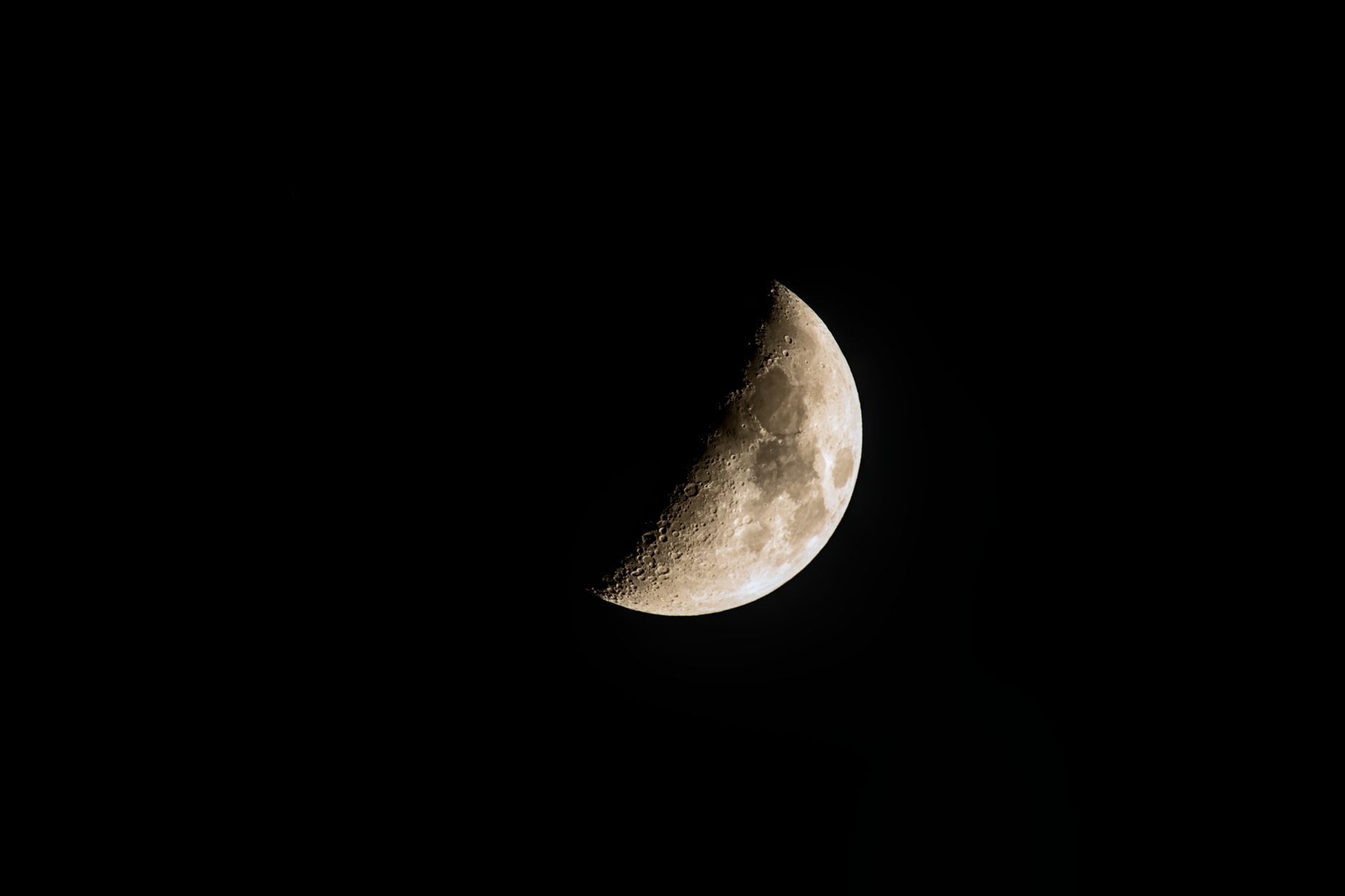
Photo by Piotr Kalinowski on Pexels
It makes me think about the software engineers back in Sagamihara. They are operating a machine that was designed using tech from over a decade ago, trying to coax it into doing things its original blueprints never mentioned. There's a beautiful tension there—between the rigid, cold reality of hardware and the fluid, creative problem-solving of the humans keeping it alive. Are we building these probes to be better than us, or are they just extensions of our own refusal to stop asking 'what's next?'
What This Actually Means
We are entering an era where space missions are no longer discrete events with a start and end date. They are platforms. Much like how the Voyager probes are still whispering to us from the interstellar void, Hayabusa2 represents a new standard of 'multi-mission longevity.' It suggests that the most sustainable way to explore the stars isn't just to launch more rockets, but to build things so well that they can be reinvented mid-flight.
This shift changes the economics of space, but more importantly, it changes the philosophy. We are starting to treat the solar system like a neighborhood we actually live in, where we keep a few scouts constantly wandering the halls to see what’s changed. If we can keep a small probe running for twenty years on a literal puff of gas, it forces us to reconsider what 'obsolescence' even means on our own planet.
In the end, Hayabusa2’s journey to Torifune is a testament to the idea that the end of the mission is just a lack of imagination. As long as there is power in the cells and a signal in the dark, there is no such thing as a finished story.
Quick Answers
Is Hayabusa2 still collecting samples?
No, its sample-return capsule was already dropped off at Earth; this extended mission is for flyby observations and data collection only.
When will it reach its next target?
It is scheduled for a high-speed flyby of the asteroid 2001 CC21 (Torifune) in July 2026.
Why is this mission considered 'sustainable'?
By repurposing an existing multi-million dollar asset instead of launching a new one, JAXA maximizes scientific return while minimizing the carbon and material cost of a new launch.