The Art of Never Saying Goodbye
We live in an era where your smartphone is designed to develop a metaphorical cough the second a new model is announced, yet somehow the Japan Aerospace Exploration Agency (JAXA) expects a hunk of metal launched in 2014 to keep working until 2031. The Hayabusa2 probe, having already harassed the asteroid Ryugu and stolen its lunch money in the form of soil samples, is now being sent on an eleven-year detour to visit something called 2001 CC21 and eventually the spinning top asteroid 1998 KY26. It is the celestial equivalent of your parents refusing to buy a new car until the current one literally dissolves into a pile of rust on the interstate.
This is being rebranded as "multi-mission longevity," which is a very fancy way of saying we don't have the budget to launch new stuff every time we want to look at a different rock. Instead of a dignified retirement, Hayabusa2 is being forced into a decade-long internship. It’s a bold strategy. If you leave your vacuum running for eleven years, you generally expect to find a fire, not a scientific breakthrough. But in space, apparently, the goal is to squeeze every last drop of xenon propellant out of the tank until the thrusters start making that sad clicking sound your grill makes when the propane is out.
Planetary Defense or Extreme Procrastination
One of the primary justifications for this extended mission is "planetary defense," a term that makes everyone feel like they’re in a Michael Bay movie despite the lack of Aerosmith soundtracks. The mission to 1998 KY26 is supposed to tell us how to stop small, rapidly rotating asteroids from turning a major city into a very expensive crater. This assumes, of course, that our plan for a 30-meter-wide rock traveling at 30 kilometers per second involves more than just sending it a very sternly worded email from a probe that’s been in space since the first John Wick movie came out.
- The probe has to survive another 11 years of cosmic radiation, which is great for its tan but less great for its delicate circuitry.
- It has to perform a high-speed flyby of asteroid "Torifune," which sounds like a luxury cruise ship but is actually just another lump of debris.
- The scientists have to stay interested in this project until 2031, which is a big ask for a species that loses interest in a social media app if the UI changes slightly.
There is something deeply optimistic about planning a meeting for July 2031. Most of us can't commit to a lunch date next Tuesday without a panic attack, yet JAXA is betting that their 17-year-old computer won't have a Blue Screen of Death in the middle of deep space. It’s not just engineering; it’s an exercise in extreme bureaucratic faith. We are counting on the fact that the code written during the Obama administration is robust enough to handle a rock we barely understand.

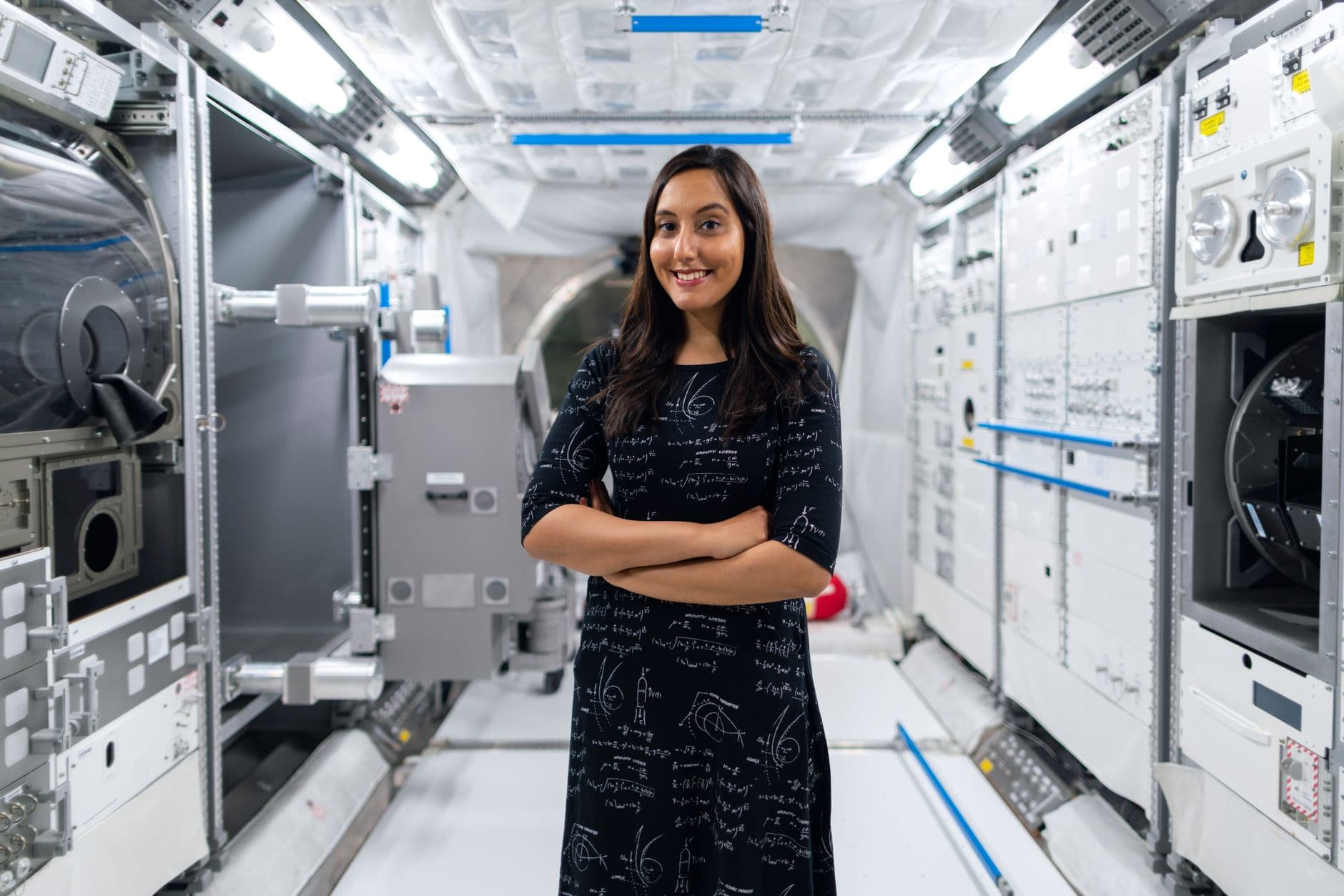
Photo by Kampus Production on Pexels
The Engineering of Holding it Together
The engineering challenges of this second act are mostly centered around the fact that space is a garbage environment for machinery. You have extreme temperature swings, constant radiation bombardment, and the distinct lack of a 24-hour repair shop. To keep Hayabusa2 going, the team has to be incredibly stingy with its remaining xenon. It’s like trying to drive from New York to Los Angeles on a gallon of gas by coasting down every hill and praying for a tailwind.
Repurposing these probes is less about "innovation" and more about the realization that building things that don't break is actually possible when you aren't trying to sell a subscription service. If Apple built space probes, Hayabusa2 would have slowed down to a crawl three years ago because its battery "needed protection." Instead, we have this overachieving tin can performing swing-bys of Earth just to get a little gravity-assisted kick in the pants. It’s efficient, sure, but it also feels a bit like watching a marathon runner finish the race and then being told they have to walk home.
What This Actually Means
What this actually means is that we have officially entered the "hand-me-down" phase of space exploration. We aren't just exploring the cosmos; we are scavenging it using the tools we already left out there. It turns out that the most valuable thing in space isn't the gold in the asteroids or the water on the moon—it’s a functioning camera that’s already in the right neighborhood. If you can move a probe from Point A to Point B without it exploding, you've saved yourself half a billion dollars and a decade of paperwork.
This shift toward "extended missions" tells us that the initial goals of these projects are increasingly just a suggestion. We launch a probe to study one thing, but we’re already eyeing the rest of the solar system like a buffet. It’s a pragmatism born of necessity. We want to see everything, but we only want to pay for a fraction of it. So, we make the robots work overtime without a raise, hoping they don't develop sentience and realize they’re being used as celestial Uber drivers for scientists who weren't even in college when the mission launched.
Ultimately, Hayabusa2 is a testament to the fact that humans are the ultimate hoarders. We can't even let a piece of debris in a vacuum go to waste. We will find a use for it, even if that use involves staring at a spinning potato in the dark for another decade. It’s impressive, it’s frugal, and it’s a little bit desperate. Welcome to the future of discovery: it’s pre-owned.
Quick Answers
Is the probe actually going to survive until 2031?
Maybe, if the electronics don't succumb to the constant barrage of subatomic particles trying to fry them. It’s a coin flip with a very expensive coin.
Why visit asteroid 1998 KY26 specifically?
Because it’s small, it spins fast, and it might one day decide to visit Earth without an invitation. We’d like to know if it’s a solid rock or just a pile of space gravel before that happens.
Is this the first time we've done this?
No, NASA’s Voyager probes have been wandering the neighborhood since the 70s, but they aren't being asked to perform precision maneuvers around rocks; they’re just screaming into the void while they slowly die.