The Physical Reality of Information Loss
Information is not abstract. It is a physical state etched into a physical medium, and in the case of the late 20th century, that medium was a volatile slurry of iron oxide coated on polyester. We have spent decades operating under the delusion that digital data is immortal, yet a 3.5-inch floppy disk has a reliable lifespan of perhaps twenty years under ideal conditions. Most are now thirty or forty years old. We are currently witnessing the literal disintegration of the primary sources of the computer revolution.
Bit rot is not a metaphor for software bugs; it is the thermodynamic inevitability of entropy. As the magnetic domains on a disk lose their coercive force, the 1s and 0s blur into an unreadable static. When this happens, the data doesn't just become difficult to read—it ceases to exist. The engineering challenge we face today is not merely one of file compatibility, but of physical rescue. We are building lifeboats for ghosts.
The Engineering of Digital Archaeology
Standard modern hardware is fundamentally incapable of communicating with the storage of the 1980s. A generic USB floppy drive bought for twenty dollars is a blunt instrument; it expects a perfect signal and gives up when it encounters the slightest magnetic inconsistency. This has necessitated the rise of a new class of hardware: specialized controllers like the KryoFlux or the Greaseweazle. These devices do not try to read files; they sample the raw flux transitions of the magnetic field at a resolution of nanoseconds.
By moving the logic from the hardware controller to software, engineers can now perform "read retries" that were impossible during the height of the floppy era. They are essentially using modern processing power to perform a digital autopsy on a dying signal. This isn't just a hobbyist pursuit. It is a sophisticated application of signal processing and FPGA (Field Programmable Gate Array) technology designed to bypass the limitations of aging mechanical components. These bridges allow us to capture a bit-perfect image of the physical media before the substrate itself flakes off the disk.
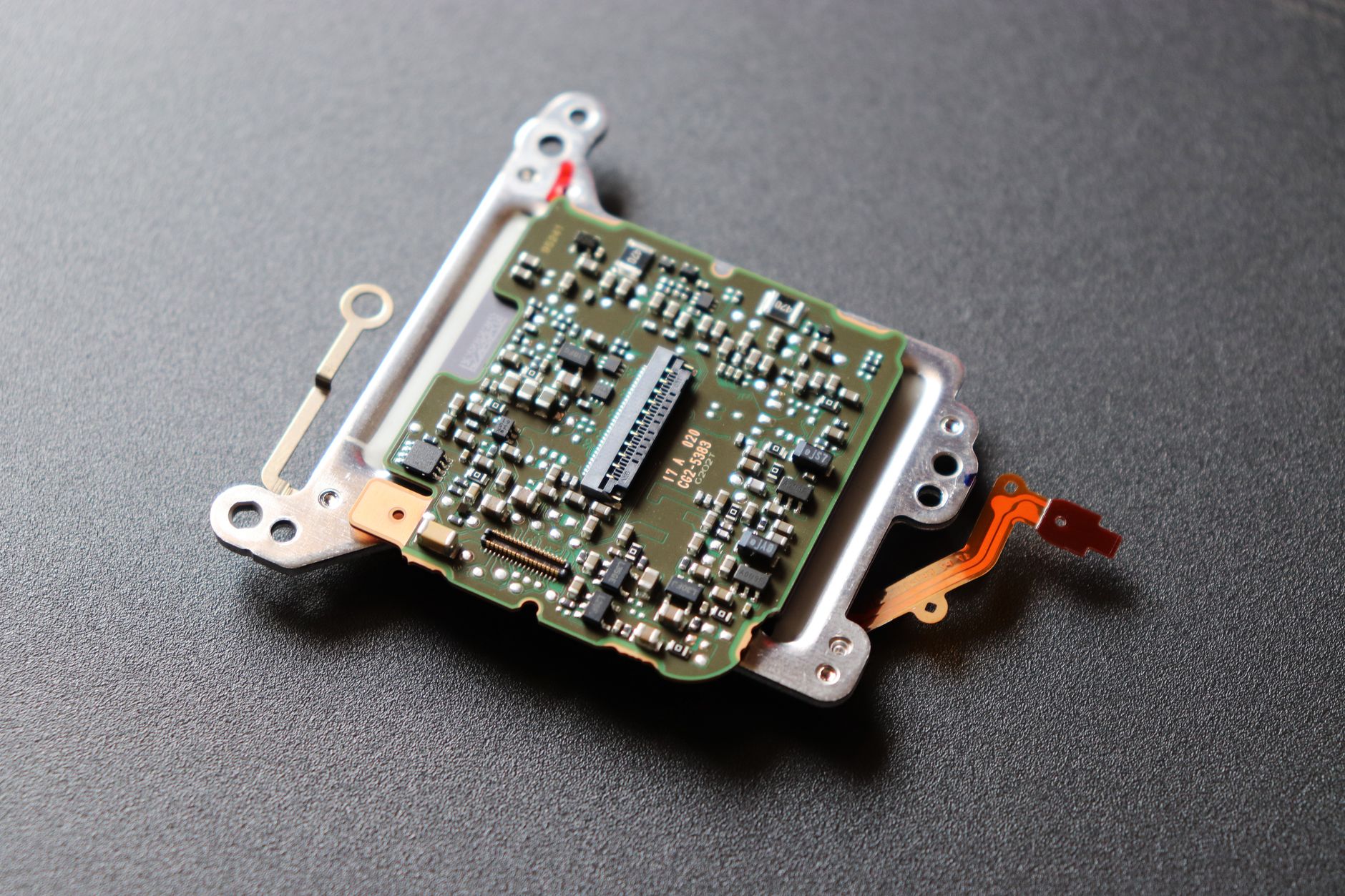
Photo by Sharath G. on Pexels
The Ethical Weight of Technical Debt
There is a profound ethical obligation attached to this engineering work. When we talk about "Copy That Floppy" initiatives, we are talking about the preservation of human intent. The source code for early medical systems, the drafts of foundational digital literature, and the architectural records of our modern infrastructure are all trapped on these decaying platters. If the engineers of today do not prioritize the creation of these digital bridges, we are effectively choosing to burn the library of the 1990s.
This is not a task that can be deferred. Unlike a Greek urn or a medieval manuscript, which can sit in a basement for centuries and remain largely intact, magnetic media has a hard expiration date. Every year we wait to standardize and fund large-scale recovery hardware is a year where a measurable percentage of our history turns into noise. The cost of the hardware—the FPGAs, the custom drive heads, the precision motors—is negligible compared to the permanent loss of the data they are designed to save.
The Limits of Emulation
While hardware emulators like the Gotek allow us to run old software on modern machines, they solve a different problem than data recovery. Emulation is about utility; preservation is about provenance. We need the physical bridges to move the data out of the danger zone of magnetic decay and into the relative safety of modern redundant storage. Relying on commercial vendors to provide these tools has proven to be a failure, as there is no sustainable profit margin in rescuing the past.
Innovation in this space is currently driven by a small, dedicated group of electrical engineers and archivists working in the open-source hardware movement. They are reverse-engineering proprietary disk controllers from defunct companies like IBM, Commodore, and Apple to ensure that no specific architecture is left behind. This work is tedious, expensive, and largely thankless, yet it is the only thing standing between our current records and a blank screen.
What This Actually Means
We must stop treating legacy data recovery as a niche nostalgia project and recognize it as a critical infrastructure requirement. The engineering of "digital bridges" is the 21st-century equivalent of carbon dating or archaeological preservation. If we do not master the ability to interface modern hardware with the physical remnants of the magnetic era, we will be the first civilization to leave behind a massive, unreadable void in the historical record.
Hardware designers have a responsibility to build for longevity, but they also have a responsibility to build for retrospection. The current trend toward specialized USB flux controllers and FPGA drive emulators is a start, but it needs to be integrated into a broader, institutionalized effort. We are in a race against the physical laws of magnetism. Currently, the magnetism is winning.
Quick Answers
What is the primary cause of bit rot on physical media?
Bit rot is caused by the gradual loss of magnetic orientation in the iron oxide particles on a disk, often accelerated by heat, humidity, and the breakdown of the chemical binders holding the particles to the plastic.
Why can't I just use a standard USB floppy drive to save my old disks?
Standard USB drives have simple controllers that cannot handle the weakened signals or non-standard formatting of older disks, leading them to report a disk as "corrupt" when the data is actually still recoverable with high-resolution hardware.
Is there a way to stop the decay once it starts?
No; you can only slow the decay through climate-controlled storage. The only permanent solution is to migrate the data to modern, more stable storage formats as soon as possible.