I keep thinking about the fact that we used to paint stars on glass. For decades, the magic of space cinema relied on a mix of matte paintings, lit ping-pong balls, and a healthy dose of artistic license that prioritized 'vibes' over orbital mechanics. But something shifted when we started getting back data that looked more cinematic than anything a human could dream up. Now, with the Odyssey Project and the rumors swirling around Christopher Nolan’s 2026 production, we aren’t just watching movies anymore; we’re watching visual proofs of physics.
There is a peculiar kind of serendipity happening right now. At the exact moment that ultra-high-resolution astronomical imaging is peaking—giving us crisp, terrifying views of the Martian surface and the swirling accretion disks of black holes—filmmakers are deciding that traditional CGI is too 'fake.' They aren't hiring digital artists to build worlds from scratch; they are hiring data scientists to port raw telemetry from the James Webb Space Telescope directly into the rendering pipeline. It’s a move from 'inspired by' to 'composed of.'
The Death of the Artist’s Impression
For a long time, the 'artist’s impression' was the gold standard for visualizing things we couldn't see. If a scientist discovered an exoplanet, an illustrator would draw a rocky sphere with some purple clouds and maybe a ring or two. It was a guess. A beautiful, educated guess, but a guess nonetheless. What’s happening with the 2026 Odyssey project is fundamentally different because it treats the laws of physics as the primary cinematographer.
When you use actual planetary data—topographical maps from the Mars Reconnaissance Orbiter or gravitational lensing simulations—you lose the ability to 'fudge' the shot for dramatic effect. You are beholden to the reality of the light. I wonder if this makes the filmmaking process more difficult or more liberating. In a world of infinite digital possibilities, constraints are usually where the best art happens. By locking himself into the 'Scientific Realism' of actual data, Nolan is essentially daring the universe to be interesting enough for an IMAX screen.
The $100 Million Simulation
We saw the precursor to this with Interstellar in 2014, where the team actually published a scientific paper on the rendering of the black hole Gargantua. But that was ten years ago. Since then, our processing power has exploded. We are now talking about 'Computational Serendipity'—the idea that by plugging real astrophysical equations into a film’s engine, the software might 'discover' a visual phenomenon that no director would have thought to ask for.
Imagine a scene where the lighting isn't determined by a technician, but by the actual calculated bounce-rate of photons off a simulated Saturnian ring system. It’s an expensive way to work, but it creates a psychological weight that the human eye can sense even if it can’t explain. We are remarkably good at spotting when gravity looks 'wrong' in a movie. By using real data as a digital set, these films bypass our internal 'uncanny valley' filters. We stop looking at a screen and start looking through a window.
A New Era of Visual Proofs
There’s a deeper question here about what cinema is actually for. If a blockbuster like The Odyssey uses 2026-era astronomical imaging to recreate a journey through the Jovian system, is it still just entertainment? Or has it become a high-budget public service announcement for the beauty of the cosmos? We are seeing Hollywood studios effectively fund the most expensive astrophysical visualizations in history—work that NASA or ESA could never afford on a government budget.
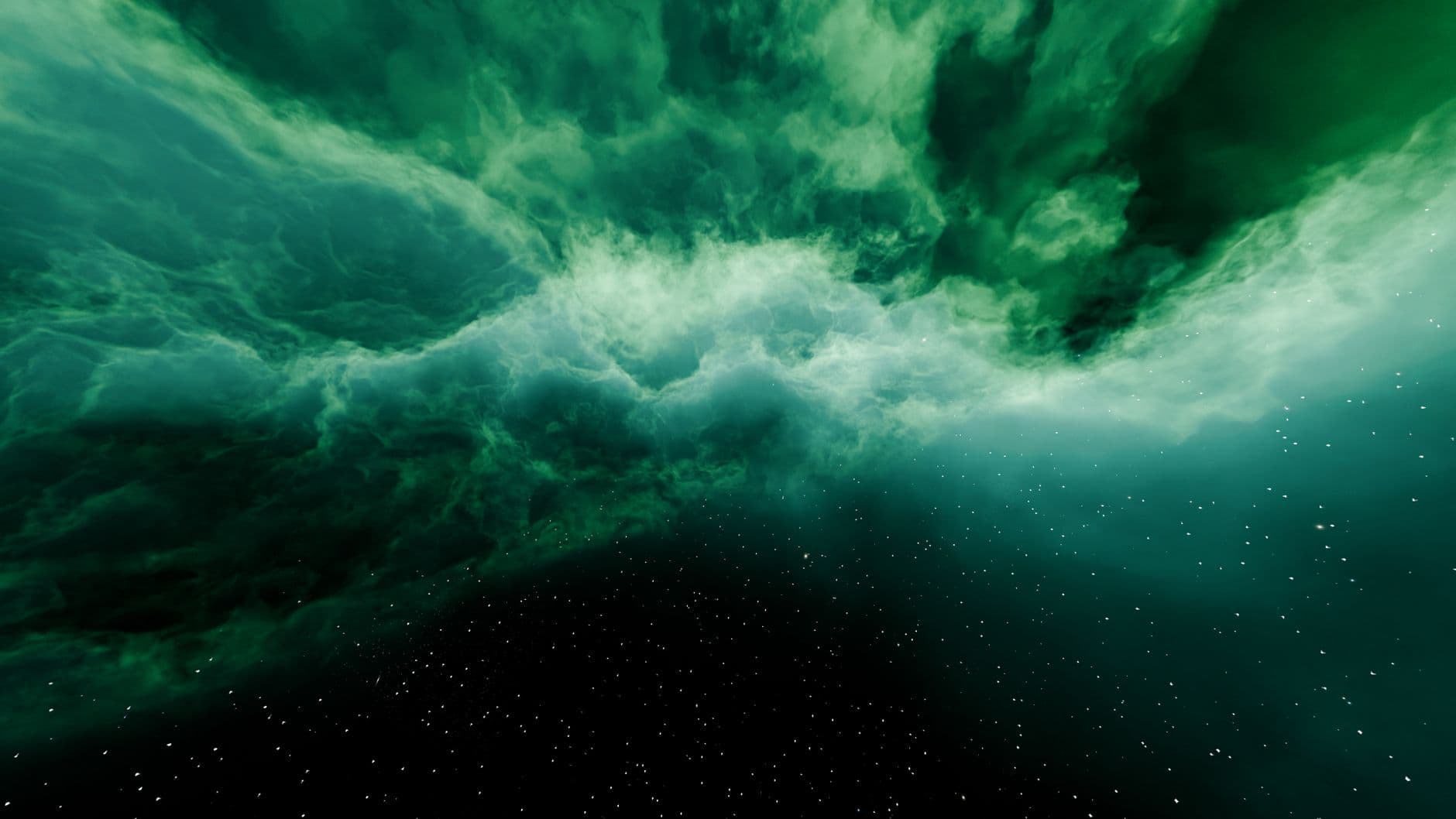
- Real-time ray tracing of light through nebulae based on gas density data.
- Gravity simulations that dictate the exact movement of every 'digital' dust particle.
- Surfaces mapped from 8K lunar photography.
This isn't just about the 'cool factor.' It’s about the democratization of the sublime. Most of us will never look through a research-grade telescope, but we will sit in a theater and see exactly what that telescope sees, projected 80 feet tall. It’s a strange, beautiful loop: science discovers the world, and cinema makes us fall in love with the data.
What This Actually Means
We are moving toward a future where the distinction between 'science' and 'media' is purely about the intent, not the content. If the data is the same, the only difference between a laboratory simulation and a Hollywood set is the presence of a script. This 'Scientific Realism' might actually change how we perceive our place in the universe. When the images on screen are no longer fantasies but high-fidelity recreations of places that actually exist, the 'final frontier' feels a lot less like a metaphor and a lot more like a destination.
I find myself wondering if this will eventually kill our imagination, or if it will simply provide a sturdier floor for it to stand on. If we know exactly what a black hole looks like, do we lose the mystery? Or does the mystery just move deeper into the parts of the data we haven't rendered yet? I suspect it's the latter. Every time we get a clearer picture of the universe, we don't find fewer questions—we just find better ones.
Ultimately, the Odyssey Project and Nolan’s involvement represent a shift in human storytelling. We are finally at a point where the truth is more spectacular than anything we could invent. We don't need to make things up anymore; we just need to build better cameras and faster computers to see what's already there.
Quick Answers
Is 'The Odyssey' a remake of the Greek epic?
While details are under wraps, the 2026 project is widely believed to be a space-faring reimagining that mirrors the themes of Homer's journey through the lens of modern astrophysics.
Why use real data instead of just hiring good CGI artists?
Real data provides a level of complexity and 'accidental' detail that humans struggle to invent, creating a sense of physical presence that traditional animation often lacks.
Does this mean the science in the movie will be 100% accurate?
Not necessarily, as drama still requires some creative leaps, but the 'visual landscape' will be grounded in actual astronomical measurements rather than pure fantasy.