We are about to witness the greatest magic trick in the history of civil engineering. In the summer of 2026, millions of international soccer fans will descend upon North America, expecting the seamless, high-speed rail networks of Europe or East Asia. Instead, they will be dropped into the sprawling, asphalt-baked reality of Arlington, Texas, and East Rutherford, New Jersey, where the local transit strategy has traditionally been "just buy a car or survive at your own risk."
But do not worry. Our brilliant municipal leaders have a plan, and it is called "temporary urbanism." Rather than spending the billions of dollars and decades of political capital required to build actual, permanent transit infrastructure, host cities are opting for the ultimate life hack: pretending. For a few glorious weeks, we are going to throw down some traffic cones, paint some temporary bus lanes, create "pedestrian fan miles" out of highway shoulders, and pray the entire illusion does not collapse under the weight of 80,000 dehydrated tourists.
The Magic of the Temporary Bus Lane
Take Miami, for instance. Hard Rock Stadium sits comfortably in Miami Gardens, surrounded by a glorious moat of parking lots and a distinct lack of heavy rail. The solution? Rapid-build Bus Rapid Transit (BRT). This is a fancy term for putting plastic pylons on a regular road and telling bus drivers to drive really fast.
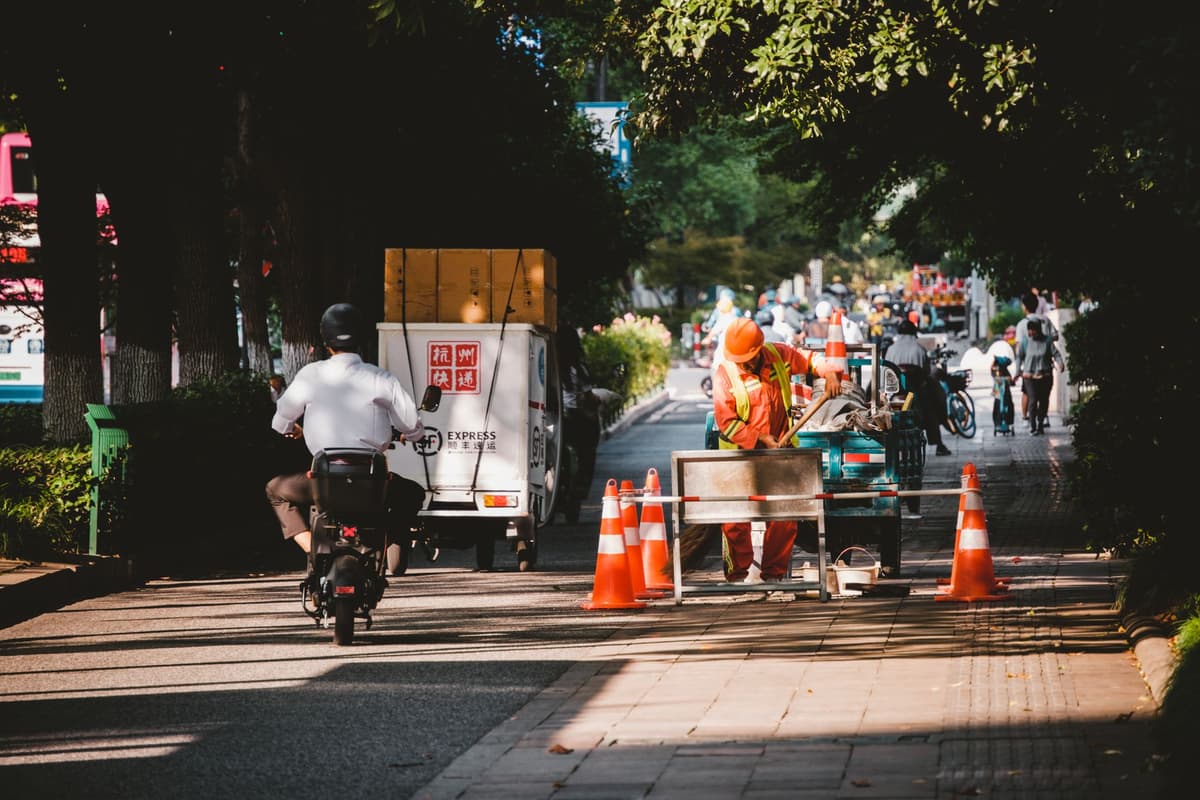
It is a beautiful concept. We are told this "tactical urbanism" is actually a high-stakes laboratory. We are not cheap; we are experimenting. By using temporary materials, cities can test if transit-oriented models work before making them permanent. It is the civil engineering equivalent of trying on a shirt at the mall, except the shirt costs $15 million in federal grants and if it does not fit, everyone has to walk five miles in the humidity.
Of course, the moment the trophy is raised and the crowds leave, those plastic pylons will be scraped off the asphalt faster than you can say "six-lane stroad." The suburban commuters will demand their lanes back, the politicians will congratulate themselves on a successful green initiative, and the paint will fade into a beautiful memory of that one month we pretended to be Copenhagen.
The Three-Mile Hike of Joy
Then we have the "fan miles." Because many of these stadiums were built on the assumption that humans only exist inside steel cages on wheels, getting from the nearest train station to the actual gate is a journey of epic proportions. MetLife Stadium in New Jersey is famously isolated, surrounded by a swamp of highways.
To bridge this gap, planners are designing pedestrianized corridors. You will not be walking through a quaint European plaza with outdoor cafes and buskers. You will be walking along a designated path next to a state route, shielded from eighty-mile-per-hour traffic by temporary concrete barriers and the sheer power of optimism.
- Fans will enjoy the scenic views of industrial shipping containers.
- Hydration stations will be set up to prevent spontaneous combustion in the 95-degree June heat.
- Security guards will ensure no one wanders off the designated asphalt path into the actual highway.
This is not a failure of design; it is an active choice. It is "active transportation." We are helping you get your steps in. If you did not want to walk three miles through an industrial park to watch a group stage match, you should have chosen a country with trains.
The $300 Million Band-Aid
Let us look at the math. Millions of dollars are being poured into these temporary fixes. Vancouver is looking at massive transit upgrades, and Dallas is trying to figure out how to move people across a metroplex that is larger than the entire country of Montenegro without making them rent a Suburban.
We are spending millions to build infrastructure designed to be torn down. It is the ultimate manifestation of our commitment to the automobile. We would rather spend $300 million on a temporary stage set of a functioning city than actually commit to building a train line that might inconvenience a single driver during the morning commute.
This is the real genius of the 2026 World Cup strategy. It allows cities to claim they are embracing the future of urban planning without actually having to live in it. We get the good PR, the Instagram photos of people riding shuttle buses, and the satisfaction of knowing that by August 2026, we can go right back to sitting in three hours of traffic on the Interstate.
What This Actually Means
If you want to know what a city truly values, look at what it builds out of concrete and what it builds out of plastic. The highways leading to these stadiums are concrete. The rail links are plastic.
Temporary urbanism is not a laboratory; it is an alibi. It is a way for cities to pretend they are doing something about sustainability and transit while ensuring that nothing actually changes for the permanent residents who will be left with the same old car-dependent wasteland the moment the circus leaves town.
When the tournament ends, the cones will be stacked in a warehouse, the temporary bus lanes will be reclaimed by SUVs, and we will return to our regularly scheduled programming. But hey, at least for thirty days, we got to pretend we lived in civilization.
Quick Answers
Why can't they just build permanent train lines for the stadiums?
Because building permanent rail infrastructure takes decades of environmental reviews, billions of dollars, and political courage, whereas buying 5,000 orange traffic cones can be done on Amazon Prime in two days.
Will the temporary bus lanes actually work during the tournament?
They will work beautifully as long as you do not mind sitting in a bus that is stuck behind three Uber drivers who got confused by the temporary signs and stopped in the middle of the lane.
What happens to all the temporary transit infrastructure after the World Cup?
It will be lovingly disassembled and placed into a landfill, leaving behind nothing but some faded white paint on the road and a series of very expensive municipal reports about "lessons learned."