We should all offer a moment of silent gratitude to the public relations geniuses who realized you can sell a lack of preparation as a cutting-edge architectural philosophy. As North America prepares to host the 2026 FIFA World Cup across 16 different cities, municipal governments have hit upon a brilliant strategy to avoid the traditional post-tournament hangover of crumbling, empty stadiums. They are calling it "adaptive urbanism."
In the old days, a city hosting a massive sporting event would spend billions of dollars building a massive, state-of-the-art stadium that would sit entirely empty for the next three decades, slowly gathering dust and debt. Now, thanks to the magic of modular design, we get to spend millions of dollars on high-tech scaffolding and temporary plastic seats that we will promptly throw into a dumpster the moment the final whistle blows. It is a triumph of modern efficiency.
The High-Tech Scaffolding Revolution
Take a look at Toronto, where BMO Field needs to magically expand its capacity to meet FIFA’s strict 45,000-seat minimum. Rather than doing something dreadfully permanent and useful, the city is spending an estimated $390 million CAD of public money to slap together temporary stands that look remarkably like the bleachers at a well-funded high school track meet, only with better branding.
This is the soul of modular urbanism. It is the architectural equivalent of buying disposable paper plates for a dinner party because you are too lazy to wash the dishes, and then telling your guests that you are pioneering a zero-impact, ephemeral dining experience.
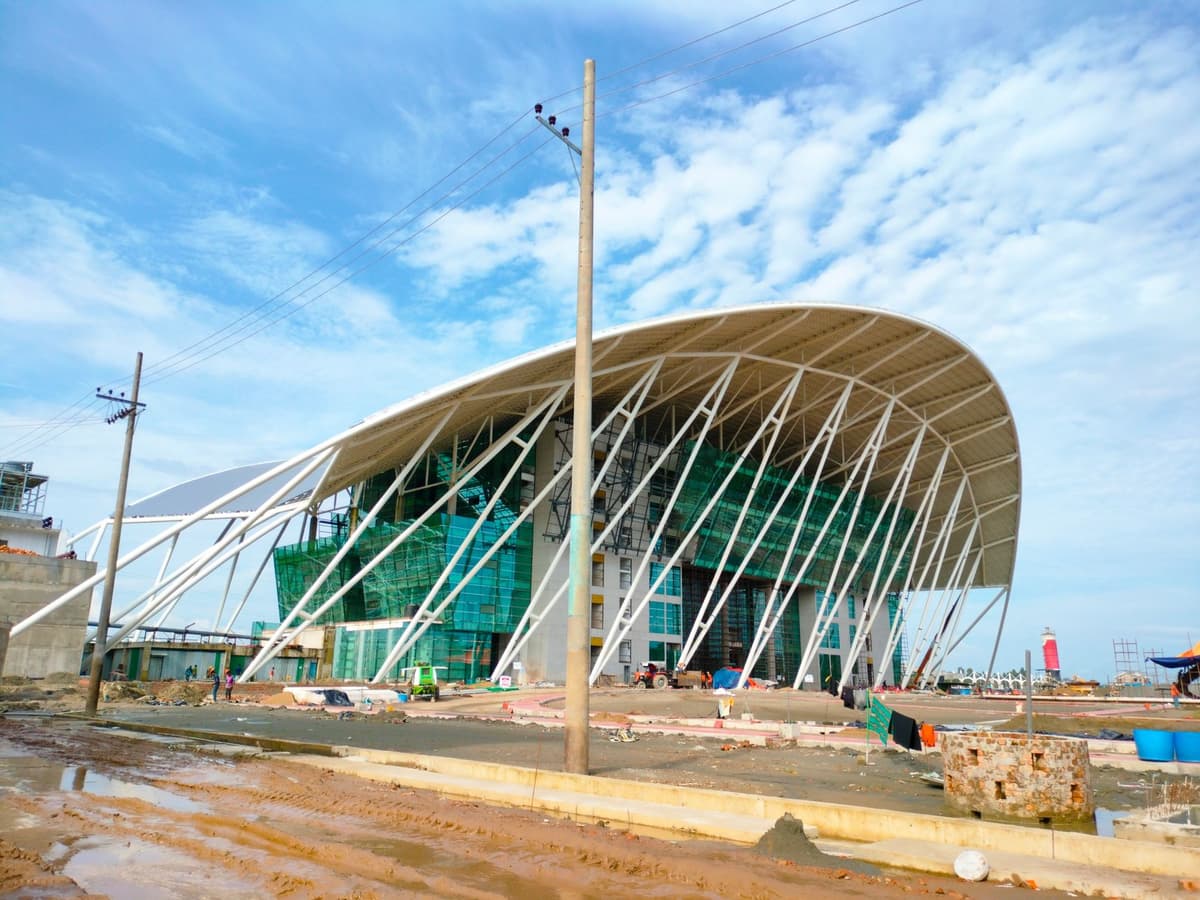
Photo by Abdur Rashid on Pexels
By utilizing temporary steel structures, host cities can handle the sudden influx of millions of fans without permanently altering their skylines. Of course, this also means taxpayers are funding construction projects that will literally vanish in two months, leaving behind nothing but a slightly more compressed patch of grass and a massive bill.
Shipping Container Chic and Pop-Up Plazas
It gets better. The real genius of the 2026 plan lies in the transit hubs and fan zones. Because our cities were designed for cars rather than human beings, we do not actually have the physical space to accommodate 100,000 drunk tourists wandering around our downtown cores.
The solution? Shipping containers. Thousands of them.
- Temporary "fan activation zones" built from stacked cargo crates that will be hauled away by semi-trucks in July.
- Modular security checkpoints that can be assembled in a parking lot and disassembled before the asphalt melts.
- Pop-up bus lanes demarcated by plastic cones that will disappear, returning the streets to their rightful state of permanent gridlock.
We are told this is a sustainable, circular economy approach. It is certainly circular for the contractors, who get paid once to put the containers up, and then get paid a second time to take them down. Meanwhile, the actual, permanent public transit systems in cities like Atlanta and Dallas will remain just as underfunded and unusable as they were before FIFA rolled into town.
The Sustainable Art of Doing the Bare Minimum
There is something genuinely beautiful about the audacity of rebranding logistical panic as environmental stewardship. FIFA has historically demanded that host countries build shiny new monuments to soccer, regardless of the human or financial cost. In Qatar, that meant spending an estimated $220 billion.
But North America has pioneered a new path: the art of doing the bare minimum and calling it "light-touch architecture." By refusing to build new transit lines and instead relying on temporary shuttle buses, we are saving the planet. By refusing to build permanent housing for visitors and instead letting short-term rental platforms destroy the local housing market for a month, we are practicing "flexible asset utilization."
It is a masterclass in low-stakes hosting. We get all the traffic, all the noise, and all the inflated beer prices, with absolutely none of the lasting infrastructure that might actually justify the disruption to daily life.
What This Actually Means
Adaptive urbanism is not a design revolution; it is a financial survival strategy disguised as progress. It is the realization that municipal budgets are so thoroughly depleted that we can no longer afford to build the white elephants of the past, so we are leasing gray mice instead.
When the circus leaves town in the summer of 2026, the temporary stands will be dismantled, the shipping containers will return to the ports, and the pop-up plazas will revert back to parking lots. The cities will look exactly as they did in 2025, only slightly poorer and with a lot of leftover branded lanyards.
But at least we won't have an empty 80,000-seat stadium to maintain. Instead, we will have the fond memory of the time we spent millions of dollars on premium scaffolding, proving once and for all that the most sustainable building is the one you immediately demolish.
Quick Answers
Why aren't cities building new stadiums for the 2026 World Cup?
Because they are broke and have finally realized that building an 80,000-seat stadium for a four-week tournament is financial suicide.
What happens to all the temporary infrastructure after the tournament?
It gets disassembled, packed into trucks, and either sold for scrap or stored in a warehouse until another city decides to host an event they can't afford.
Is this actually better for the environment?
Only in the sense that demolishing a temporary steel structure produces slightly less carbon than letting a massive concrete stadium slowly decay over fifty years.