The smart home industry has spent a decade selling us a lie. We were told that for a light switch, a microwave, or a thermostat to understand a spoken command, it needed to route our voices through a data center hundreds of miles away. This architecture was never about technical necessity. It was a compromise born of lazy engineering and a desire to harvest consumer data.
That compromise is no longer justifiable. A quiet revolution in embedded software has shrunk high-quality text-to-speech (TTS) and automatic speech recognition (ASR) engines into footprints smaller than half a megabyte. By packing sophisticated voice interfaces into less than 500kb, developers are proving that the expensive, privacy-invasive cloud pipeline was always a temporary crutch.
The Anatomy of the 500kb Breakthrough
To understand why this matters, we have to look at the sheer inefficiency of modern consumer tech. For years, standard voice assistants required gigabytes of RAM and constant internet connections to process basic commands. If your internet dropped, your $200 smart speaker became a paperweight.
Engineers achieved this sub-megabyte breakthrough not by relying on massive neural networks, but by returning to highly optimized, algorithmic mathematics. They are using techniques like deep quantization, which compresses 32-bit floating-point parameters down to 4-bit or even 2-bit integers, alongside highly efficient acoustic modeling.
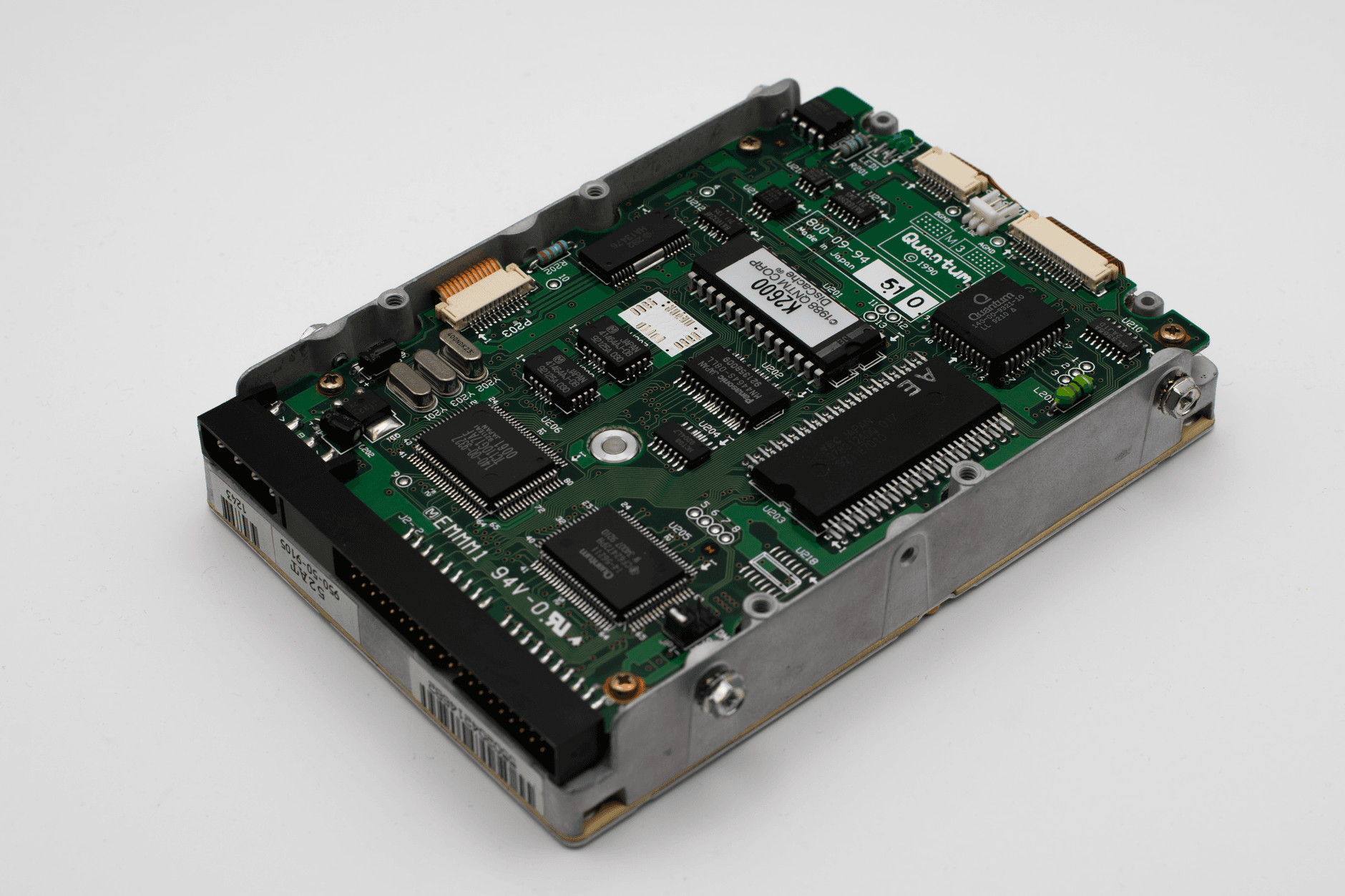
This means a microchip costing less than $0.50—hardware that has been considered legacy for a decade—can now process complex natural language locally. It requires milliwatts of power and zero bandwidth. The implications for manufacturing are staggering, but the implications for the consumer are even larger.
Ending Planned Obsolescence
When a company decides to shut down its servers, its smart products die. We saw this when Alphabet's Nest killed the Revolv hub, and we see it every time a smart home startup goes bankrupt. Your physical hardware is held hostage by a corporate balance sheet.
Offline voice engines change the lifecycle of electronics entirely. A washing machine equipped with a 500kb local voice interface will still understand "start delicate cycle" twenty years from now, regardless of whether the manufacturer still exists.
- Devices become permanent tools rather than temporary subscriptions.
- Maintenance costs for manufacturers drop to zero since they no longer host server infrastructure.
- Electronic waste decreases as functional hardware is no longer bricked by software deprecation.
This is not a minor upgrade; it is a fundamental shift in how we define ownership in the digital age.
The Uncompromised Privacy Frontier
Privacy has long been treated as a premium luxury or an inconvenient afterthought. Consumers were forced to accept a Faustian bargain: hand over your household audio data to tech giants, or live without the convenience of modern automation.
Local processing removes the security risk entirely. When a device lacks the physical hardware or network stack to connect to the internet, it cannot leak your data. There are no voice recordings stored on remote servers, no terms of service that can be unilaterally changed, and no vulnerability to cloud-based data breaches.
Photo by www.kaboompics.com on Pexels
By keeping the data on the silicon, we eliminate the attack surface. This is particularly critical for sensitive environments like bedrooms, bathrooms, and medical facilities, where internet-connected microphones areifiably viewed with deep suspicion.
What This Actually Means
We are moving toward an era of "atomic gadgets"—fully autonomous, highly capable devices that do not rely on an invisible life support system. This shift will dismantle the centralized monopoly that a handful of cloud providers hold over the smart home market.
This technology forces us to re-evaluate what makes a device "smart." True intelligence is not a product of how much data a device can send to a server; it is a measure of how efficiently it can solve a problem locally.
When the history of consumer technology is written, the era of the cloud-dependent smart home will be viewed as a bizarre detour. The future belongs to independent, resilient hardware that respects both your privacy and the longevity of the physical objects you buy.
Quick Answers
How can voice recognition fit into less than 500kb?
By using advanced mathematical compression techniques like quantization and pruning, engineers can shrink language models to run on tiny, inexpensive microcontrollers without losing accuracy.
Will these local offline devices perform as well as Alexa or Siri?
For specific, domain-control tasks like operating an appliance or adjusting lighting, they perform faster because there is no network latency. They do not, however, answer general knowledge trivia.
Are any products using this technology right now?
Yes, industrial equipment and high-end medical devices have begun adopting offline voice chips, and the technology is rapidly trickling down to consumer appliances and home automation tools.