
Our eyes are tired. Every screen in our lives now demands that we look at a world sharper than the one we actually inhabit, polished by algorithms and upscaled by artificial intelligence until reality itself feels like a rendering. In response, a quiet but stubborn resistance is forming among artists, developers, and digital minimalists who are actively breaking their files, stripping away metadata, and embracing the jagged, artifact-heavy edges of the low-resolution JPEG.
This is not the predictable cycle of vintage nostalgia that brings back vinyl records or film cameras. This is a deliberate, political rejection of the modern web’s infrastructure and the uncanny valley of algorithmic perfection. By choosing the degraded image, these creators are drawing a line in the sand against a digital ecosystem that has become bloated, hyper-surveilled, and suffocatingly clean.
The Violence of Computational Perfection
To understand the rise of intentional degradation, we have to look at what has been done to our visual environment. The average webpage size has ballooned to over 2.2 megabytes, largely driven by massive, high-definition image assets and tracking scripts. At the same time, platforms like Instagram and YouTube use aggressive, real-time sharpening algorithms to make every upload look artificially crisp, stripping away the natural texture of light and shadow.
When every image is subjected to computational enhancement, we lose our grip on authenticity. AI upscaling tools do not actually retrieve lost detail; they hallucinate what they think should be there based on probability. The result is a sterile, hyper-smooth aesthetic where human skin looks like molded plastic and landscapes look like video game assets.
Choosing a 15-kilobyte JPEG with visible compression blocks is an act of preservation. It preserves the boundaries of the original moment. A highly compressed image does not lie to you about what it is; it confesses its limitations immediately, offering a relief from the exhausting task of discerning what is real and what has been mathematically generated.
The Environmental Cost of the Infinite Canvas
There is a material reality to our digital indulgence that we routinely ignore. The data centers powering our high-fidelity internet are projected to consume up to 8% of global electricity by 2030. Every 4K image we casually scroll past contributes to a physical supply chain of energy, water cooling, and carbon emissions.
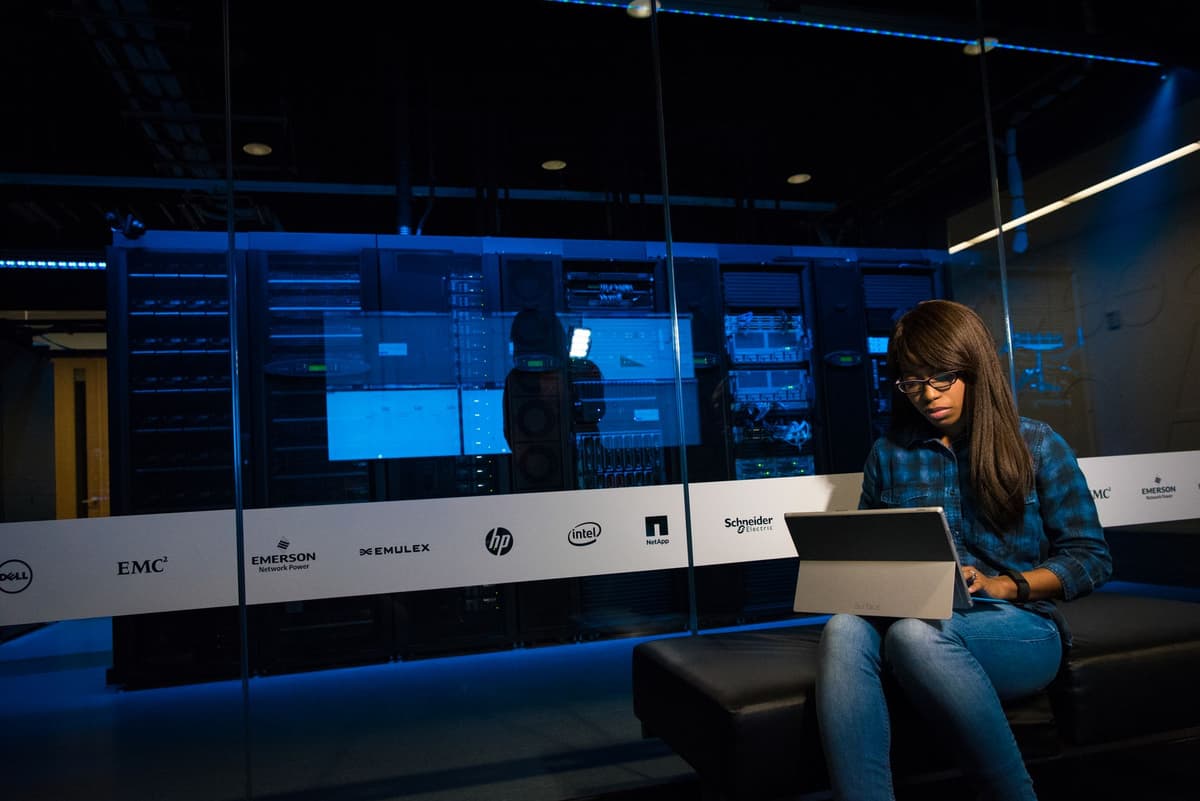
Photo by Christina Morillo on Pexels
The intentional use of regressive JPEGs is an aesthetic philosophy that doubles as a carbon-reduction strategy. A website built with heavily compressed images loads instantly, even on ancient hardware or weak cellular connections. It respects the user's bandwidth and attention.
- Low-resolution assets reduce the thermal load on local processors, extending device lifespans.
- Bypassing modern content delivery networks removes layers of tracking and optimization scripts.
- The aesthetic forces a return to editorial discipline, where an image must carry weight through its composition rather than its sheer pixel count.
By refusing to participate in the arms race of resolution, digital minimalists are building a parallel web that is faster, lighter, and remarkably more resilient than the fragile, high-bandwidth platforms we currently rely on.
The Right to Decay in a Digital Archives
We have built a digital culture obsessed with permanence and preservation, yet we have forgotten the value of rot. In the physical world, objects degrade gracefully. A photograph fades; paper yellows; dust settles in the grooves of a record. This decay is a marker of time, a physical proof of existence.
On the modern web, files are kept in a state of suspended animation, constantly refreshed, cached, and upscaled to meet current display standards. The regressive JPEG reintroduces the concept of digital entropy. When an image is saved, re-saved, compressed, and shared across decentralized networks, it accumulates scars.
These compression artifacts—the blocky noise in the shadows, the color bleeding around sharp edges—are the digital equivalent of a patina. They tell a story of transit. They prove the image has traveled, been handled by humans, and survived the journey through the pipes of the internet without being sanitized by a corporate platform's optimization engine.
What This Actually Means
The embrace of low-resolution imagery is not a retreat from technology, but a demand for a more human scale within it. It is an acknowledgment that our sensory systems were not designed for the endless, high-frequency stimulation of ultra-high-definition displays.
When we strip away the bloat, we find that meaning does not require high bandwidth. A heavily compressed image forces the viewer to fill in the blanks, engaging the imagination in a way that a sterile 4K render never could. It requires an active mind, not just a passive retina.
Ultimately, this subculture is warning us of a looming crisis of visual literacy. If we continue to let algorithms define what is beautiful and what is real, we will lose our ability to appreciate the imperfect, the fleeting, and the authentic. The jagged edge of a low-res JPEG is a reminder of what the internet used to be: a tool built by humans, for humans, flaws and all.
Quick Answers
Isn't this just another form of hipster retro-fetishism?
No. Unlike vinyl or film, which often require expensive, specialized analog equipment, the regressive JPEG uses the existing, highly accessible tools of the digital waste stream to reduce data consumption and bypass algorithmic smoothing.
Why not just use modern, efficient formats like AVIF or WebP?
While those formats are technically superior at saving space, they are designed to hide their compression. The goal of intentional degradation is to make the compression visible, using the artifacts as an expressive element that rejects artificial perfection.
How does this affect accessibility for average users?
It improves it significantly. Low-resolution, highly compressed sites load instantly on older devices and in regions with poor internet infrastructure, making information more democratic and less reliant on expensive, modern hardware.