The Philanthropy of the Black Box
It is truly heartening to watch multi-billion dollar entities trip over themselves to be the most generous person in the room while holding their pockets tightly shut. The current 'open-weights' movement is the tech equivalent of a chef giving you a finished cake and claiming they've shared the recipe, provided you don't ask about the ingredients, the oven temperature, or why there is a faint taste of scraped internet data in every bite. We are told this is a win for 'the community,' a vague group of people who are expected to be grateful for the crumbs of a trillion-parameter feast.
Meta, xAI, and the rest of the gang have realized that 'Open Source' is a fantastic vibe but a terrible business model. So, they’ve simply decided to keep the vibe and discard the actual definition. By releasing weights—the mathematical residue of a process no one is allowed to see—they get the free labor of thousands of developers who will bug-fix their products for them, all while the companies maintain an iron grip on the only thing that actually matters: the data. It is a beautiful arrangement where you do the work and they get the PR.
The Open Source Initiative is Ruining the Party
The Open Source Initiative (OSI) recently had the audacity to suggest that 'Open Source AI' should actually require, you know, the source. This includes the training data, the processing code, and the parameters. Naturally, the corporate world reacted as if they had been asked to donate a kidney. They argue that revealing the 15 trillion tokens of 'publicly available' data they scraped would be a security risk, or perhaps a privacy concern, or—more honestly—a massive legal liability that would make a copyright lawyer’s head spin.
- Transparency (Corporate Version): Telling you the model exists and letting you run it on your own $40,000 GPU cluster.
- Collaboration (Corporate Version): Letting you find the hallucinations they missed so they can fix them in the next proprietary version.
- Freedom (Corporate Version): A license that says you can do anything you want, unless you become successful enough to actually compete with them.
If we follow the logic of the 'open-weights' crowd, a locked safe is 'open' as long as you can see the serial number on the back. They want the halo of the Linux kernel without the inconvenience of actually letting anyone see how the sausage is made. It’s a bold strategy to redefine a forty-year-old movement just because it doesn't fit your quarterly growth projections, but if anyone can pull off a gaslighting campaign of this scale, it’s people who use the word 'disrupt' unironically.

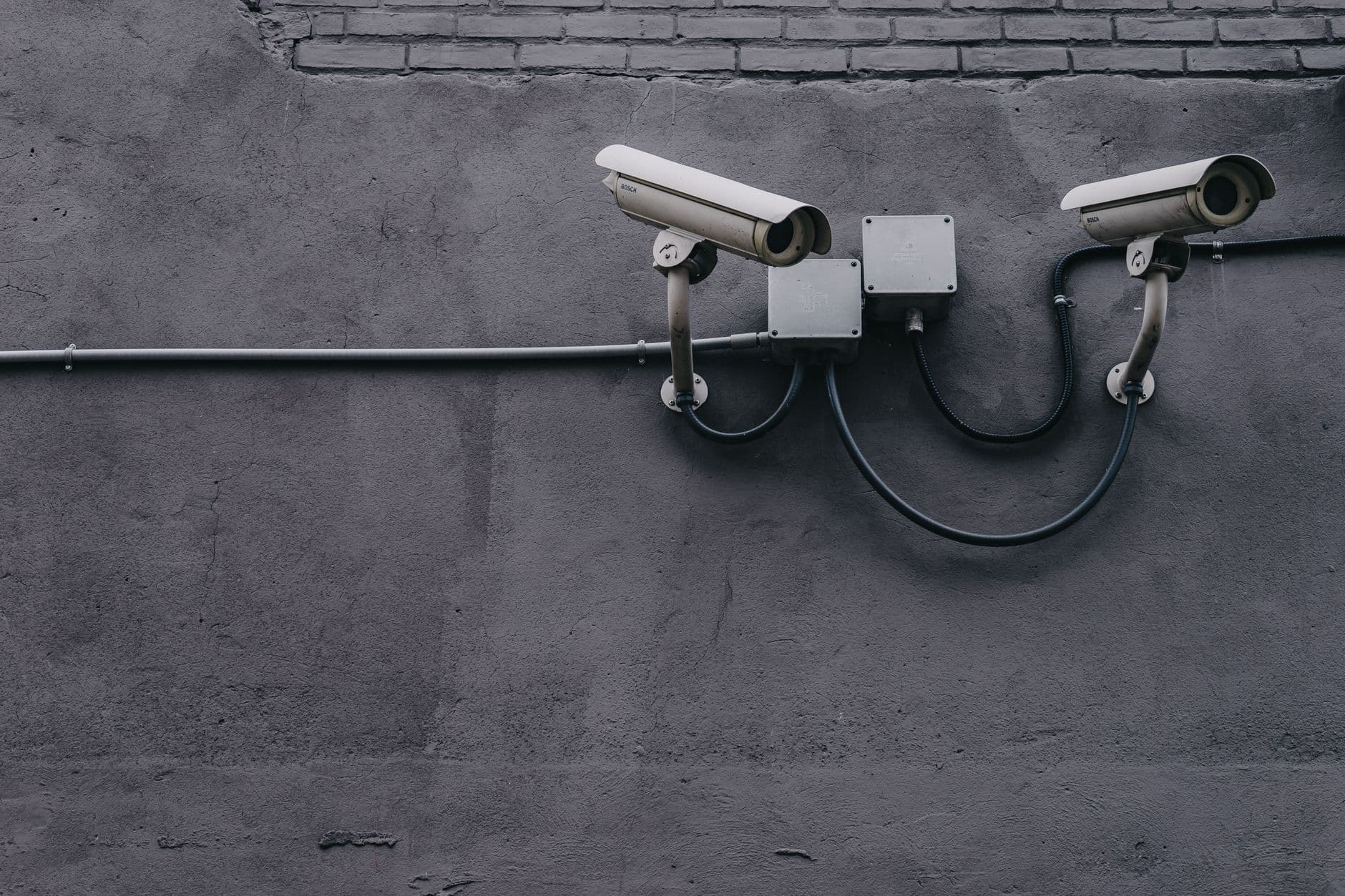
Photo by Wolfgang Vrede on Pexels
Protecting Us From Our Own Curiosity
The most touching part of this semantic war is the 'safety' argument. We are told that releasing the full training pipeline would be dangerous. Apparently, if we knew exactly which Reddit threads and pirated eBooks were used to teach a chatbot how to be mediocre at poetry, the social fabric might unravel. It is much safer for everyone if the data remains a mystery, guarded by the very corporations who have famously prioritized public safety over profit for… well, never.
By keeping the data secret, these companies ensure that no one can actually audit their biases or verify their claims of 'clean' datasets. It’s a convenient shield. If you can’t see the training data, you can’t prove they used your personal blog or that one paywalled news site to build their $200 billion valuation. It’s not a secret; it’s 'proprietary safety architecture.' It sounds much more professional when you put it in a white paper with a minimalist sans-serif font.
What This Actually Means
We are witnessing the birth of 'Faux-pen Source.' It is a marketing category designed to capture the hearts and minds of developers who grew up on the ethics of the GPL but now have mortgages to pay. By calling a model 'open' when it is merely 'available to download,' corporations are successfully diluting the definition of freedom until it is thin enough to see through. They aren't building a commons; they are building a fan club that doubles as an unpaid QA department.
This schism matters because once the word 'open' loses its meaning, the power to hold these systems accountable vanishes. If we accept that 'open-weights' is the same as 'open source,' we are settling for a future where we are allowed to use the tools, but never allowed to understand them. We become tenants in a digital landscape where the landlords are praised for their 'generosity' every time they let us paint the walls of a room we’ll never own.
Ultimately, if you can’t recreate the model from the instructions provided, it isn’t open source. It’s a demo. It’s a very impressive, very useful, very expensive demo that you are being allowed to play with until the terms of service change. We should probably stop thanking them for the privilege of being their beta testers.
Quick Answers
Is there a difference between open-weights and open-source?
Yes, one is a commitment to transparency and the other is a file transfer. Open source requires the recipe; open-weights just gives you the leftovers.
Why don't companies just release the training data?
Because 'publicly available' data is often 'copyrighted' data, and admitting that in a legal document is what lawyers call 'a very bad idea.'
Does this mean Grok and Llama are useless?
Not at all, they are incredibly powerful tools. They just aren't the democratic, transparent revolutions their marketing departments claim they are.
Will the OSI's new definition change anything?
Only if we care about words having meanings. Otherwise, we can just keep calling everything 'open' until the word is as hollow as a 'natural' label on a box of processed cereal.