The Infinite Spike in the Machine
I’ve been thinking about the Dirac delta function lately, which is a weird place for a brain to go on a Tuesday. In pure mathematics, it’s a conceptual monster—a point that is infinitely high and infinitely thin, but somehow has an area of exactly one. It shouldn't exist in the physical world, yet it’s the heartbeat of everything from signal processing to quantum mechanics. Now, a niche group of researchers is trying to turn this abstraction into the fundamental unit of a programming language called NoiseLang. They aren't trying to make code more precise; they’re trying to make it behave more like the messy, probabilistic universe it inhabits.
Traditional computing is obsessed with the binary wall. You have a one or a zero. If a stray cosmic ray flips a bit, the system breaks or throws an error because noise is the enemy. But NoiseLang treats variables as distributions rather than static values. When you declare a variable, you aren't pointing to a bucket in memory; you’re defining a probability spike. It’s a shift from "what is the value?" to "where is the value most likely to be?" and that distinction is where things get fascinating.
Why We Are Afraid of the Dark
For decades, the goal of hardware engineering has been noise suppression. We spend billions of dollars on shielding, error correction, and high-voltage thresholds just to make sure the hardware doesn't "hallucinate" a signal. It’s an expensive, energy-hungry war against entropy. Stochastic computing, the paradigm underpinning ideas like NoiseLang, suggests we’ve been looking at the problem backward. If we stop trying to suppress noise and instead use it as a computational resource, we might unlock a level of efficiency that binary systems can’t touch.
Think about how your brain works. You don't process a single pixel of light as a binary true/false state. You process a wash of noisy, conflicting signals and arrive at a probabilistic conclusion that there is a coffee cup on the desk. You do this on about 20 watts of power. A modern GPU trying to simulate that same level of recognition pulls hundreds of watts because it’s busy translating that organic noise into rigid, artificial math. NoiseLang is a peek into a world where the software finally speaks the same language as the atoms.
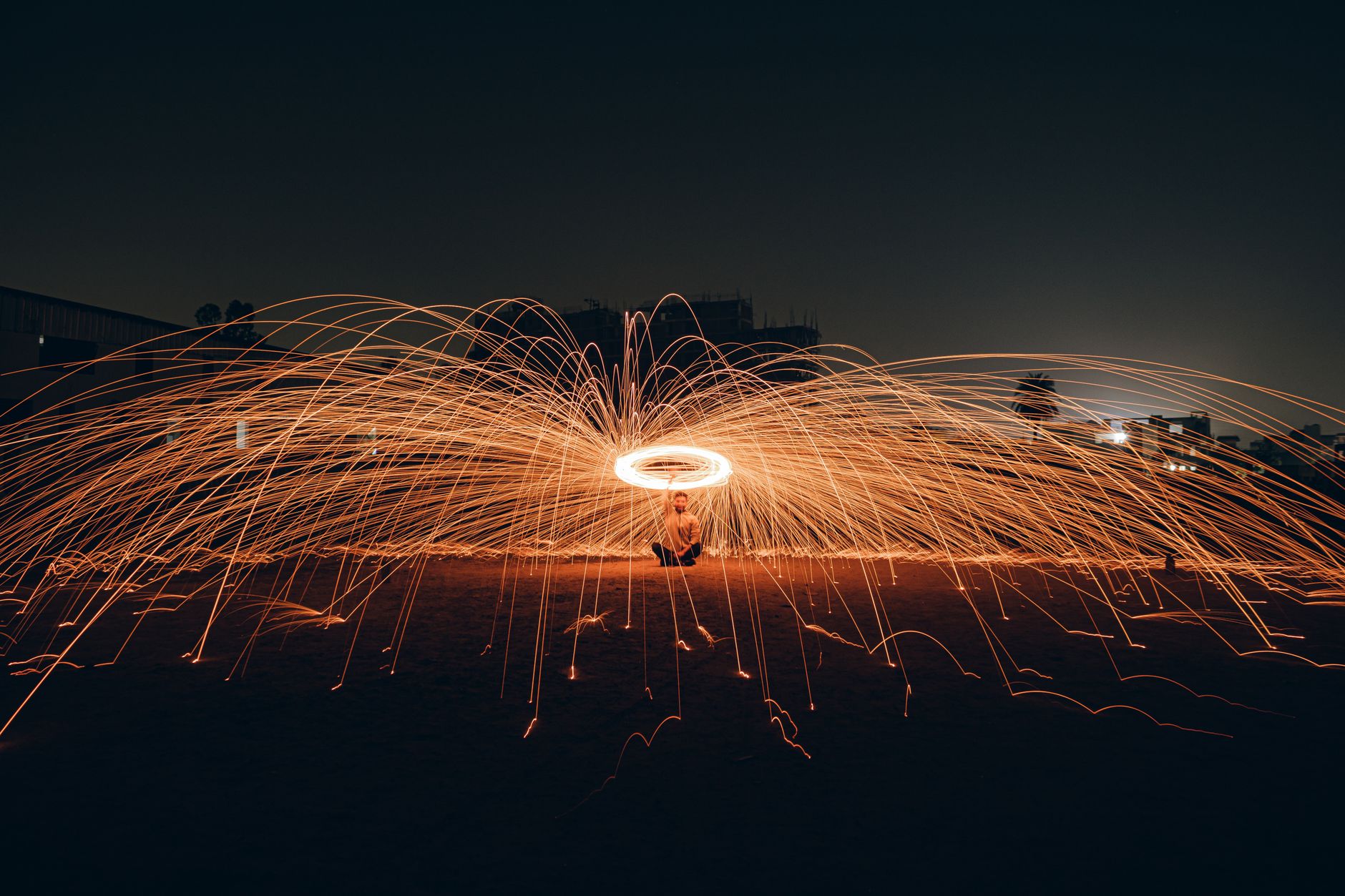
Photo by Kushal Verma on Pexels
The Mathematical Singularity Problem
There is a catch, and it’s why this is currently relegated to the fringes of computer science. When you treat every variable as a Dirac delta distribution, the math gets terrifyingly complex very quickly. In a standard computer, 2 + 2 is a trivial operation. In a stochastic system using NoiseLang-style logic, you are essentially convolving two probability distributions. If the math isn't handled perfectly, you hit what researchers call the "Computational Singularity"—a point where the uncertainty in the system compounds until the output is just white noise.
This isn't just a bug; it’s a fundamental limit of how much reality we can let into our chips before they stop being useful. I find myself wondering if this is actually a mirror of our own cognitive limits. We can handle a certain amount of nuance and "gray area," but eventually, if there’s too much noise, we lose the thread of reality entirely. Watching a program struggle to find a signal in a sea of delta functions feels uncomfortably close to watching a human try to find a fact in a sea of misinformation.
What This Actually Means
We are likely approaching the end of the line for traditional silicon scaling. We can't keep making transistors smaller without quantum tunneling making them too noisy to function. Instead of building bigger walls to keep the noise out, we’re going to have to learn how to compute with the noise. Languages like NoiseLang are the first, awkward steps toward a post-binary future where software looks less like a logic gate and more like a weather pattern.
If this succeeds, it changes the definition of "correctness." We won't ask if a computer got the right answer; we’ll ask if it’s confident enough in its answer for us to act on it. It’s a move away from the cold certainty of the 20th century toward a more fluid, organic kind of intelligence. It’s messy, it’s difficult to debug, and it’s arguably much more honest about how the universe actually functions.
I don't know if I want my bank using a stochastic language to calculate my balance, but I definitely want it running the AI that tries to understand the world. There’s a certain beauty in the idea that the very thing we’ve been trying to eliminate—noise—might be the key to the next great leap in thinking machines.
Quick Answers
Is NoiseLang something I can download and use today?
Not unless you have a PhD and a very specific set of hardware simulators; it's currently a research-grade tool for exploring theoretical limits.
Does this mean computers will start making more mistakes?
In a way, yes, but they will be "calculated" mistakes that allow for massive gains in speed and power efficiency for tasks like image recognition or climate modeling.
Why use the Dirac delta function specifically?
It serves as a perfect mathematical bridge between the discrete world of digital bits and the continuous, messy world of analog physics.