The Ghost of the Extreme Sports Dream
There was a specific window of time, roughly between 2012 and 2015, where it felt like every human being on a bicycle, surfboard, or slightly steep hiking trail had a silver cube strapped to their head. Nick Woodman didn't just sell a camera; he sold the idea that your life was an IMAX movie waiting to happen. But lately, when I look at GoPro's market cap—which has cratered from a peak of nearly $13 billion in 2014 to hovering around $200 million today—I wonder if the 'dream' was actually a finite resource that we simply used up.
It’s a strange paradox to witness. The hardware has never been better. The Hero 12 Black is a marvel of stabilization and ruggedness that would have seemed like alien technology a decade ago. Yet, the more perfect the tool becomes, the less the general public seems to care. I find myself wondering if GoPro is the victim of its own success, having built a product so durable and capable that nobody actually needs to buy a new one every two years.
The Smartphone Gravity Well
We have to talk about the computational monster in your pocket. Apple and Samsung aren't just making phones; they are building the most sophisticated cameras in history, backed by silicon that can process light in ways a standalone hardware company simply can't afford to develop from scratch. When the iPhone 13 introduced "Cinematic Mode" and improved its IP68 water resistance, it wasn't just a feature update. It was an existential threat to every specialized device that lives in the mid-range.
I catch myself thinking about the friction of the 'workflow.' To use a GoPro, you have to charge it, find the mounts, record the footage, transfer it to a phone or PC, edit it, and then share it. To use a phone, you just... hit record. In a world governed by the path of least resistance, how does a specialized tool survive when the 'good enough' tool is already in your hand? Is the gap between 'smartphone footage' and 'action cam footage' wide enough to justify a $400 barrier to entry for anyone who isn't jumping out of a plane?
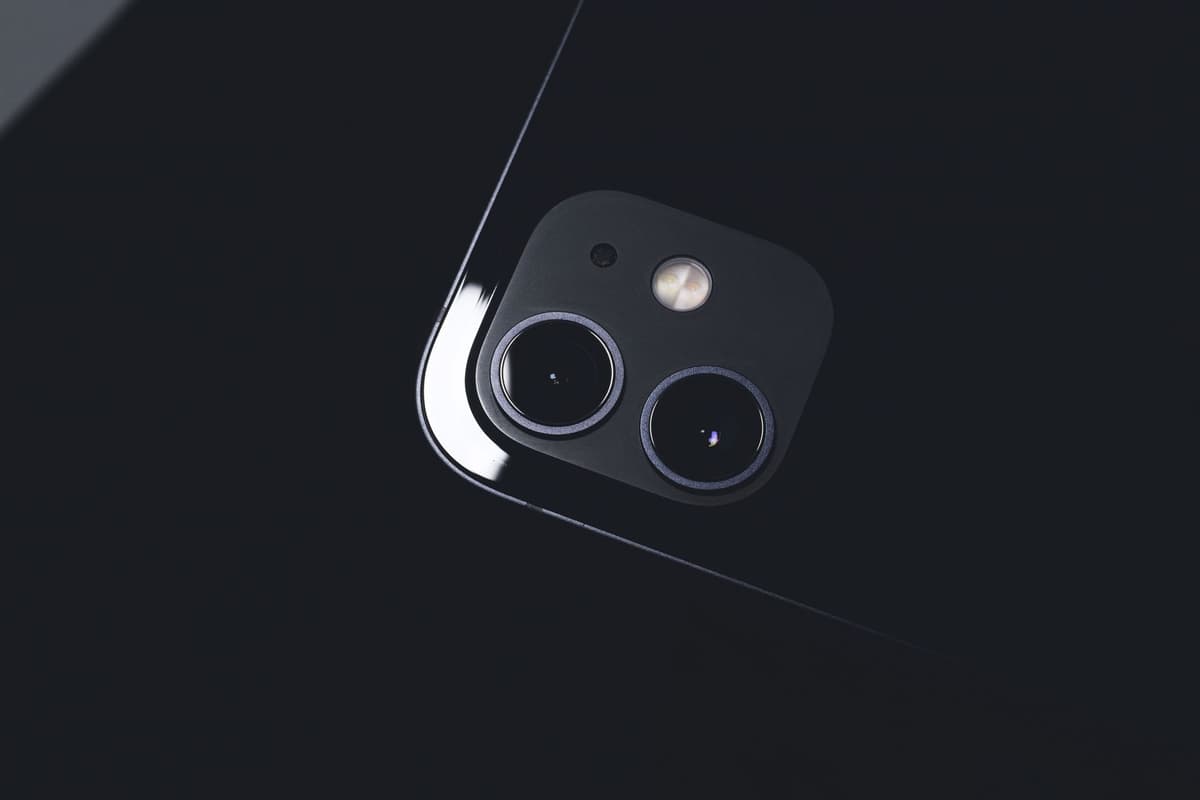
Photo by Calil Encarnación on Pexels
The DJI Shadow and the Niche Trap
Then there is the pressure from the East. DJI didn't just stay in the air; they landed on the ground and started eating GoPro's lunch with the Osmo series. Because DJI owns the drone market, they have a massive R&D budget for gimbal stabilization and sensor tech that they can trickle down into handheld cameras. GoPro is essentially fighting a land war against a company that has already mastered the air, and they're doing it with a much smaller war chest.
This is what economists call the 'niche-trap.' If you are the best at one specific thing—like wide-angle, rugged video—you eventually saturate your audience. Once every skydiver and mountain biker has a GoPro, where do you go? You try to make a 360-camera (the Max), or you try to become a software subscription company. But at the end of the day, you are still a hardware company in an era where investors have a violent allergy to hardware margins. I wonder if it’s even possible for a single-product hardware company to remain a public titan anymore.
What This Actually Means
GoPro’s struggle is a harbinger for every 'specialized' gadget. We are seeing a Great Consolidation where our phones swallow everything—GPS units, point-and-shoot cameras, flashlights, and now, action cams. The only things that survive are the tools that offer something a phone physically cannot do, like high-end professional cinema rigs or specialized medical equipment. For GoPro, that 'physical impossibility' is getting smaller every year as phone glass gets tougher and sensors get smarter.
I don't think GoPro disappears, but I wonder if its future is as a boutique tool for the 1% of extreme athletes rather than a household name. There is something bittersweet about watching a company that taught us how to see the world from new angles get trapped in a frame it can no longer break out of. It’s not that they stopped innovating; it’s that the rest of the world caught up, and then they just kept walking.
Ultimately, the 'Hero' might just be tired. If the company gets bought out or goes private, it won't be because they failed to build a great camera. It will be because they succeeded so well that they made themselves redundant to everyone but the most daring among us. Maybe being a niche tool is a more honest existence than trying to please Wall Street's hunger for infinite growth.
Quick Answers
Is GoPro going out of business?
Not immediately, but their plummeting valuation and recent layoffs of about 4% of their workforce suggest a company that is desperately trying to trim its way to profitability.
Can't they just make a better camera than DJI?
They can and often do, but DJI's massive supply chain advantages and dominance in the drone market allow them to undercut GoPro on price and iterate on hardware faster.
Why don't they just make a smartphone?
That would be a suicide mission; the capital required to compete with Apple or Google’s R&D is billions of dollars beyond what GoPro has in the bank.