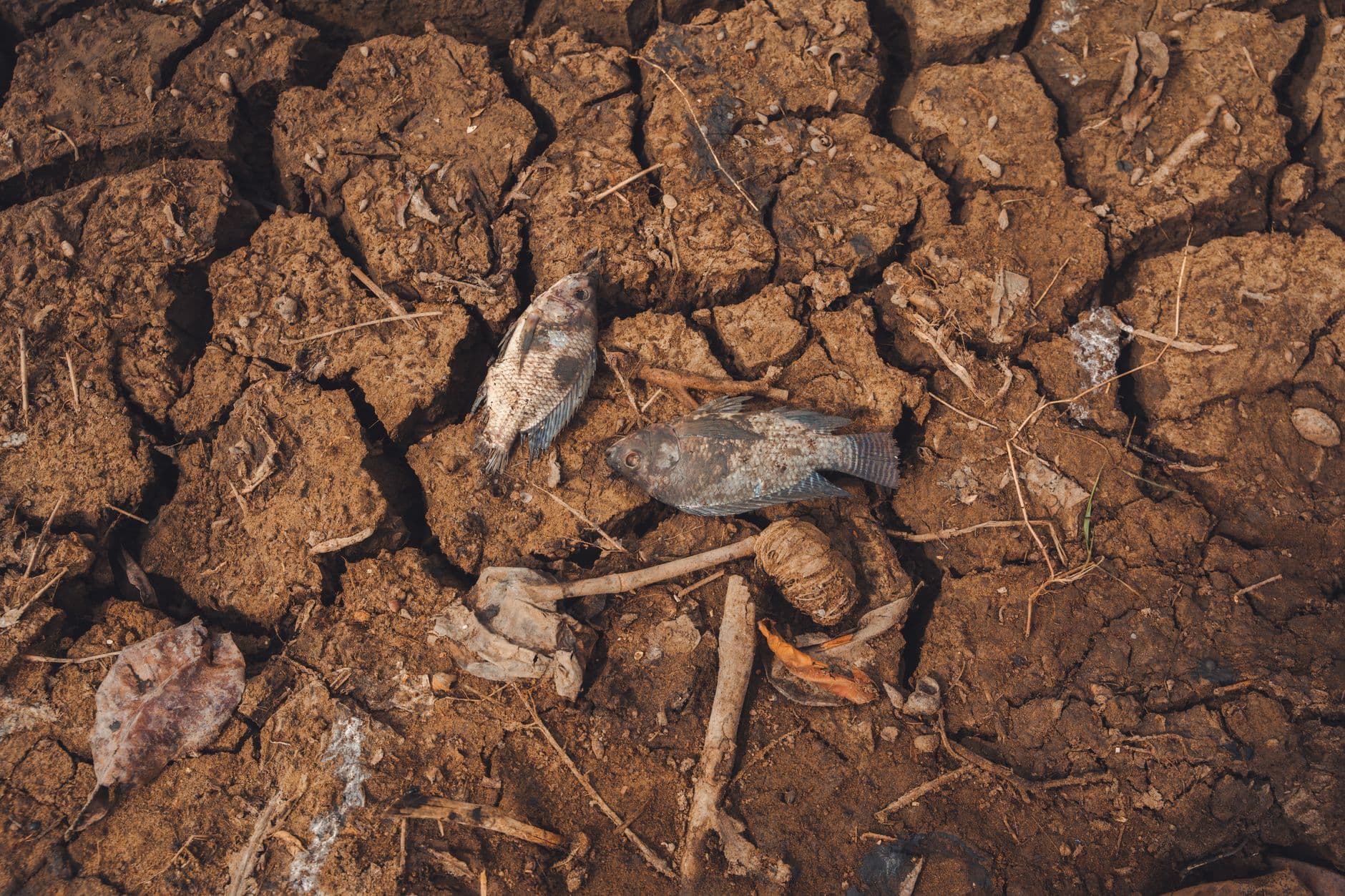
We are losing our grip on the physical reality of ecological collapse. As our screens fill with predictive heat maps and abstract gigaton percentages, we grow increasingly detached from the actual, suffering skin of the Earth. This is why the rise of the "pedological archive"—the practice of keeping a physical dirt notebook—matters so deeply. It is not a quaint aesthetic trend for gardeners. It is a rigorous, defiant act of citizen science that anchors global climate data in the dirt beneath our fingernails.
To keep a dirt notebook is to document the slow-motion crisis of our topsoil. By collecting local samples, drying them, taping them to pages, and noting their color, texture, and location, ordinary citizens are building a hyper-local record of environmental degradation. It is a direct, unfiltered confrontation with the Anthropocene. While satellite imagery can show us a forest browning from space, it cannot capture the precise moment a patch of loam loses its structure and turns to dust.
The Thin, Living Shield We Take for Granted
Most people do not think about soil unless they are trying to wash it out of their clothes. Yet, this critical zone—the top few inches of the Earth's crust—is the fragile membrane that makes terrestrial life possible. It takes nature roughly 500 years to generate just one inch of topsoil. We are currently destroying it at a rate that far outpaces its creation, with the UN estimating that 90 percent of the Earth’s topsoil could be degraded by 2050.
When you press a sample of earth into a paper notebook, you are preserving a specific moment in geological history. You are recording the presence of organic matter, the moisture retention, and the microscopic structure that holds carbon. If you return to the same spot five years later, the visual and tactile contrast can be jarring. A healthy, dark, crumbly soil rich in microbial life can degrade into a pale, compacted block, stripped of its biological integrity by rising temperatures and shifting rainfall patterns.
This physical archiving exposes what digital models often smooth over. A spreadsheet can tell you that a region is experiencing moderate drought, but a dirt notebook shows you the actual crusting, the hydrophobic soil behavior, and the loss of root binding that leads directly to erosion. It is the difference between reading a medical chart and looking at a wound.
Countering the Tyranny of the Digital Model
We have outsourced our environmental consciousness to algorithms. We rely on complex simulations to tell us how the planet is doing, which inadvertently creates a sense of distance. We treat climate change as a future event calculated by supercomputers, rather than an active process happening in our backyards right now.

Photo by Alex Dos Santos on Pexels
Physical archives disrupt this distance. A notebook containing fifty distinct soil samples from a single county over a decade is an irrefutable physical record. It cannot be deleted, it cannot be glitched, and it requires no internet connection to read. It brings the scale of ecological observation back down to the human level.
Furthermore, this practice democratizes scientific observation. Professional soil scientists are stretched thin, underfunded, and often restricted to agricultural or industrial sites. Citizen archivists fill the gaps, documenting the vacant lots, the suburban forests, the riverbanks, and the roadside verges. They are creating a dense, decentralized map of the Earth’s changing skin that institutions simply do not have the resources to build.
The Radical Act of Slow Observation
There is a political dimension to this practice. In a culture obsessed with speed, efficiency, and dematerialization, spending an afternoon digging, drying, cataloging, and labeling dirt is an act of quiet resistance. It forces us to slow down to the speed of the earth itself.
This slow observation cultivates what writers call "ecological literacy." When you begin to pay attention to the soil, you start to notice the relationships that depend on it. You see how a change in soil texture correlates with the disappearance of specific insects, or how compacted earth leads to localized flooding during heavy rains. You stop seeing the ground as a passive backdrop and start seeing it as an active participant in our survival.
We cannot protect what we do not understand, and we cannot understand what we refuse to touch. The pedological archive movement is a reminder that the climate crisis is not just an atmospheric problem. It is a terrestrial one.
What This Actually Means
Ultimately, the dirt notebook is a tool for grief and a tool for action. It forces us to bear witness to the degradation of our local environments in a way that cannot be ignored or swiped away. It turns abstract global warming into a concrete local reality.
But it also offers a blueprint for a more grounded form of environmentalism. By documenting the decline of our soil, we establish the baseline necessary for its restoration. We learn exactly what has been lost, which is the first step toward figuring out how to rebuild it.
We must stop looking exclusively at the sky for answers about our future. The most critical data points are not in the clouds; they are buried under our feet, waiting to be collected, documented, and remembered.
Quick Answers
Is a dirt notebook actually scientifically useful?
Yes. While it lacks the precision of laboratory testing, a consistent physical record of soil color, texture, and organic matter over time provides invaluable baseline data for researchers tracking erosion, compaction, and desertification at a hyper-local level.
How do you prevent the soil samples from molding inside a paper notebook?
Samples must be completely air-dried in a thin layer for several days before being archived. Once dry, they can be secured using clear adhesive sheets or stored in small, flat glassine envelopes affixed to the pages.
Isn't this just a form of doomerism?
No. It is an act of active witness. Documenting degradation is a necessary prerequisite for restoration, as it provides a clear physical record of what a healthy local ecosystem actually looks like before it is damaged.