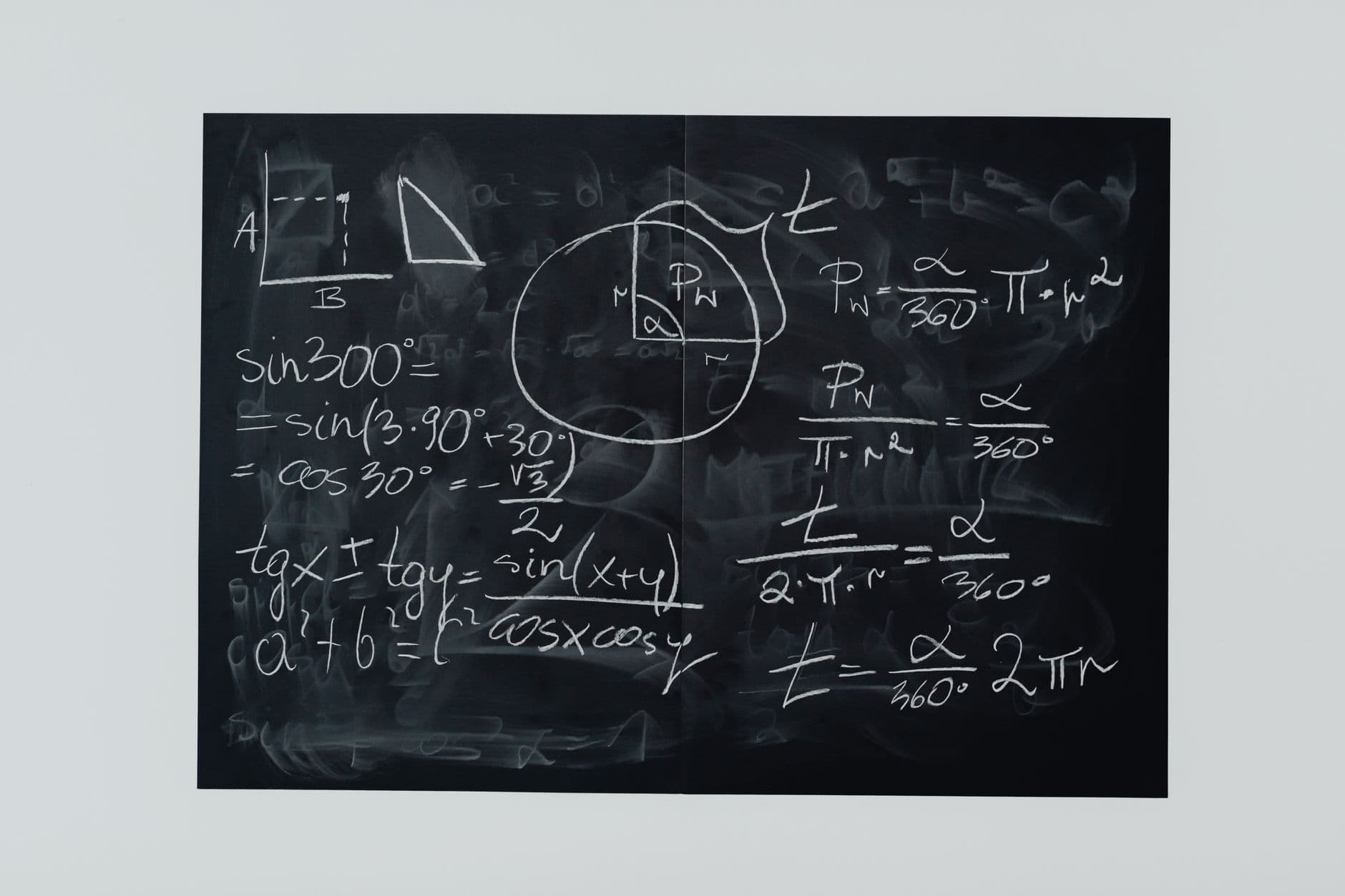
We have long nurtured a romantic myth about the mathematician. We picture the solitary genius, staring at a blackboard, waiting for a flash of insight to bridge the gap between the known and the infinite. This narrative suggests that deep mathematical truth is a matter of aesthetic elegance and human intuition.
That myth is dying a quiet death in university computer labs. Automated reasoning systems and neural networks are now systematically hunting down counterexamples to conjectures that have baffled human minds for decades. By executing brute-force algorithmic searches across multidimensional spaces we cannot visualize, these machines are proving that our intuitive grasp of mathematics is not a universal key, but a biological limitation.
The Failure of Human Scale
Human mathematicians are prisoners of low dimensions and small numbers. We naturally look for patterns that are elegant, symmetrical, and simple enough to fit inside our working memory. This cognitive bias has served us well for a few millennia, but we have reached the outer limits of what this localized intuition can resolve.
Consider the Polya conjecture, which posited that most integers up to any given point have an odd number of prime factors. It seemed obviously true. It held for every number humans checked by hand. Then, in 1958, a computer found a counterexample at the massive scale of 906,180,359.
Today, the scale of our inadequacy has grown exponentially. Modern machine-learning models, such as those developed by Google DeepMind, are finding counterexamples in knot theory and representation theory that exist in high-dimensional spaces we cannot conceptualize. The machines do not find these exceptions by understanding them in the human sense. They find them because they do not share our aesthetic prejudices. They are willing to look in the messy, asymmetrical corners of mathematical space where no self-respecting human would think to search.
The Shift From Proof to Search
This shift represents a fundamental pivot in the scientific method. Traditionally, mathematics progressed from intuition, to conjecture, to rigorous proof. The proof was the gold standard because it delivered absolute certainty alongside conceptual understanding. It told us not just that something was true, but why it had to be true.
Now, we are entering the era of the systematic search. When an algorithm generates a highly complex, million-step counterexample to a classic conjecture, it provides the certainty without the understanding. We are left with a brute fact: the conjecture is false. But the "why" remains locked inside the machine's neural weights.
- Verification over creation: Mathematicians are increasingly relegated to the role of curators, verifying the outputs of automated search engines rather than generating novel pathways themselves.
- The loss of narrative: A traditional proof is a narrative with a beginning, middle, and end. An algorithmic counterexample is an abrupt, unappealable stop sign.
- The expansion of search space: Machines can evaluate billions of mathematical structures per second, turning a discipline of pure thought into an industrial mining operation.
This is not just a change in toolsets; it is a change in the definition of the discipline. If mathematics becomes primarily a search problem, then the most valuable asset is no longer the creative genius of a human mind, but the computational budget of a data center.
The Crisis of Comprehension
This transition brings us to a profound epistemological crisis. What does it mean to "know" a mathematical truth if the proof or counterexample is too vast for any human mind to comprehend in a single lifetime?
In 2016, a computer-assisted proof of the Boolean Pythagorean triples problem produced a file that was 200 terabytes in size. To read it would take a human roughly 10 billion years. We can use smaller computer programs to verify that the proof is correct, but we cannot actually hold the logic of the proof in our heads. We are forced to outsource our comprehension to the very machines we built to serve us.
This creates a strange, stratified reality. We have highly functional, indisputably correct mathematical data that we cannot conceptually assimilate. We are like medieval builders who have been handed the blueprints for a nuclear reactor; we can see that it works, but we do not understand the underlying physics that makes it possible.
What This Actually Means
We must abandon the arrogant assumption that the universe's fundamental laws are written in a language designed for human comprehension. Our brains evolved to avoid predators on the savannah, not to calculate the topology of eleven-dimensional manifolds. It is entirely possible that the deepest truths of reality are simply too complex for our biology to process.
This does not mean mathematics is dead, but it does mean the era of the mathematician-as-philosopher is drawing to a close. The future belongs to the mathematician-as-engineer, individuals who can design the search spaces, write the loss functions, and interpret the massive, alien data structures that the machines return to us.
We are not being replaced; we are being demoted. The machine has shown us that the mathematical landscape is far vast, more chaotic, and less elegant than we wanted to believe. To progress, we must have the humility to accept that our intuition is no longer the measure of all things.
Quick Answers
Are machines actually doing math, or just guessing?
They are executing highly sophisticated, directed searches based on probabilistic models and formal logic. While it lacks human-like intent, this systematic search is functionally indistinguishable from high-level mathematical discovery.
Does this mean human mathematicians are obsolete?
No, but their role is shifting from creators of proofs to translators of machine outputs and designers of the parameters within which AI searches.
Why does a counterexample matter if it only occurs at massive numbers?
In mathematics, a single exception invalidates an entire theory. If a rule does not hold for a number with a billion digits, the rule is fundamentally flawed, and any physics or computer science built upon it is unstable.