
The Shrinking Gray Matter Mystery
I spent three hours last night watching a documentary about deep-sea squids, and today I found out that my brain might be smaller because of it. A recent study published in Psychological Medicine tracked over 10,000 individuals and found a consistent, measurable link between high levels of television viewing and lower gray matter volume in the frontal and entorhinal cortex. It isn't just a metaphor for being 'braindead' after a marathon session of reality TV. The physical mass of the regions responsible for memory and executive function is actually thinner in people who watch the most.
What fascinates me isn't the damage itself, but the specific areas being affected. The entorhinal cortex is essentially the gateway to the hippocampus; it handles the way we navigate space and time. If we spend six hours a day sitting perfectly still while our eyes traverse a flat, two-dimensional glow, does the brain simply decide those 'navigation' neurons are redundant? It’s as if the brain is an extremely efficient landlord, and if you aren't using the spare room for complex thought, it decides to knock down the walls to save on the heating bill.
Why Does Boredom Feel So Expensive
We usually talk about 'passive consumption' as a moral failing or a lack of discipline, but I wonder if it’s actually a biological survival strategy gone wrong. In the wild, conserving energy is the ultimate goal. Thinking is expensive. The human brain accounts for about 20% of the body's total energy consumption despite being only 2% of its weight. When we sink into a couch to watch a procedural drama, we are essentially putting our cognitive processors into 'Low Power Mode.'
I find myself wondering if the structural decline isn't a 'glitch' but a physiological adaptation to a low-stimulation environment. If your environment requires zero complex navigation, zero social risk, and zero physical movement, why would your body bother maintaining the expensive neural machinery required for those things? We are essentially terraforming our internal landscapes to match the flatness of our living rooms.
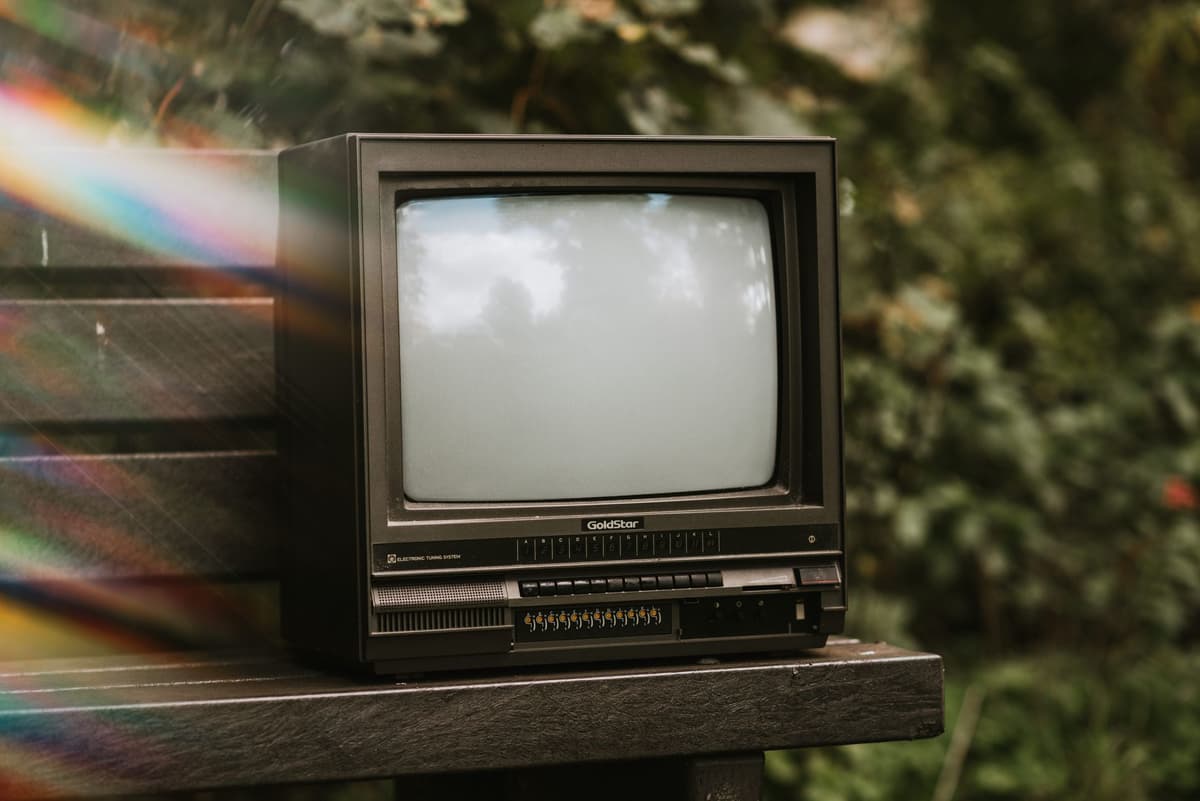
Photo by Anete Lusina on Pexels
The Self-Medication Loop
There is a specific kind of relief that comes from a binge-watch session that feels less like entertainment and more like anesthesia. The study touches on this idea of 'low-stimulation self-medication.' When the world feels too loud or the internal monologue gets too frantic, we use the TV to flatten our emotional spikes. It works remarkably well. But the cost seems to be a literal thinning of the prefrontal cortex—the part of the brain that helps us regulate those very emotions in the first place.
- The study looked at data from the UK Biobank, involving 10,000+ participants.
- Researchers noted that the association remained even after controlling for physical activity levels.
- This suggests it's not just the sitting that hurts us, but the specific mental state of watching.
If we use TV to numb the brain, and that numbing causes the brain to shrink, does it become harder to feel 'okay' without the TV? It feels like a feedback loop where the cure for our stress slowly removes our biological capacity to handle stress. I'm curious if we could reverse this by doing the opposite—by intentionally seeking out 'high-friction' entertainment that forces the brain to build those walls back up.
What This Actually Means
This isn't just another 'screens are bad' lecture. It’s an invitation to look at our habits as architectural blueprints. Every time we choose the passive path, we might be sending a signal to our biology that those complex structures are no longer necessary for our survival. We are effectively pruning ourselves into simpler shapes.
I don't think the answer is to throw the TV out the window, but perhaps to recognize that 'rest' and 'passivity' aren't the same thing. True rest should leave you feeling restored, not physically diminished. We have to wonder what happens to a society when the physical hardware of the collective brain starts to lean toward the path of least resistance.
If our brains are truly as plastic as we've been told, then they are constantly being sculpted by our attention. The question I'm left with isn't how much TV is 'safe,' but what kind of brain I actually want to live inside of for the next forty years. If I want a brain that can handle the complexity of the real world, I might need to spend a little less time in the simplified worlds of others.
Quick Answers
Does this mean TV causes dementia?
The study shows a correlation with smaller brain structures, which are often markers for cognitive decline, but it doesn't definitively prove TV causes Alzheimer’s or dementia.
Is it the sitting or the screen that's the problem?
Interestingly, the researchers found the brain shrinkage was linked to the act of watching itself, even when they accounted for how much the person exercised or sat around doing other things.
Can the brain grow back?
Neuroplasticity suggests that the brain can reorganize and strengthen areas through new learning and high-engagement activities, though the study focused on the loss rather than the recovery.
Is 'active' screen time like gaming different?
Other research suggests that interactive media like gaming, which requires spatial navigation and decision-making, does not have the same shrinking effect as passive watching.