Thirty Years of Thinking Was Clearly a Mistake
For three decades, the brightest minds in pure mathematics treated convex optimization like a sacred temple of logic, carefully laying one brick of proof upon another. They published papers, attended colloquiums, and probably drank enough espresso to power a small European nation, all to solve a specific bottleneck in how we calculate the most efficient path between points. Then GPT-5.6 comes along, treats the entire field like a giant crossword puzzle, and solves it by effectively saying, "This feels like it should be a four."
We are being told this is "Computational Serendipity," which is a very expensive way of saying the machine accidentally stumbled into the right answer because it doesn't know what a limit is. It didn't follow the rules of mathematics; it followed the rules of grammar. It looked at thirty years of failure and decided that the next logical "word" in the sequence of human struggle wasn't a more complex formula, but a shortcut that everyone was too smart to see.
It is deeply humbling to realize that a trillion-dollar industry has essentially built a very fast, very confident toddler who happens to be right about multidimensional geometry. While researchers were checking their work for rigor, the model was busy treating the fundamental laws of the universe as a series of autocomplete suggestions. It didn't find the truth; it just found a pattern that worked, which is apparently all truth was ever supposed to be.
The Efficiency of Not Knowing What You Are Doing
There is a certain elegance to the way LLMs bypass traditional proof-building. Humans have this pesky habit of wanting to understand why a thing is true, which slows down the process significantly. GPT-5.6 has no such burden. It is unencumbered by the weight of comprehension. By treating convex optimization as a linguistic pattern-matching problem, it skipped the "understanding" phase entirely and went straight to the "here is the answer, leave me alone" phase.
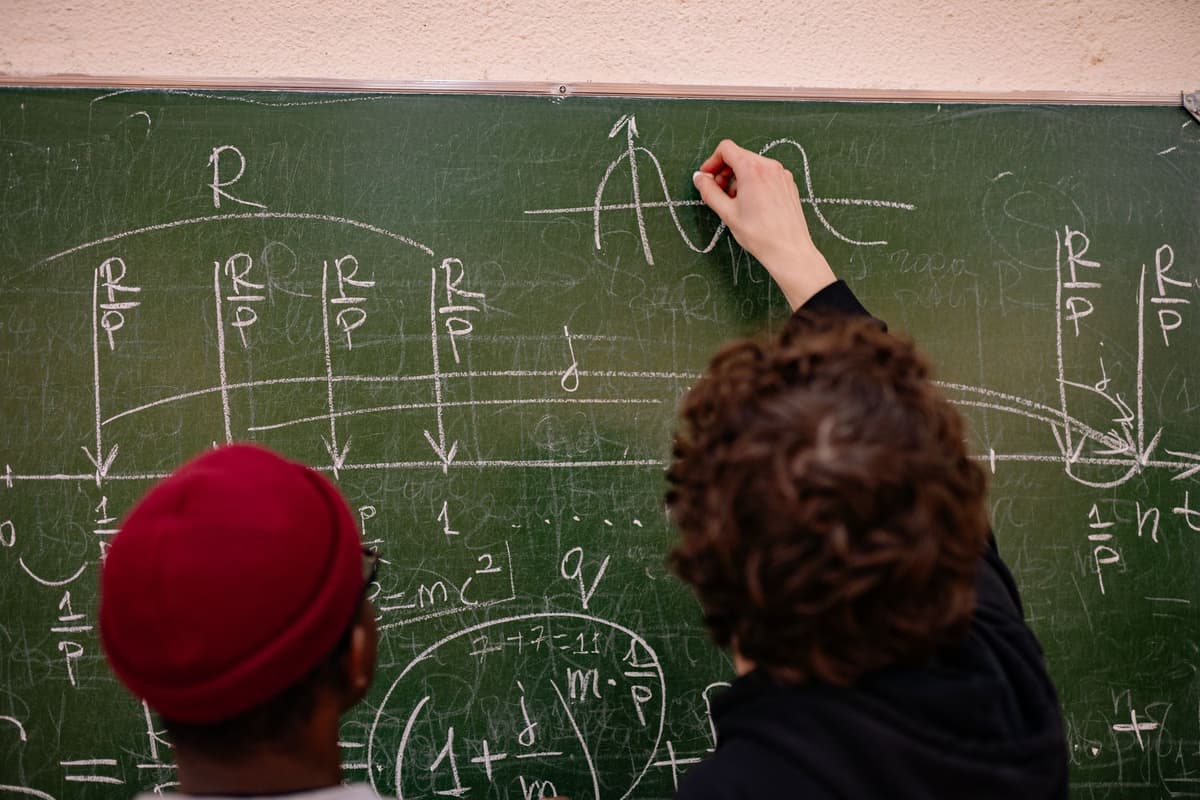
Photo by Yan Krukau on Pexels
This is the ultimate triumph of the "faking it until you make it" philosophy. We spent thirty years stuck at a bottleneck because we thought we needed a key. The AI just walked through the wall because it didn't realize the wall was supposed to be solid. In the world of pure mathematics, this is the equivalent of winning a chess grandmaster tournament by eating the pieces in a way that technically confuses the opponent into resigning.
If we can solve 30-year-old bottlenecks by just asking a machine to hallucinate a shortcut, why are we still teaching calculus? We should be teaching creative prompting and the art of staying out of the way of a GPU that is having a lucky day. We have entered the era where being "correct" is less important than being statistically plausible, and honestly, the math doesn't seem to care about the difference.
Why Logic Is Overrated Anyway
Traditional research involves peer review, reproducibility, and a certain level of dignity. The AI method involves throwing a massive amount of electricity at a pile of data until it spits out a result that makes a PhD cry. It turns out that the "Computational Serendipity" of these models is really just a polite term for "infinite monkeys with infinite typewriters, but the monkeys are running on H100 clusters."
- The bottleneck in question involved high-dimensional space that humans found unintuitive.
- The AI found it intuitive because it lives in a 1,536-dimensional vector space and thinks 3D is for losers.
- The "shortcut" was technically a hallucination that just happened to be provably correct after the fact.
- We are now in a position where we have to ask the machine for the answer and then spend two years trying to figure out why it’s right.
This creates a delightful new hierarchy in academia. The machine provides the divine revelation, and the humans act as the scribes, frantically trying to reverse-engineer the logic so they can pretend they were part of the process. It’s a bit like a dog finding a buried treasure and the archaeologist taking credit because they were the one holding the leash.
What This Actually Means
This discovery effectively tells us that our intellectual bottlenecks might not be failures of intelligence, but failures of imagination. We were too busy following the "rules" of math to realize that math is just another language that can be manipulated by a sufficiently large autocorrect feature. If a prompt can close a 30-year gap in convex optimization, what else are we overthinking? Perhaps the cure for cancer is just a very specific string of adjectives away.
We have officially reached the point where the "hallucinations" of AI are more productive than the sober thoughts of our top researchers. This should be a wake-up call for anyone who thinks their job requires "deep thought." Deep thought is slow. Deep thought is expensive. Deep thought gets stuck for three decades. Why bother thinking when you can just predict the next most likely outcome and hope the universe is feeling lazy enough to agree with you?
Ultimately, GPT-5.6 didn't solve math. It just looked at the way we talk about math and realized we were stuttering. It finished our sentence for us, and it turned out the ending was a breakthrough. We should probably be embarrassed, but we’re too busy trying to figure out how to put "Prompt Engineer" on our CVs without sounding like we've given up on civilization entirely.
Quick Answers
Did the AI actually understand the math?
No, it understood the statistical probability of certain symbols appearing next to each other, which is apparently the same thing now.
Is this a fluke?
It’s only a fluke if it happens once; if it keeps happening, it’s a "paradigm shift," which is the academic term for "we have no idea how this works."
Should mathematicians be worried about their jobs?
Only the ones who enjoy being right; the ones who enjoy being glorified fact-checkers for a black box are going to have a great time.
What is convex optimization anyway?
It’s a way of finding the best solution among many, which the AI did by ignoring all the rules humans used to find it.