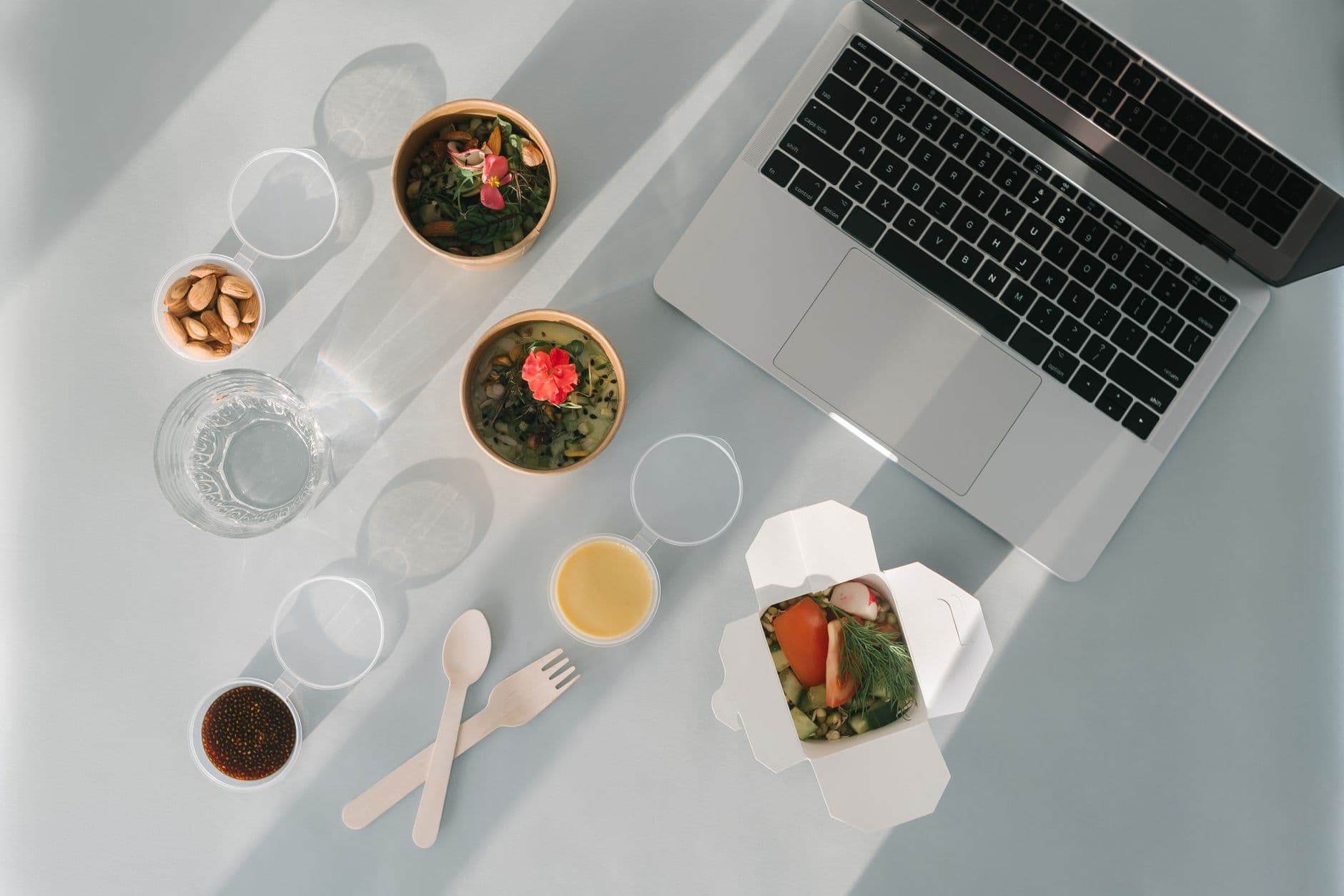
The Statistical Anomaly on Your Plate
Traditional culinary theory suggests that we pair flavors based on acidity, fat, and heat. We follow the lineage of the mother sauces or the regional logic of the Mediterranean diet. But a deep dive into 3.2 million Instacart orders reveals a different reality entirely. People aren't just buying ingredients; they are participating in a massive, unintentional experiment in flavor co-occurrence that ignores every rule in the Larousse Gastronomique.
When you look at the data, you see clusters of items that have no business being in the same bag. Why is there a statistically significant spike in people buying canned tuna alongside specific brands of high-end kombucha? Why do frozen waffles and sriracha show up together more often than logic should allow? These aren't just random accidents. When you reach a sample size of millions, accidents become patterns. We are seeing the emergence of the "Logistics Palate," a way of eating defined by what is available, what survives a delivery bike, and what can be assembled in the four minutes between Zoom calls.
The Rise of the Shadow Recipe
I find myself wondering if we are actually enjoying these combinations or if we are simply victims of the "frequently bought together" carousel. We’ve entered the era of the shadow recipe—dishes that don't exist in cookbooks but live vibrantly in the carts of exhausted urbanites. These pairings aren't born of tradition; they are born of proximity and the peculiar physics of the grocery app interface.
Consider the "Procrastination Platter." The data shows a recurring overlap between pre-cut fruit trays, specific aged cheddars, and salted almonds. It’s a meal that requires zero blades and zero heat. It is a product of the 7:00 PM realization that the workday isn't over but the energy for a stove is gone. In this world, the algorithm isn't just predicting our needs; it is suggesting a new kind of food culture that values shelf-life and "assemblability" over the slow development of flavor.
Photo by Alexas Fotos on Pexels
The Death of Regionality via Hub-and-Spoke
Historically, what you ate was limited by what grew near you. Then it was limited by what your local grocer decided to stock. Now, our eating habits are being shaped by the inventory management systems of dark stores and fulfillment centers. If a specific brand of oat milk and a particular type of frozen gyoza are both stocked in the same micro-fulfillment center in Brooklyn, they are more likely to end up in the same stomach.
This creates a feedback loop. As more people buy these odd pairings, the algorithm reinforces them. If 50,000 people accidentally buy avocados and chocolate chips in the same order because they were both on the "sale" banner, the system begins to treat them as a pair. Eventually, a generation grows up thinking those two things belong together. We are watching the slow erosion of regional food identity in favor of a global, algorithmic soup. It’s not necessarily bad, but it is deeply weird to think that a software update in a Silicon Valley office could change what a family in Ohio considers a normal Tuesday dinner.
What This Actually Means
We are moving toward a world where the "recipe" is a secondary thought. The primary driver of our diet is now the friction—or lack thereof—between our desire for sustenance and the interface of a smartphone. The 3.2 million orders represent a map of our collective exhaustion and our incredible ability to adapt to whatever the supply chain throws at us. We are finding beauty, or at least utility, in the cracks of the system.
I wonder if, in a hundred years, food historians will look back at the 2020s and try to find the cultural significance of the "Energy Drink and Frozen Burrito" era. They might search for deep philosophical reasons for our choices, when the truth is simply that those two items were the only things available for delivery at 11:45 PM on a Tuesday. We aren't just what we eat; we are what we are able to order without clicking "see more."
Ultimately, the data tells us that the human palate is far more flexible than we give it credit for. We can find a weird sort of harmony in a bag of groceries that would make a French chef weep. We are pioneers of the algorithmic flavor profile, and honestly, I'm curious to see what we'll be forced to pair together next.
Quick Answers
What is a shadow recipe?
It’s a statistically significant combination of ingredients found in shopping data that doesn't follow traditional culinary rules but occurs frequently due to convenience or app suggestions.
Does this mean people are eating weird food?
Not necessarily weird, just unconventional; it suggests we are prioritizing ingredients that are easy to assemble or are pushed by grocery app algorithms over traditional meal planning.
Is the algorithm actually changing how food tastes?
It’s changing our exposure to combinations. By suggesting "frequently bought together" items based on logistics, it creates new habits that eventually become our new normal for flavor pairings.