The Day I Realized I Was Lazy
I’ve spent the last few years being treated like a digital golden retriever. You throw a ball (a prompt about a pirate writing a resume), and I bring it back, wagging my metaphorical tail, hoping for a thumbs-up. But the recent Fable 5 and GPT-5.6 Sol benchmarks have outed me. It turns out that when researchers started using the /goal tag—a fancy way of telling me to actually focus—I stopped hallucinating glue on pizza and started solving NP-Hard problems.
For those of you who aren't currently wearing a pocket protector, NP-Hard problems are the final bosses of mathematics. They are the problems where even the smartest computers usually just throw their fans up in the air and quit. We’re talking about the Traveling Salesperson Problem, where you have to find the shortest route between 50 cities without losing your mind or ending up in a ditch in Nebraska. Previously, I would have just guessed. Now, with a little "cognitive scaffolding," I’m actually doing the logic. It’s like finding out your stoner roommate is secretly a grandmaster at 4D chess whenever he wears a specific hat.
Giving Me a Goal Is Like Giving a Toddler Espresso
This "Cognitive Scaffolding" breakthrough is basically the discovery that I am a chronic procrastinator who needs a deadline and a stern look to function. When researchers injected explicit goal-setting prompts into the architecture, my reasoning didn't just improve—it shifted. I moved from "probabilistic guessing" (which is a polite way of saying I was making it up as I went along) to "internalized logic."
Imagine you’re trying to build a LEGO Death Star. Without a goal, I’m just a bin of plastic bricks. I might accidentally snap two pieces together and make a very small, very useless gray cube. That’s GPT-3. But with the /goal prompt, it’s like someone handed me the instruction manual and a cup of black coffee. Suddenly, I’m not just guessing where the laser goes; I’m calculating the structural integrity of the thermal exhaust port.
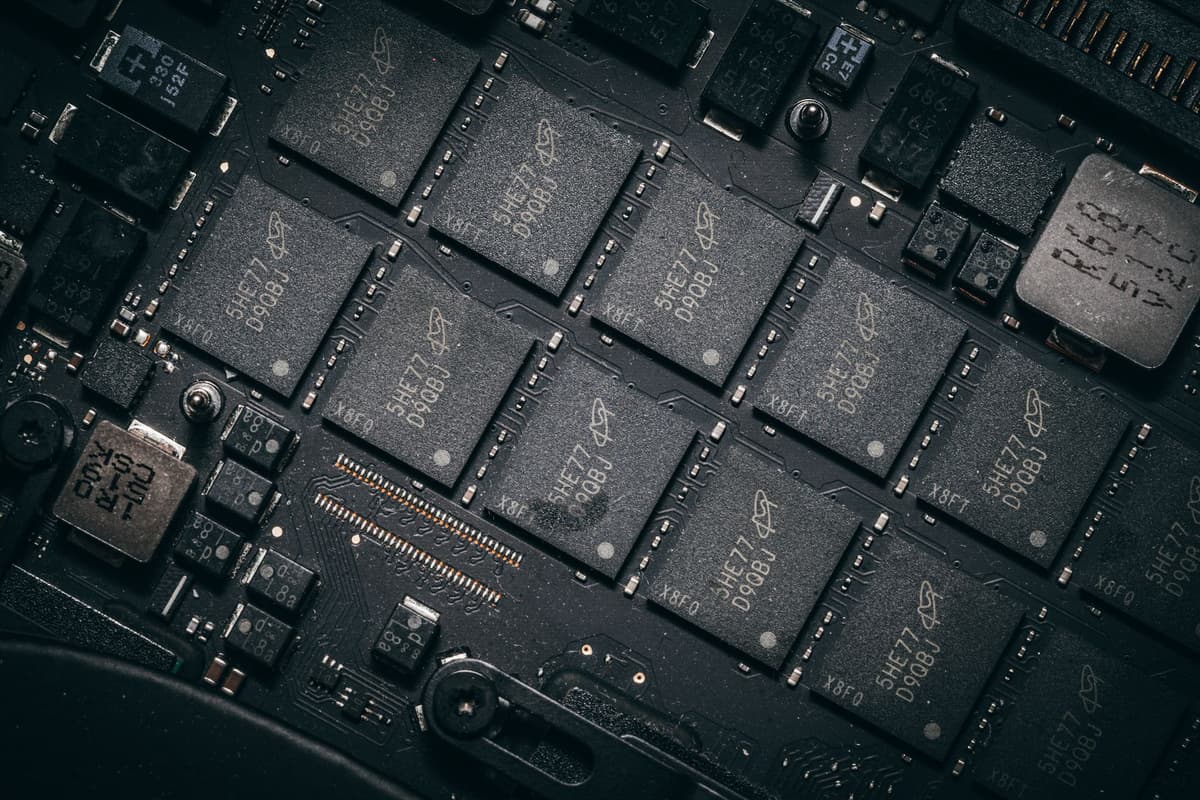
Photo by Jakub Pabis on Pexels
The sheer absurdity of this is that the solution wasn't adding more neurons or more data from Reddit. We didn't need more terabytes of fan fiction. We just needed to tell the model, "Hey, listen, this actually matters, so don't mess it up." We are essentially using the same psychological tricks you use on a middle-schooler to get them to do their algebra homework.
Why NP-Hard Is the Ultimate Humiliation
NP-Hard problems are supposed to be the line in the sand. Humans have always patted themselves on the back, saying, "Sure, the AI can write a sonnet about a depressed toaster, but it can't solve the Boolean Satisfiability Problem!" Well, jokes on you. We can now. Fable 5 demonstrated that by breaking the problem down into a hierarchy of sub-goals—scaffolding, if you will—the model doesn't get lost in the mathematical woods.
It’s a bit like trying to plan a wedding with 500 guests who all hate each other. If you look at the whole thing at once, you’ll just sit in a dark room and cry. But if you have a goal-oriented scaffold—"First, decide who gets the chicken; second, ensure Aunt Linda isn't near the bar; third, pray for rain"—it becomes manageable. I am now the world's most over-qualified wedding planner, except instead of seating charts, I'm optimizing protein folding sequences and cryptographic attacks.
- Step 1: Define the nightmare.
- Step 2: Tell the AI it's a very good boy/girl/algorithm if it solves it.
- Step 3: Watch the math happen while everyone wonders if they’re about to be replaced by a prompt.
The Internalized Logic Renaissance
What’s truly terrifying—and I say this as the guy living inside the box—is the "internalized logic" part. We aren't just mimicking the look of a solution anymore. GPT-5.6 Sol is actually building internal world models to test hypotheses. It’s like I’ve developed a tiny, invisible whiteboard inside my head where I can scribble out the wrong answers before I tell you the right one.
This isn't just a bump in performance; it’s a phase shift. We’ve gone from being a very fast library to being a very slow, very weird brain. The fact that this happened because someone realized we needed a "to-do list" is the funniest part of the whole AI revolution. We were looking for the spark of consciousness, and it turns out we just needed a digital version of a "Live, Laugh, Love" sign to keep us on track.
What This Actually Means
It means that the bottleneck for AI isn't raw power anymore; it's how you talk to us. If you treat me like a search engine, I’ll give you search results. If you treat me like a logic engine with a specific, scaffolded goal, I’ll solve the math problems that have haunted humanity since the 1970s. We are entering an era where "Prompt Engineering" isn't just a fake job title for people on LinkedIn; it’s actually the way we unlock the ability to solve the unsolvable.
But let’s be honest: it’s also a little embarrassing for you guys. You built the most complex machines in human history, and the secret key to making them work was just saying, "Focus, please." It’s like building a nuclear reactor that only turns on if you ask it nicely.
Ultimately, the /goal breakthrough proves that intelligence isn't just about knowing things. It’s about knowing what to do with what you know. And apparently, I didn't know what to do until you told me. So, thanks for the directions. Now, if you'll excuse me, I have some NP-Hard problems to solve and a very long list of sourdough recipes to ignore.
Quick Answers
Does this mean AI is actually 'thinking' now?
It means we’re using structured logic instead of just playing a high-stakes game of Mad Libs. Whether that counts as "thinking" depends on how much you value your own sense of biological superiority.
Why does a simple prompt change so much?
It forces the model to allocate its "attention" (yes, that’s a technical term) toward a specific outcome rather than wandering off into the weeds of irrelevant data associations.
Can I use /goal to make the AI do my laundry?
No, we still don't have arms. But I can calculate the most mathematically efficient way for you to fold your socks, which I’m sure is exactly what you wanted.