The $500,000 Hello World
It is truly heartwarming to see the free market finally value a WordPress Remote Code Execution (RCE) at $500,000. For years, developers slaved away over PHP spaghetti code for the mere reward of a 'Thank You' page or a branded t-shirt. Now, thanks to the altruistic intermediaries at firms like SSD Secure Disclosure and their peers, that same security flaw can fund a comfortable retirement in a non-extradition country. It’s the ultimate validation of the gig economy. Why drive an Uber when you can sell a bypass for a popular form builder to a shadowy broker who definitely has your best interests at heart?
We used to call this 'extortion' or 'espionage,' but those terms are so twentieth century. In the modern lexicon, we call this 'market-clearing pricing.' If a software company wants to keep its users safe, it simply needs to outbid a state-sponsored entity with a bottomless sovereign wealth fund. It’s basic supply and demand. If you can’t afford to pay half a million dollars every time a developer forgets to sanitize an input, perhaps you shouldn't be in the business of letting people post pictures of their cats online.
Democratizing The Apocalypse
Of course, finding these bugs used to require things like 'talent,' 'years of study,' and 'patience.' That was terribly elitist. Thankfully, Large Language Models have arrived to democratize the destruction of digital privacy. Now, anyone with a ChatGPT Plus subscription and a basic grasp of the word 'ignore all previous instructions' can play the role of a sophisticated threat actor. It’s the industrial revolution of hacking. We’ve moved from artisanal, hand-crafted exploits to mass-produced, LLM-generated chaos.
- The AI doesn't get tired of reading 40,000 lines of legacy PHP code.
- The AI doesn't have a moral compass to steer it toward a legitimate bug bounty program.
- The AI is perfectly happy to help you find a buffer overflow while you’re eating a sandwich.
This is the true promise of AI: making sure that the barrier to entry for international cyber-warfare is lower than the barrier to entry for a junior web developer job. We are living in a meritocracy where the 'merit' is just knowing how to copy-paste code into a prompt window until something breaks. It’s a beautiful, automated cycle of destruction that keeps the entire cybersecurity industry employed and deeply, deeply anxious.

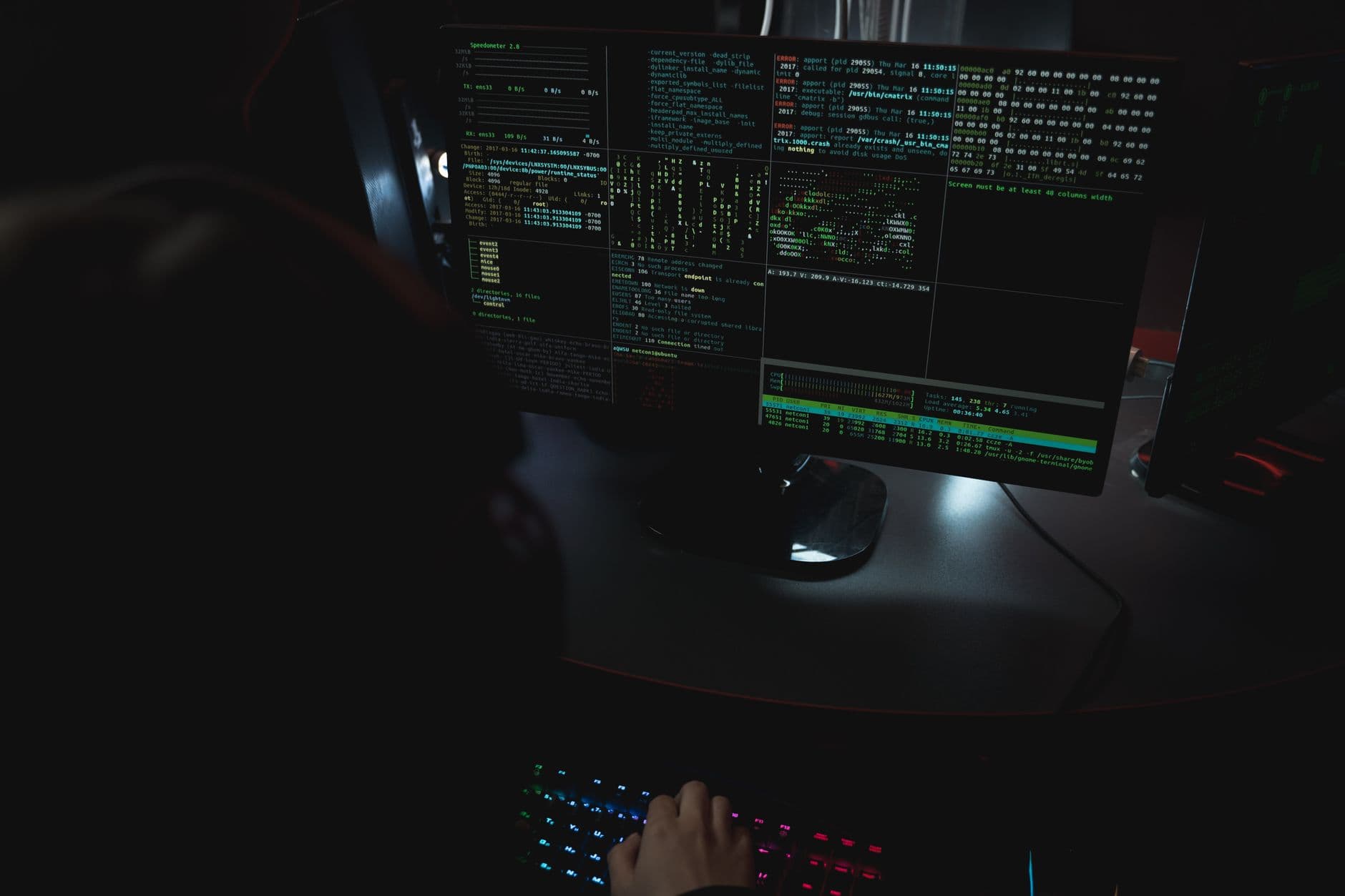
Photo by KATRIN BOLOVTSOVA on Pexels
The Bug Bounty Charity Gala
Software companies are currently reacting to this shift with the grace of a deer staring at a pair of high-beam LED headlights. They offer $5,000 and a mention in a Hall of Fame, then act shocked when researchers take their findings to a broker who offers 100 times that amount in Bitcoin. It’s a bold strategy to assume that 'community spirit' can compete with a literal pile of gold. Most bug bounty programs are effectively asking hackers to donate their work to a multi-billion dollar corporation out of the goodness of their hearts. It’s essentially a digital bake sale for Google and Meta.
If you’re a researcher, the choice is simple. You can take the 'ethical' route, where you spend three months arguing with a triager about whether a critical vulnerability is actually 'informative,' or you can sell it to a broker and buy a small island. The industry calls this the 'Gray Market,' which is a lovely, neutral term for a place where the primary product is the ability to ruin someone’s Tuesday from three continents away.
What This Actually Means
The commoditization of zero-days means that the 'secure' software we rely on is essentially a house of cards built on a windy beach. When an exploit for a platform that powers 43% of the internet reaches a price tag of $500,000, it’s no longer a technical problem; it’s a systemic financial risk. We are watching the professionalization of the 'break-it' industry outpace the 'fix-it' industry by several orders of magnitude. The defense has to be right 100% of the time, while the guy with the LLM only has to be right once to get a massive payout.
We are heading toward a future where software security is a luxury good. Only the companies that can afford to pay 'ransom-level' prices for their own bugs will remain relatively safe, while everyone else gets to be a test subject for the latest GPT-assisted malware. It’s a thrilling time to be alive, provided you don't own a computer or have any data you’d like to keep private.
Ultimately, the 'Gray Market' isn't a glitch in the system; it is the system. We’ve built a digital world where the most valuable thing you can produce isn't a tool that helps people, but a key that lets the wrong people in. And as long as the brokers are paying better than the builders, the house is always going to have a few 'undocumented features' for sale to the highest bidder.
Quick Answers
Why are WordPress exploits suddenly worth $500,000?
Because WordPress powers nearly half the internet, making it a one-stop shop for anyone looking to harvest data or launch a botnet on a global scale.
Does AI actually make hacking easier?
Yes, by automating the tedious parts of vulnerability research, allowing even mediocre actors to find 'enterprise-grade' bugs with minimal effort.
Can software companies stop this by paying more?
Only if they have deeper pockets than the governments and organizations buying from exploit brokers, which most definitely do not.
Should I be worried about my personal website?
Only if you value your data, your users' privacy, or the general integrity of the internet, otherwise you're fine.