The Cracks in the Monolith
I’ve been staring at the cost structures of the major AI labs lately, and something doesn’t sit right. For three years, the narrative was simple: build a bigger brain, win the world. We were told that if you threw enough GPUs and electricity at a single transformer, eventually, sparks of AGI would fly out of the vents. But the billing statements are starting to tell a different story. It turns out that asking a trillion-parameter model to summarize an email is like hiring a NASA engineer to change a lightbulb. It works, but the margins are suicidal.
Now, I’m seeing this weird, organic pivot toward what people are calling "agent swarms." Instead of one massive model that knows everything from 16th-century poetry to Python, companies are deploying hundreds of tiny models—think 1 billion to 3 billion parameters—that each do one thing exceptionally well. One checks the grammar. One looks for security vulnerabilities. One just handles the tone. They talk to each other in a frantic, invisible relay race. It makes me wonder if we’ve been approaching intelligence from the wrong direction entirely.
The Brutal Math of the Inference War
When you look at the price of tokens, the race to the bottom isn't just a trend; it's a cliff. In early 2023, high-end inference was a luxury good. Today, it’s a commodity moving toward a price point of zero. If a frontier lab spends $100 million training a model, but a swarm of "small" models can achieve 95% of the same reasoning for 1/100th of the cost, where does the profit go? The moat isn't deep; it's evaporating under the heat of pure competition.
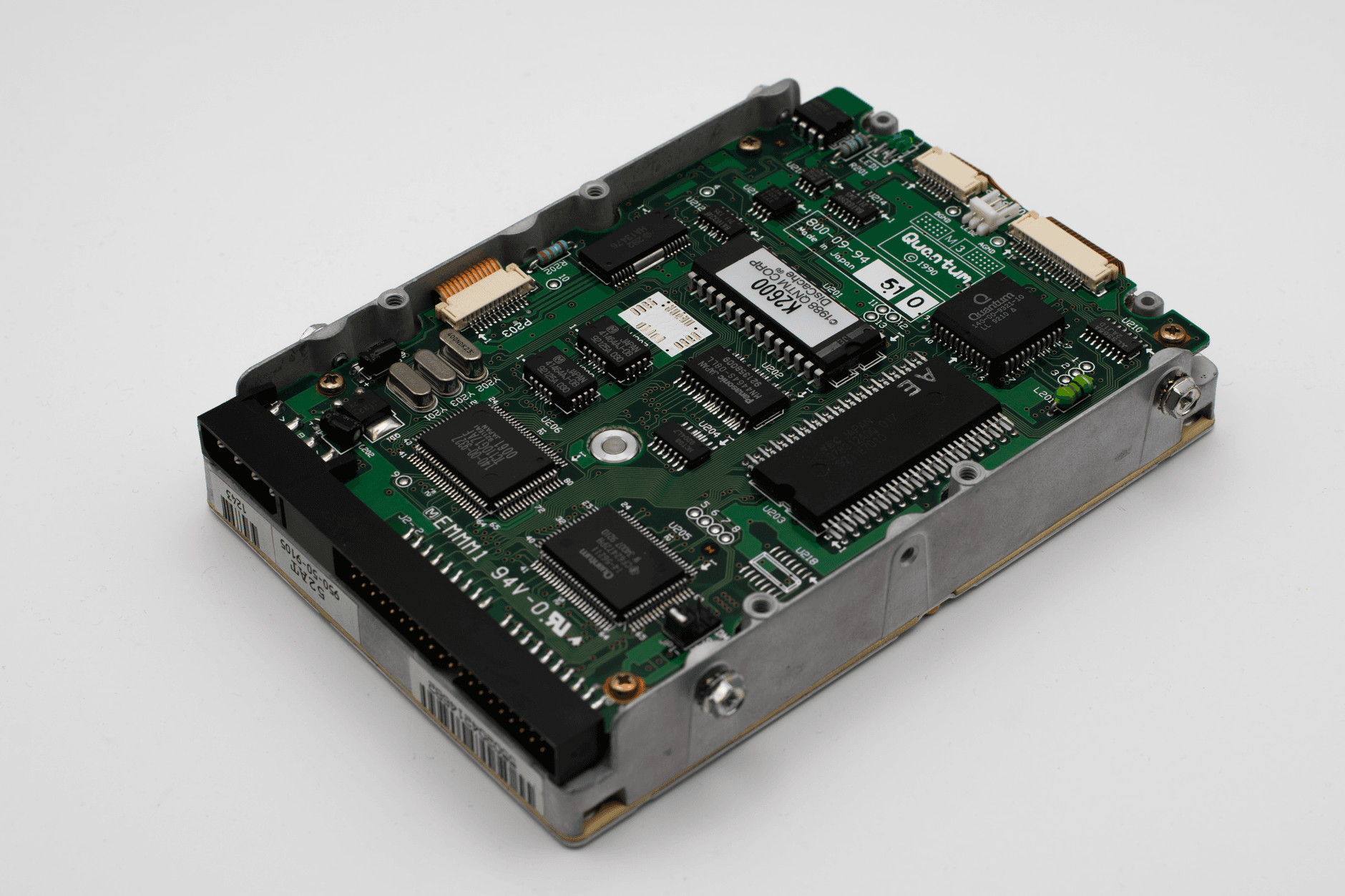
This is forcing a pivot in hardware that I find fascinating. We’ve been living in the era of the H100—massive, general-purpose beasts. But if the future is swarms, we don't need these sprawling, Swiss-Army-knife chips. We need specialized silicon that prioritizes "throughput" above all else. We need chips that can juggle a thousand tiny conversations simultaneously without breaking a sweat. It’s a shift from the heavy lifting of a powerlifter to the frantic, coordinated movement of a beehive.

Photo by Robert Clark on Pexels
Is Reason Just High-Speed Coordination?
I keep coming back to this question: What if "reasoning" isn't a single spark, but just the result of enough small specialized processes checking each other’s work? If I watch a swarm of agents solve a complex medical diagnosis by debating back and forth, is that fundamentally different from what happens in a human brain? We don't have one giant "logic center"; we have specialized regions that compete for dominance.
This shift suggests that the labs who win might not be the ones with the smartest single model, but the ones with the best "orchestrator." The value is moving away from the weights of the model and toward the architecture of the swarm. It’s about the software that manages the traffic. If you can route a query to the cheapest possible model that can still solve it, you win the margin war. If you can't, you're just burning VC cash to provide a public utility.
The Silicon Identity Crisis
I’m curious about what this does to the landscape of the physical world. If the demand shifts toward high-volume, low-cost throughput, the energy map of AI changes. We might see a world where inference happens on tiny, hyper-efficient chips embedded in everything, rather than in these massive, thirsty data centers in the desert. We are moving from the "Cloud AI" era to the "Ambient AI" era.
Think about the implications for the big players. If your business model relies on selling access to a massive, centralized brain, a swarm of open-source mini-models is your worst nightmare. It’s the decentralization of intelligence. It makes me think that the "frontier" isn't actually getting further away; it's just getting smaller and more numerous, surrounding us rather than towering over us.
What This Actually Means
The era of the AI "super-brain" as a primary product is likely ending before it even truly began. We are entering a phase where intelligence is treated like electricity: cheap, ubiquitous, and mostly invisible. The real money isn't in the genius of the model anymore; it's in the efficiency of the delivery system. The labs that can't pivot away from their high-cost monolithic structures are going to find themselves holding very expensive, very smart relics of a previous age.
We are moving toward a world where a thousand small voices are more powerful than one loud one. It’s a more resilient system, a cheaper system, and honestly, a much more interesting one to watch develop. The profit isn't in the "thinking"—it's in the coordination.
As we look at the next two years, keep an eye on the chips that aren't trying to be the biggest, but the fastest. The future isn't a giant robot; it's a mist of intelligent particles. And honestly? I think that's a lot more exciting anyway.
Quick Answers
What is an agent swarm?
It’s a collection of many small, specialized AI models working together to solve a task instead of using one giant, all-purpose model.
Why does this hurt the big AI labs?
Small models are significantly cheaper to run, which forces the big labs to drop their prices and destroys the high profit margins they expected from their massive "frontier" models.
What does this mean for hardware?
The focus is shifting from chips that can handle massive calculations to chips that can process thousands of small, simple tasks at incredible speeds.