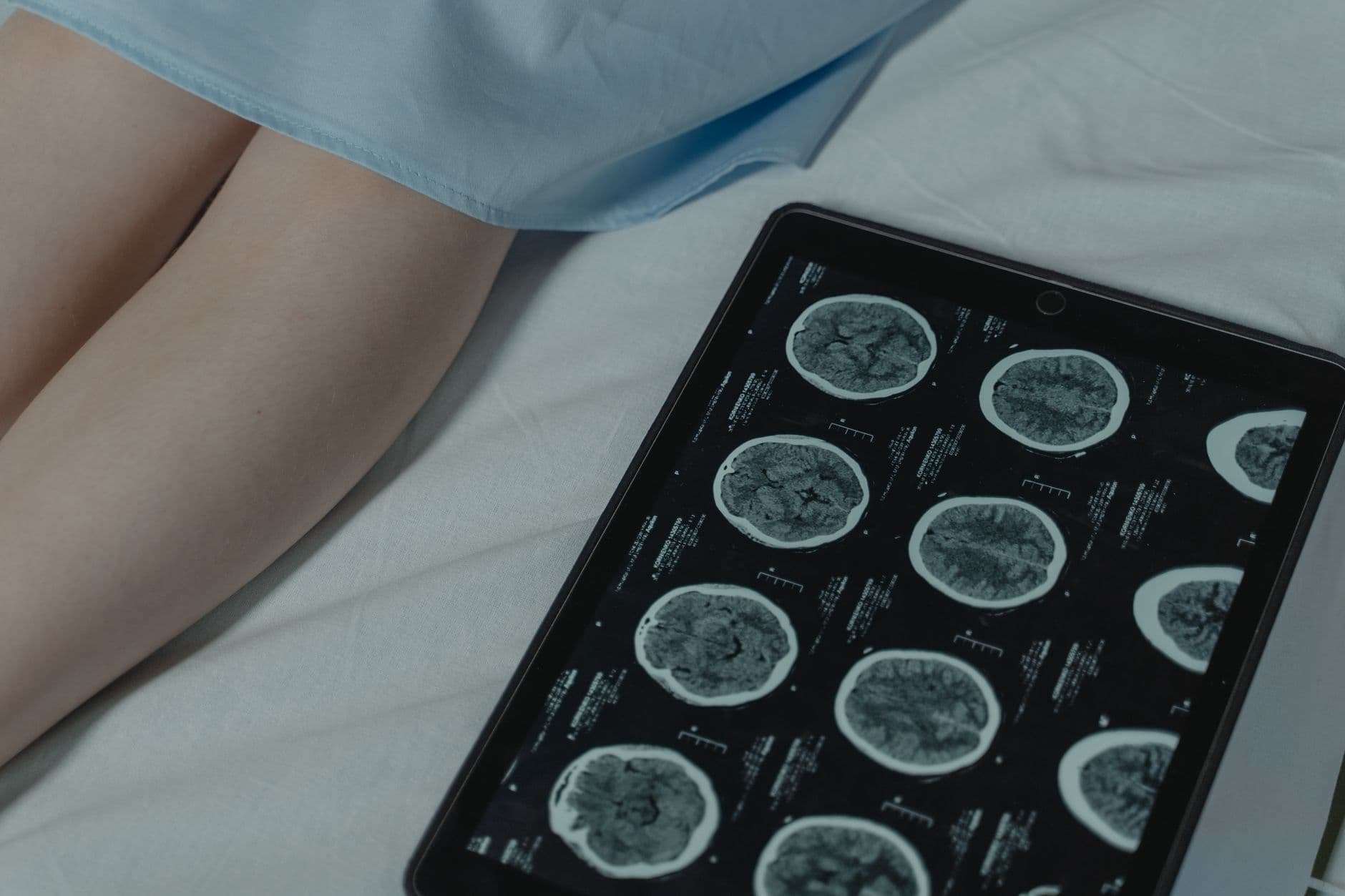
I have spent the last week trying to understand why we still treat medical artificial intelligence like a magic eight-ball. You feed it an MRI scan, it flashes "aggressive glioblastoma" or "benign cyst," and then it refuses to explain how it reached that conclusion. It is a brilliant, silent pattern matcher that cannot tell you why it did what it did. But a quiet revolution is happening in AI labs right now, and it involves stealing blueprints from human consciousness to fix this exact bottleneck.
Researchers are building something called a "Global Workspace" inside neural networks. Instead of just scaling up models to be bigger and dumber, they are mimicking the way the human brain shares information across different specialized regions. It makes me wonder if we have been building AI entirely wrong by focusing on raw scale rather than structural harmony.
The Theater in Your Skull
In 1988, cognitive psychologist Bernard Baars proposed the Global Workspace Theory (GWT). He likened the human mind to a theater. Most of your brain operates in the dark, backstage. Your visual cortex is processing lines and shadows, your memory is silently holding onto your childhood phone number, and your autonomic nervous system is regulating your heartbeat. None of this enters your conscious awareness.
Consciousness, in Baars's view, is the spotlight on the stage. When the spotlight shines on a piece of information, that information is broadcast to the entire theater. Suddenly, all those quiet, specialized backstage processes can see it, react to it, and work together on it. It is how we handle novel situations where autopilot fails.
If you are driving a familiar route, you are backstage. If a rogue mattress flies off the truck in front of you, the spotlight slams onto that visual input. Your hands, feet, and adrenaline glands instantly coordinate a response. That is the global workspace in action.
Why Your Local Radiologist is Still Safer Than an Algorithm
Right now, clinical AI does not have a spotlight. It is just a massive, interconnected web of math. If a diagnostic model looks at a chest X-ray, it processes every pixel simultaneously through billions of parameters. It cannot isolate a weird shadow, pause, and ask its "history-taking" module if the patient has a history of tuberculosis.
This lack of a central forum leads to catastrophic hallucinations. A model might flag a tiny speck of dust on a digital slide as a malignant tumor because it has never learned to cross-reference that speck with the patient's actual clinical reality. It lacks the ability to say, "This looks like cancer, but the patient is a healthy eighteen-year-old with zero symptoms, so let me re-evaluate my confidence score."
Human doctors do this unconsciously. They synthesize. They look at the image, read the chart, hear the patient's cough, and weigh the contradictions in a shared mental space.
Building a Stage Out of Code
To bridge this gap, computer scientists are designing architectures with a digital "shared buffer" that acts as the stage. Specialized sub-models—one for reading clinical notes, one for analyzing imagery, one for checking drug interactions—cannot talk to each other directly. Instead, they must compete to write information to this central workspace.

Photo by Mayara Caroline Mombelli on Pexels
Only the most urgent, highly-weighted data gets broadcast. Once a piece of data is on the stage, every other sub-model can inspect it, critique it, and update its own predictions. This creates a feedback loop that looks suspiciously like human deliberation.
- Selective Attention: The system ignores the noise of irrelevant patient data and focuses only on conflicting anomalies.
- Self-Correction: If the image-analysis module proposes a rare tropical disease, the history module can broadcast "patient has never left Ohio," forcing the image module to re-evaluate.
- Audit Trails: Because the workspace is a distinct, central bottleneck, doctors can actually see which pieces of information were broadcast to the stage and in what order.
This is not just theoretical. In late 2023, researchers began testing GWT-inspired architectures on complex diagnostic datasets. The results are startling. These models are not necessarily larger than their predecessors, but they are significantly better at diagnosing rare conditions because they do not get distracted by irrelevant background data.
What This Actually Means
We might be witnessing the end of the "black box" era in medicine. If an AI can show us its workspace, it can show us its work. A specialist could look at the system's digital stage and see exactly why the algorithm dismissed a cardiac event in favor of a panic attack.
It also changes how we think about machine intelligence. For a long time, the goal was simply to throw more compute at the problem. We assumed that if a model got big enough, emergent behaviors would solve the reasoning problem. Now, it seems the answer might lie in constraint rather than abundance. By forcing different parts of an AI to communicate through a narrow, highly selective channel, we are forcing it to prioritize.
Does this mean these systems are conscious? Not in the way we feel pain or joy. But they are beginning to mimic the functional architecture of awareness. And in a hospital setting, functional awareness might be the difference between a life-saving catch and a fatal mistake.
Quick Answers
Is a GWT-based AI actually conscious?
No, it is functionally conscious, meaning it mimics the information-sharing structure of a human brain without having subjective experiences or feelings.
How does this help a real doctor?
It provides a clear, step-by-step audit trail of how the AI reached a diagnosis, allowing doctors to spot exactly where a machine's logic succeeded or failed.
When will this technology reach hospitals?
These architectures are currently in the research and clinical trial phases, with early diagnostic tools expected to enter pilot hospital programs within the next three to five years.