The Alchemy of the Public Commode
Modern engineering has spent a staggering amount of money trying to figure out why the Pantheon hasn't crumbled into a pile of gravel while the bridge down the street from your house has a weight limit and a prayer list. We assumed it was the volcanic ash from Pozzuoli. We thought it was a lost mathematical genius that died with the Empire. We were wrong. It turns out the secret ingredient in the world’s most durable concrete wasn't divine inspiration; it was the fact that Romans didn't believe in bathroom privacy.
Recent analysis of a 1,900-year-old latrine suggests that the 'miracle' of Roman concrete longevity is tied directly to the chemical interaction between volcanic minerals and the nitrogen-rich waste of thousands of citizens. While we use high-tech polymers and carbon fiber to keep our skyscrapers from tipping over, the Romans were unknowingly fortifying their foundations with the byproduct of every toga-clad bureaucrat who stopped for a chat and a squat. It is a humbling realization that the bedrock of Western civilization is literally held together by recycled urine.
We love to romanticize the 'glory of Rome,' but the reality is a feedback loop of public hygiene and structural integrity. They didn't just build these structures; they seasoned them. The intersection of social behavior and chemistry here is delicious. You didn't just go to the bathroom in Rome; you contributed to the structural maintenance of the city. Every public latrine was a small, smelly laboratory where the future of civil engineering was being brewed in real-time.
A Social Network Made of Stone and Sewage
To understand the Roman latrine is to understand a level of social comfort that would make a modern influencer weep. These were not stalls; they were benches. You sat shoulder-to-shoulder with strangers, discussed the grain dole, and shared a communal sponge on a stick. This wasn't just a lapse in personal boundaries; it was a high-volume chemical processing plant. The sheer concentration of urea and ammonia in these specific urban hubs interacted with the lime and volcanic ash in the walls, creating a mineral growth that actually healed cracks over time.
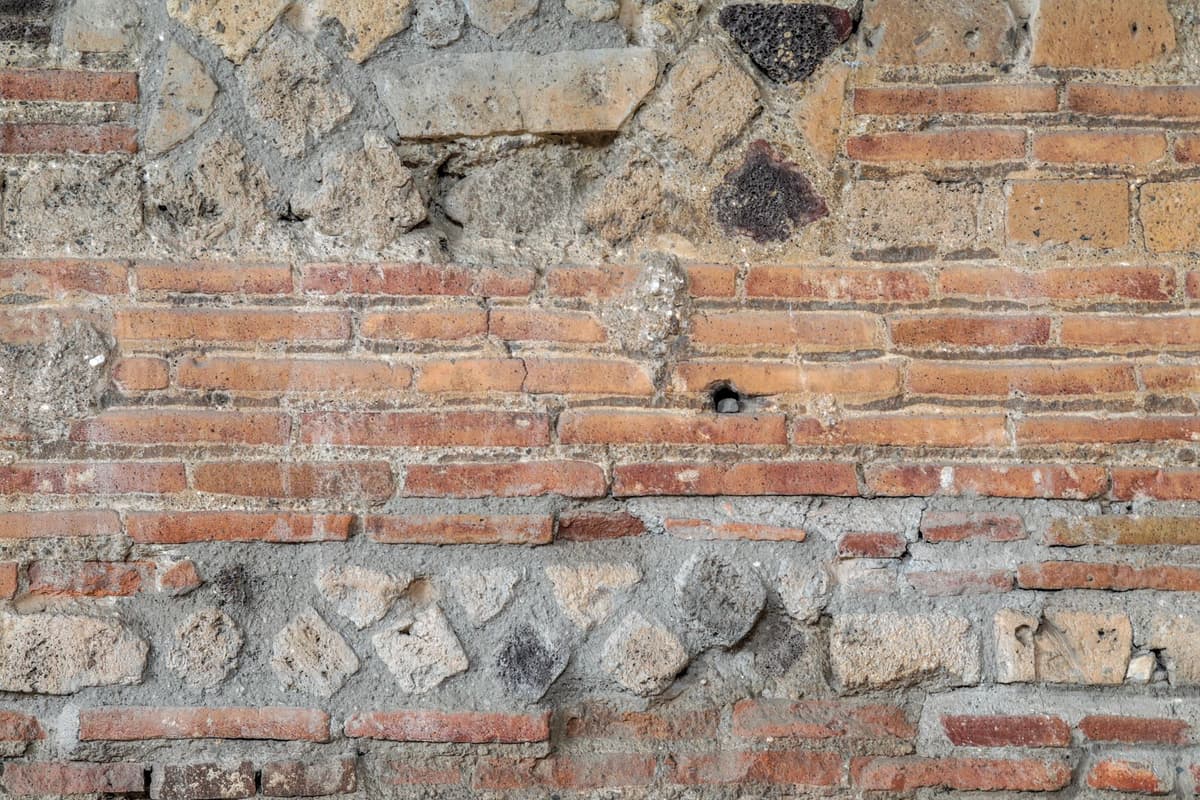
Photo by Franck Ferrante on Pexels
While our modern 'smart cities' try to use 5G and sensors to manage infrastructure, the Romans used the biological output of their population. It is the ultimate irony of history: the more crowded and 'unhygienic' the city became, the stronger its walls grew. They weren't trying to be sustainable. They were just too cheap to build individual bathrooms, and the universe rewarded their lack of modesty with buildings that refuse to die.
This 'bio-feedback loop' explains why certain Roman harbors and sewage tunnels are more durable than the concrete we poured in 1995. The chemical signature of ancient waste created a crystalline structure within the concrete that is essentially self-repairing. We have been looking for a master architect when we should have been looking for a plumber with a very busy schedule. It's not a miracle of design; it's a miracle of unintended consequences.
The High Cost of Privacy
We decided as a species that we wanted doors on our bathroom stalls, and in doing so, we sacrificed the longevity of our buildings. That is the trade-off. You get to scroll through your phone in private, but your apartment building will probably be a parking lot in seventy years. The Romans didn't have that luxury, and their reward is a coliseum that survived the Middle Ages, several earthquakes, and millions of tourists wearing fanny packs.
Modern concrete is designed to be convenient. It cures fast, it looks clean, and it starts degrading the moment the truck leaves the site. Roman concrete was a slow-cooked stew of volcanic rock and human metabolic waste. It took years to fully harden, but once it did, it became a part of the geology. We are building for the next quarter’s earnings report; they were building because they had nowhere else to put all that nitrogen and nowhere else to talk about the Senate.
What This Actually Means
It means that human progress is often a series of happy accidents fueled by things we find repulsive. We want to believe that the Great Works of Humanity are the result of pure intellect and lofty goals. The reality is that the most enduring structures on the planet are basically fossilized toilets. It’s a stinging critique of our current obsession with 'disruptive technology' when the most disruptive thing the Romans ever did was sit down next to each other.
If we want buildings that last 2,000 years, we don't need better software. We need to reconsider our stance on communal sponges and public chemistry. But since we aren't going to do that, we’ll just have to accept that our civilization will be a layer of plastic and rusted rebar in the geologic record, while the Roman latrines will still be sitting there, mocking us with their structural integrity.
Nature doesn't care about your architectural degree. It cares about chemistry. And as it turns out, chemistry really likes the stuff we try hardest to flush away. The Romans didn't beat time with their minds; they beat it with their bladders.
Quick Answers
Wait, so the secret ingredient was actually pee?
Mostly the nitrogen and ammonia reacting with the volcanic ash to create rare minerals like stratlingite, which stop cracks from spreading. It's less 'magic dust' and more 'biological mortar.'
Are you saying we should stop building modern bathrooms?
Unless you want your local library to double as a chemical reactor for your neighbors' waste, no. We've traded structural immortality for the dignity of not making eye contact while we go.
Why didn't we know this before?
Because scientists usually look for 'clean' explanations like mineral ratios rather than admitting the local tavern's drainage system was the real engineering hero.