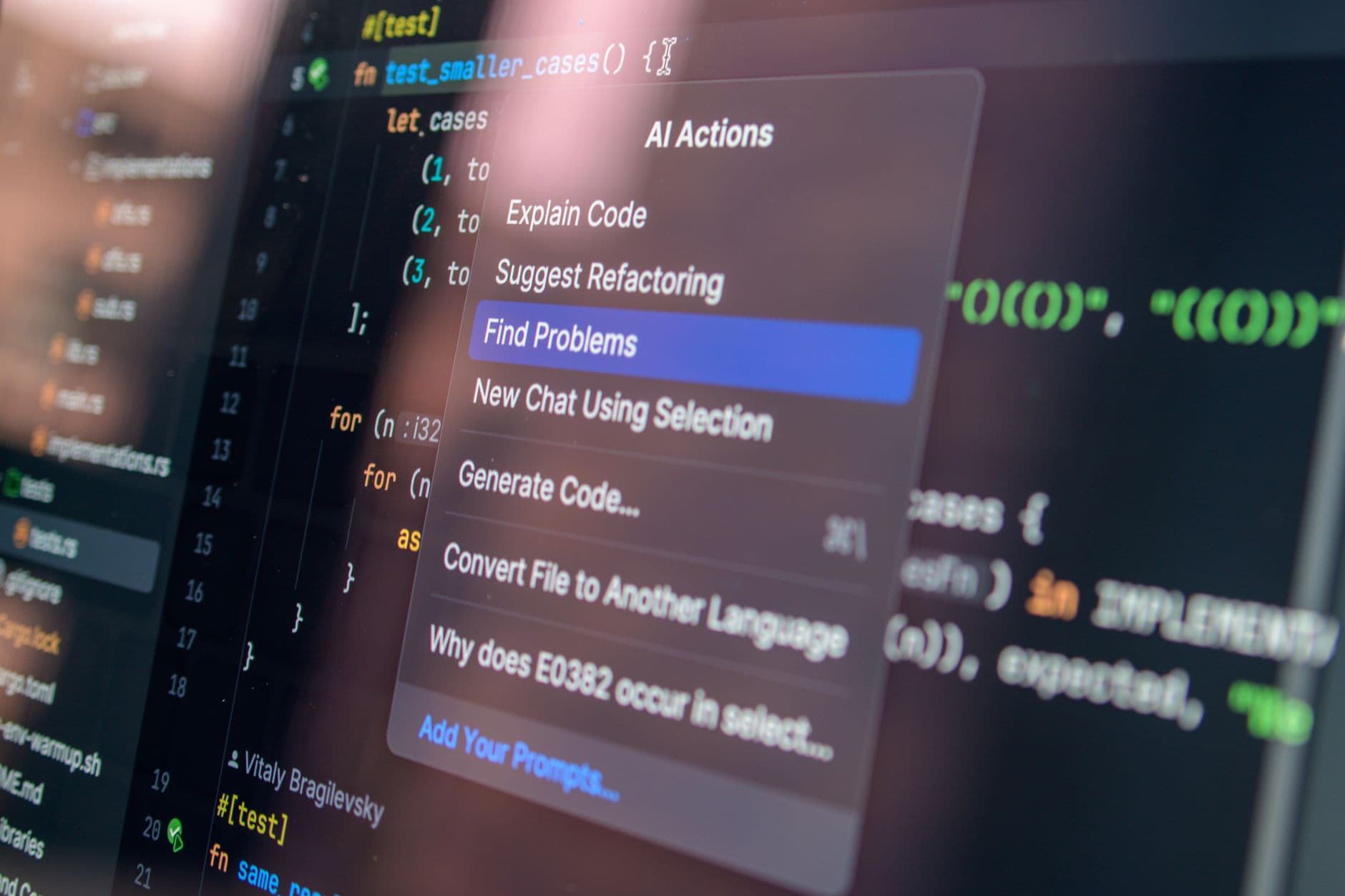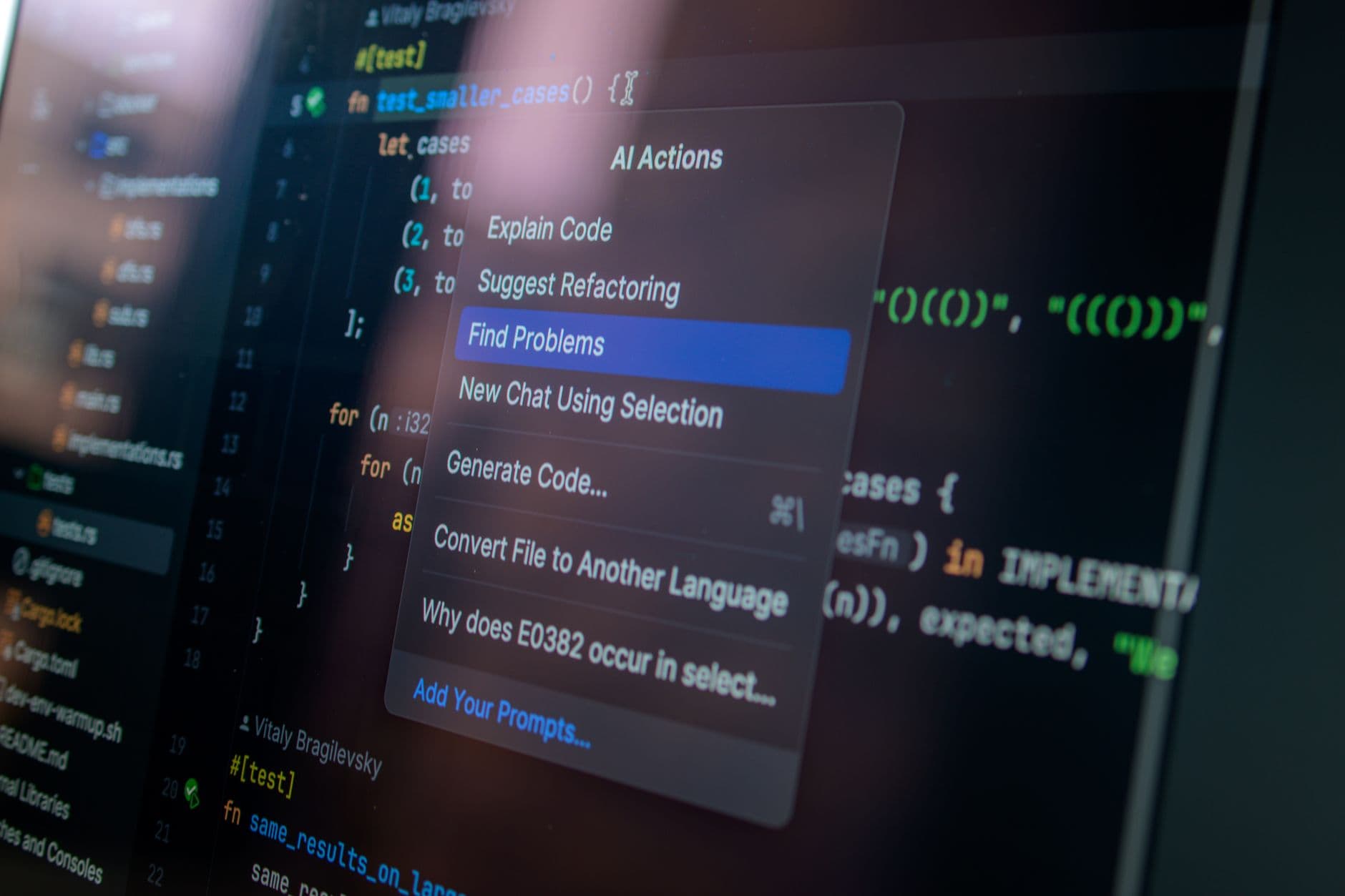
Modern software development has entered a dangerous era of structural negligence. When Andrew Kelley, the creator of the Zig programming language, recently critiqued the industry's pivot toward LLM-dependent coding, he wasn't just defending a niche language; he was identifying a systemic economic risk. We are replacing the deliberate, human act of architectural design with a statistical approximation of what code should look like. This is not progress. It is the high-speed manufacturing of future catastrophes.
Anthropic and other major AI players sell a vision of infinite productivity, yet they rarely account for the entropy they introduce. A developer using an LLM to generate a feature in ten minutes feels like a hero. However, that developer often lacks a deep understanding of the subtle logic gates and edge cases the AI hallucinated into the middle of a five-hundred-line pull request. When that code fails eighteen months from now, the original prompter may be gone, and the remaining team will be left staring at a black box of synthetic logic that no human actually wrote or fully understands.
The Illusion of Feature Velocity
Venture capital thrives on the metric of 'velocity,' but speed is a liability if the direction is wrong. Startups are currently using AI to ship features at a rate that would have been physically impossible three years ago. This creates a false sense of value. A company might hit its Series B milestones by shipping six major integrations in a quarter, but if those integrations are built on a foundation of unoptimized, AI-generated bloat, the company has effectively taken out a high-interest loan against its own future.

This isn't just a theoretical concern for engineers. It is a fundamental balance sheet issue. Real technical debt—the kind that requires a total rewrite—usually takes years to accumulate. AI is compressing that timeline. We are seeing systems reach a state of unmaintainable 'spaghetti code' in months rather than decades. The cost to fix these systems will eventually outpace the revenue they generate, leading to a massive correction in the SaaS market where 'AI-first' companies find themselves unable to pivot because their codebases are too brittle to touch.
The Emergence of the Refactoring Economy
As these systems begin to fail under their own weight, we will see the rise of a secondary market: the human refactoring consultant. Companies that spent 2024 firing senior engineers to replace them with junior 'prompt engineers' will spend 2026 desperately trying to hire those same seniors back at triple the rate. These specialists will be tasked with the digital equivalent of hazardous waste removal—untangling millions of lines of AI-generated nonsense that lacks a cohesive mental model.
- Senior engineering salaries will likely spike as 'janitorial' coding becomes the most critical role in tech.
- Insurance premiums for software reliability may begin to reflect the percentage of a codebase that was generated by non-human agents.
- The 'AI discount' will become a reality in M&A, where acquiring companies lower their offer prices for startups with high synthetic code ratios.
We are essentially building a digital infrastructure out of cheap, unreinforced concrete. It looks fine during the ribbon-cutting ceremony, but it lacks the internal tension and integrity required to survive a shift in the environment. The current trend ignores a basic truth of the industry: code is read far more often than it is written. If no human can easily read and reason about the logic, the code is a liability, not an asset.
The Fallacy of the Infinite Prompt
There is a prevailing belief in Silicon Valley that we can simply use more AI to fix the problems created by the first AI. This is a circular logic that ignores the reality of compounding errors. If you use a model to refactor code that was poorly generated by a previous model, you are effectively playing a game of digital telephone with your core intellectual property. Every iteration moves further away from a verifiable, secure, and performant reality.
True engineering requires saying 'no' to features that cannot be supported by the current architecture. AI never says no. It simply provides a solution that looks correct on the surface but may be computationally expensive or fundamentally insecure. By prioritizing the 'write' phase of development, we are ignoring the 'maintain' phase, which accounts for roughly 70% of a software project's lifetime cost. This math does not change just because a chatbot provided the syntax.
What This Actually Means
The industry is currently in a honeymoon phase with synthetic code because the bills haven't arrived yet. But the physics of software remain unchanged. Every line of code added to a system increases its complexity, and if that complexity isn't managed by a human mind with a long-term vision, it will eventually collapse. We are trading long-term stability for short-term stock price bumps and VC funding rounds.
Investors and founders need to stop treating AI-generated code as a 'free' resource. It is a debt instrument. Those who continue to ignore the warnings from language creators like Andrew Kelley are setting themselves up for a reckoning. When the 'Technical Debt Bubble' bursts, the companies left standing won't be the ones that generated the most code, but the ones that had the discipline to write code that could actually be understood.
Sophisticated organizations will soon start implementing 'Human-Authored Minimums' for their core logic. They will realize that while AI can help with boilerplate and unit tests, the architectural spine of a product must be forged by human hand. Anything else is just a house of cards waiting for the first major wind.
Quick Answers
Is all AI-generated code bad for business?
No, but it is high-risk. It is useful for repetitive tasks and boilerplate, but dangerous when used for core logic without deep human oversight and architectural planning.
Why is this considered an economic risk?
Because it creates hidden liabilities. A company’s valuation is tied to its technology; if that technology is unmaintainable, the asset is significantly less valuable than it appears on paper.
Will AI eventually get good enough to refactor its own mess?
Unlikely in the near term. Refactoring requires understanding intent and business context, which AI lacks; it can only optimize patterns, not align code with shifting human goals.