The Canadian Connection to a French Soul
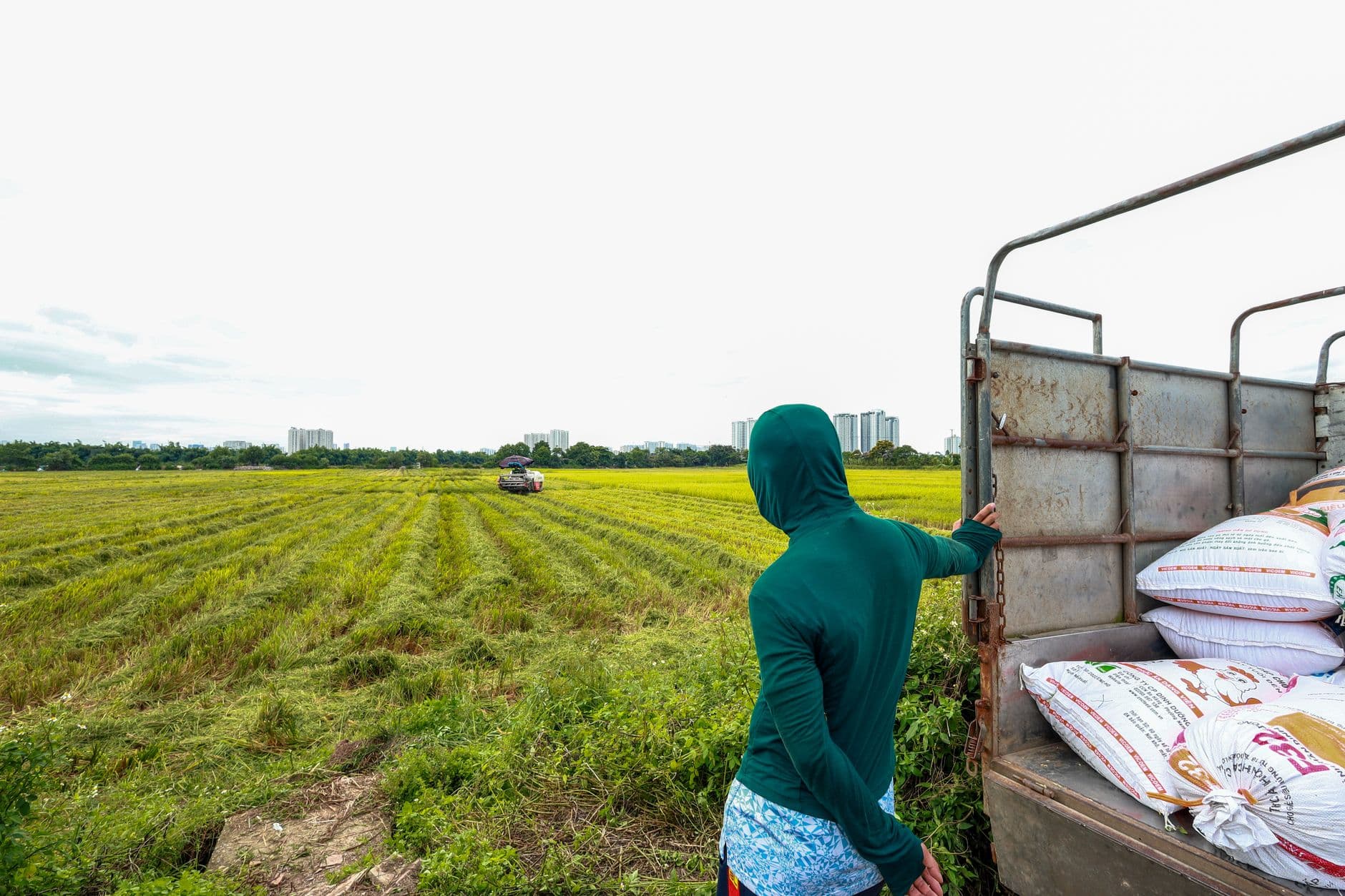
I’ve been staring at a jar of Maille and wondering how something so seemingly permanent can be so physically precarious. We think of Dijon mustard as an inherently French artifact, something birthed from the soil of Burgundy and protected by centuries of tradition. But the 2022 shortage revealed a strange, almost poetic dependency: about 80% of the brown mustard seeds used by French manufacturers actually come from the Canadian prairies. When the heat dome hit Saskatchewan and Alberta in 2021, cutting yields by 50%, the ripple effect didn't just slow down exports—it effectively turned off the tap for an entire culture's condiment.
It makes me wonder why we’ve collectively decided that putting all our seeds in one basket (or one province) was a sustainable strategy. Canada produces roughly 75% of the world's traded mustard seeds. That is a staggering level of centralization for a crop that is famously fickle. We’ve optimized our food systems for efficiency and price, but in doing so, we’ve accidentally built a system with zero redundancy. It’s like having a high-end stereo system where if one specific copper wire in a Canadian basement snaps, the whole world goes silent.
The Pesticide Paradox
While the climate was cooking the seeds in Canada, the European Union was tightening the screws on the chemicals used to grow them at home. France used to grow its own seeds, but the acreage plummeted over the last few decades. Part of this is purely economic—it’s cheaper to grow in the vast, flat expanses of the North American plains—but part of it is a genuine struggle with biology. The EU banned certain neonicotinoids to protect bee populations, which is objectively a good thing for the planet, but it left French farmers defenseless against the flea beetle.
- The flea beetle can decimate a mustard crop in days.
- Without specific pesticides, yields in France dropped by as much as 30-50%.
- Farmers switched to easier crops like sunflowers or rapeseed.
I find myself caught between two impulses here. I want a world where we don't poison the pollinators, but I also see the unintended consequence: by making it harder to grow mustard locally under strict environmental rules, we’ve forced the production to places where those rules are different, only to have the climate bite us anyway. It’s a loop. We protect the local environment, move the production halfway across the world to a climate-vulnerable monoculture, and then act surprised when the shelves are empty on Bastille Day.
Photo by esma bartin on Pexels
The Ghost of Diversity Past
What happened to the regional variants? History tells us that mustard wasn't always this singular, monolithic thing. In the 18th century, every region had its own blend, its own seed source, and its own texture. We traded that variety for the consistency of the 'Dijon' brand. Now, that consistency is our greatest weakness. If every jar of Dijon on Earth relies on the exact same genetic strain of seed grown in the exact same soil in Saskatchewan, a single bad weather event becomes a global catastrophe.
I’m curious about what a 'decentralized' pantry would actually look like. If we incentivized farmers in Burgundy to grow mustard again, even at a higher cost, would we pay for it? We say we value food security, but our buying habits suggest we value the $3.99 price point above all else. The shortage saw prices jump by 10% to 25% in some regions, and suddenly, the 'expensive' local seed didn't look so pricey anymore. It’s a classic case of knowing the price of everything and the value of nothing until it's gone.
What This Actually Means
The mustard crisis is a dry run for the rest of our diet. We are currently repeating this exact same mistake with coffee, chocolate, and wheat. We find the most efficient place on Earth to grow a crop, we transform that place into a massive monoculture, and we pray the weather stays boring. But the weather isn't boring anymore. The 2022 shortage wasn't a freak accident; it was a preview of a world where 'localized' ecological collapses have global consequences because we've engineered out all the safety nets.
We need to stop thinking about food as a factory product and start thinking about it as a biological portfolio. You wouldn't put 80% of your retirement savings into a single volatile stock, yet we’ve done exactly that with the basic ingredients of our lives. Diversifying the 'seed-to-shelf' geography isn't just a nice idea for organic hobbyists; it’s the only way to ensure that a heatwave in Canada doesn't mean a dry sandwich in Paris.
Ultimately, the lesson of the missing mustard isn't about condiments at all. It’s about the terrifying thinness of the ice we’re skating on. We’ve built a world of incredible abundance, but that abundance is brittle. It’s time we started valuing resilience as much as we value yield, even if it means the mustard costs an extra fifty cents.
Quick Answers
Why couldn't France just grow more mustard quickly?
Mustard is a rotation crop that requires specific soil conditions and is highly susceptible to pests like the flea beetle, which are currently difficult to manage under EU pesticide restrictions.
Is the shortage over now?
Yes, for the most part, as Canadian harvests recovered in 2023, but the underlying vulnerability—the fact that one region produces most of the supply—remains completely unchanged.
Will this happen to other foods?
Almost certainly. Crops like coffee and vanilla are even more concentrated in specific geographic 'hubs' that are currently facing significant climate instability.