
Modern networking is built on a fragile lie: the assumption that a connection must be constant to be valid. For forty years, the TCP/IP protocols that Vint Cerf helped birth have relied on a 'chatty' handshake, a continuous back-and-forth that assumes a response will arrive in milliseconds. On Earth, where light circles the globe seven times a second, we can afford this vanity. But as Cerf prepares to step back, his final contribution—the Bundle Protocol—forces us to confront a universe that does not care about our need for real-time gratification.
Moving the internet to Mars isn't a matter of laying more cable or launching better satellites. It is a fundamental divorce from the concept of the 'session.' Between Earth and Mars, the round-trip time for a signal ranges from eight to forty-eight minutes. In that window, a standard web browser would time out thousands of times over. Cerf isn't just retiring; he is handing us the blueprints for an infrastructure that survives the void by embracing the delay.
The End of the Chatty Protocol
The fundamental problem with terrestrial internet is its sensitivity to interruption. If a single packet of data is lost or a connection flickers for a second, the entire exchange often collapses and must restart. This is the 'chattiness' of TCP/IP. It requires a synchronous heartbeat between two points. In deep space, where planets rotate and orbits create literal shadows that block signals for hours, synchronicity is impossible.
Cerf’s solution is the Delay-Tolerant Networking (DTN) architecture, specifically the Bundle Protocol (RFC 5050). Instead of assuming an end-to-end path exists, DTN treats every node in the network—be it a rover, a satellite, or a ground station—as a secure storage locker. Data is 'bundled' and moved hop-by-hop. If the next node isn't visible, the data simply sits and waits. It does not expire. It does not trigger an error. It persists until the celestial mechanics align.
This shift from 'flow-based' to 'storage-based' networking is the most significant architectural pivot since the 1970s. It acknowledges that in a vast system, the state of the network is permanently fragmented. We are moving away from the illusion of a single, global circuit and toward a relay system that mirrors the maritime post of the 18th century, updated for the speed of light.
Terrestrial Applications for Deep Space Logic
While the primary theater for the Interplanetary Internet is the 140-million-mile gap between us and the Red Planet, the implications for Earth’s 'digital deserts' are profound. Our current obsession with 5G and low-latency fiber has left behind the billions of people living in environments where connectivity is intermittent at best. We have built a digital society that breaks the moment it loses a signal.
By implementing DTN locally, we could finally solve the connectivity gap in remote regions like the Arctic or deep sub-Saharan Africa. In these areas, hardware is often available, but consistent backhaul is not. A DTN-based system would allow a village school to function digitally even if its satellite link only appears for one hour a day. The data would accumulate locally and sync automatically during that window, without the user ever seeing a 'Connection Timed Out' screen.
- DTN ignores the 'jitter' and high error rates of long-distance radio links.
- It provides a standardized way to use 'data mules'—physical vehicles carrying storage devices—as legitimate network nodes.
- It moves security to the data bundle itself, rather than relying on the security of the connection path.
The Weight of a Final Legacy
Vint Cerf’s career is a rare arc that begins with the creation of a tool and ends with the realization of its limitations. In the 1970s, the goal was to make computers talk to each other across a room. In 2024, the goal is to make civilizations talk to each other across a solar system. There is a specific kind of humility in designing a system that assumes failure is the default state of a connection.
This 'architecture of patience' is more than a technical specification. It is a philosophy for a maturing species. We are moving past the frantic, fragile infancy of the internet—where every millisecond of lag was a flaw—into a robust era where we build systems meant to last across vast distances and uncertain timeframes. Cerf is leaving us with a network that doesn't just work; it waits.
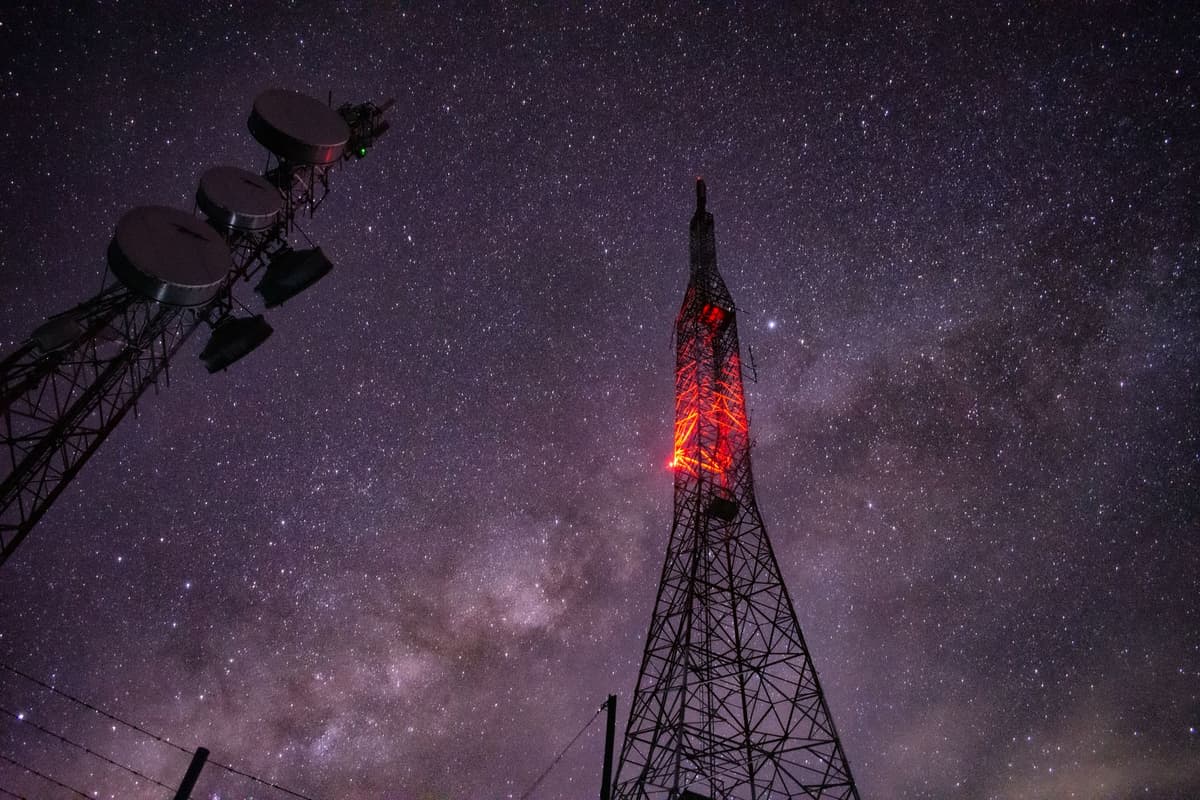
Photo by Juan Martin Gomez on Pexels
What This Actually Means
The expansion of the Interplanetary Internet signifies that we are no longer treating space as a series of isolated missions, but as a permanent extension of human geography. By 2030, the Lunar Gateway and various Mars assets will likely be using the Bundle Protocol as their primary means of communication. This creates a standardized 'Solar System Web' that allows any nation or private company to plug into an existing backbone rather than building bespoke, proprietary radios for every launch.
For those of us on Earth, this means the 'always-on' requirement for digital participation is about to become optional. The technologies developed to handle the Martian vacuum will eventually filter down into our devices, allowing our phones and computers to handle dead zones with the same grace as a Mars rover. We are building a more resilient, less frantic version of the internet by looking at the stars.
Ultimately, Vint Cerf is ensuring that his life’s work doesn't die with the limitations of Earth’s atmosphere. He is giving us a way to maintain our collective knowledge and communication across a scale of distance that our ancestors could only measure with their eyes. It is a transition from a global network to a cosmic one, and it is the only way forward.
Quick Answers
Is the Interplanetary Internet just faster satellites?
No, it is a total rewrite of the software protocols. It focuses on 'Store-and-Forward' mechanics rather than the constant, real-time handshaking used by Earth-based Wi-Fi and LTE.
When will this be fully operational?
Elements are already in use. NASA has been testing DTN on the International Space Station since 2016, and it is the designated standard for the upcoming Artemis moon missions.
How does this help people without internet on Earth?
It allows for 'asynchronous' internet. People in remote areas could use apps and services that sync whenever a connection becomes available—via a passing truck, plane, or low-orbit satellite—without the apps crashing or losing data.