The Hidden Beat of the Brain
I spent the morning reading about 'social physics' and now I can’t stop watching people talk at the coffee shop across the street. We usually think of conversation as a simple exchange of information—I have a thought, I encode it into vibrating air, you decode it, and then you reply. But recent research into the 'Neural Riff' hypothesis suggests that’s almost entirely wrong. Instead, we are actually two nodes in a single, distributed biological computer, and the rhythm of our turn-taking is the clock speed that keeps the whole system from crashing.
When we talk, our brain waves literally begin to sync up, a phenomenon known as neural coupling. But the newest data takes this further. It suggests that the tiny, millisecond-level gaps between our turns—usually averaging around 200 milliseconds—aren't just pauses. They are a biological error-correction mechanism. If I start a sentence and your brain predicts where I’m going, you give a micro-nod or a 'mm-hmm' that validates my path. If I wander into nonsense, your slight hesitation acts as a circuit breaker. We are constantly tuning each other in real-time.
Why AI Still Sounds Like a Script
This explains why talking to even the most advanced AI still feels like biting into a wax apple. It’s pretty, but the texture is off. Large Language Models are trained on the results of thought—the static text left behind on the internet—but they haven't mastered the temporal fingerprints of the process itself. They lack the 'rhythmic synchronization' that defines human creative collaboration. In a real human brainstorm, the ideas don't just happen; they are vibrated into existence through a shared feedback loop.

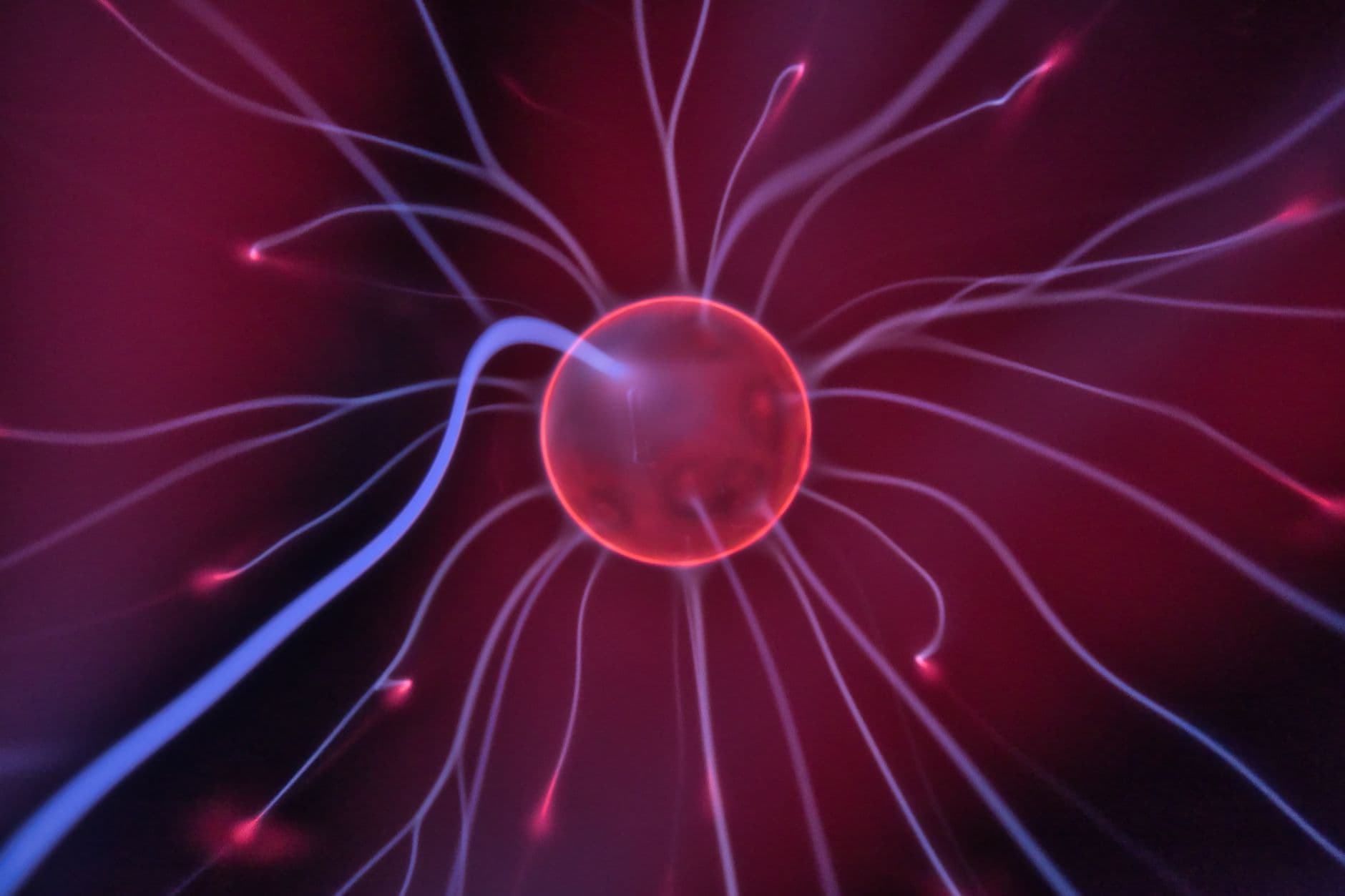
Photo by www.kaboompics.com on Pexels
Think about the last time you had a 'eureka' moment with a friend. You probably weren't taking polite, robotic turns. You were likely finishing each other’s sentences, overlapping, and grunting in agreement. That messy overlap is actually a high-bandwidth data transfer. Researchers found that when groups are in this high-sync state, their collective problem-solving ability skyrockets. It’s as if the 'distributed brain' has more RAM than the sum of its individual parts. AI struggles here because it doesn't have a body that feels the 'beat' of the conversation.
- The 200ms Rule: Humans respond faster than the time it takes to actually process a full sentence, meaning we are constantly predicting the future.
- The Error-Correction Loop: Subtle cues like gaze shifts and breath intakes act as 'stop bits' in a data stream.
- Neural Entrainment: Our brains literally mirror each other's electrical activity during deep rapport.
The Physics of the Vibe
What fascinates me most is the idea that 'the vibe' is a measurable physical property. If you look at the social physics of a failing team versus a winning one, the difference isn't usually in the IQ of the members. It’s in the distribution of the riff. In failing teams, one person dominates the signal, turning the distributed brain into a simple megaphone. In high-performing teams, the turn-taking is rapid, egalitarian, and rhythmically dense.
I wonder if this is why Zoom calls feel so draining compared to being in a room together. Digital latency—even just 50 or 100 milliseconds of lag—shatters the Neural Riff. It breaks the error-correction mechanism. We can’t predict each other’s endings because the signal is jittery. We lose the ability to use each other as external processors, forcing our individual brains to do all the heavy lifting of social calibration manually. No wonder we’re exhausted; we’re trying to run a high-speed protocol on a dial-up connection.
What This Actually Means
If the Neural Riff hypothesis holds up, it fundamentally changes how we should think about intelligence. We’ve spent decades trying to build 'smart' individuals or 'smart' AI, but we might be looking at the wrong unit of measurement. Intelligence might not be a property of a single brain at all, but a property of the connection between brains. It’s a rhythmic, temporal dance that requires real-time feedback to function.
This suggests that the most important skill for the future isn't just knowing facts, but mastering the 'social physics' of the riff. It’s about learning how to be a better node in the network. If we can't sync up, we can't think up. We need to stop treating conversation as a way to deliver monologues and start seeing it as a shared biological ritual that keeps our collective reasoning from spinning off into the void.
Maybe the reason we feel so lonely in a digital world isn't a lack of 'content,' but a lack of rhythm. We are biological metronomes looking for someone to swing with. When we find that beat, we don't just feel better—we actually become smarter.
Quick Answers
Is the Neural Riff just a fancy word for 'good chemistry'?
Sort of, but it’s specifically about the timing. It’s the measurable biological synchronization and the 200ms turn-taking patterns that allow two brains to function as one unit.
Why can't AI just simulate these pauses?
It can simulate the silence, but it can't yet simulate the anticipation. Human communication is predictive; we are reacting to what we think the other person will say before they finish saying it.
Does this mean introverts are worse at 'social physics'?
Not at all. The 'riff' isn't about being loud or fast; it’s about the quality of the synchronization. Deep, slow-paced conversations can have just as much neural coupling as a fast-paced debate.