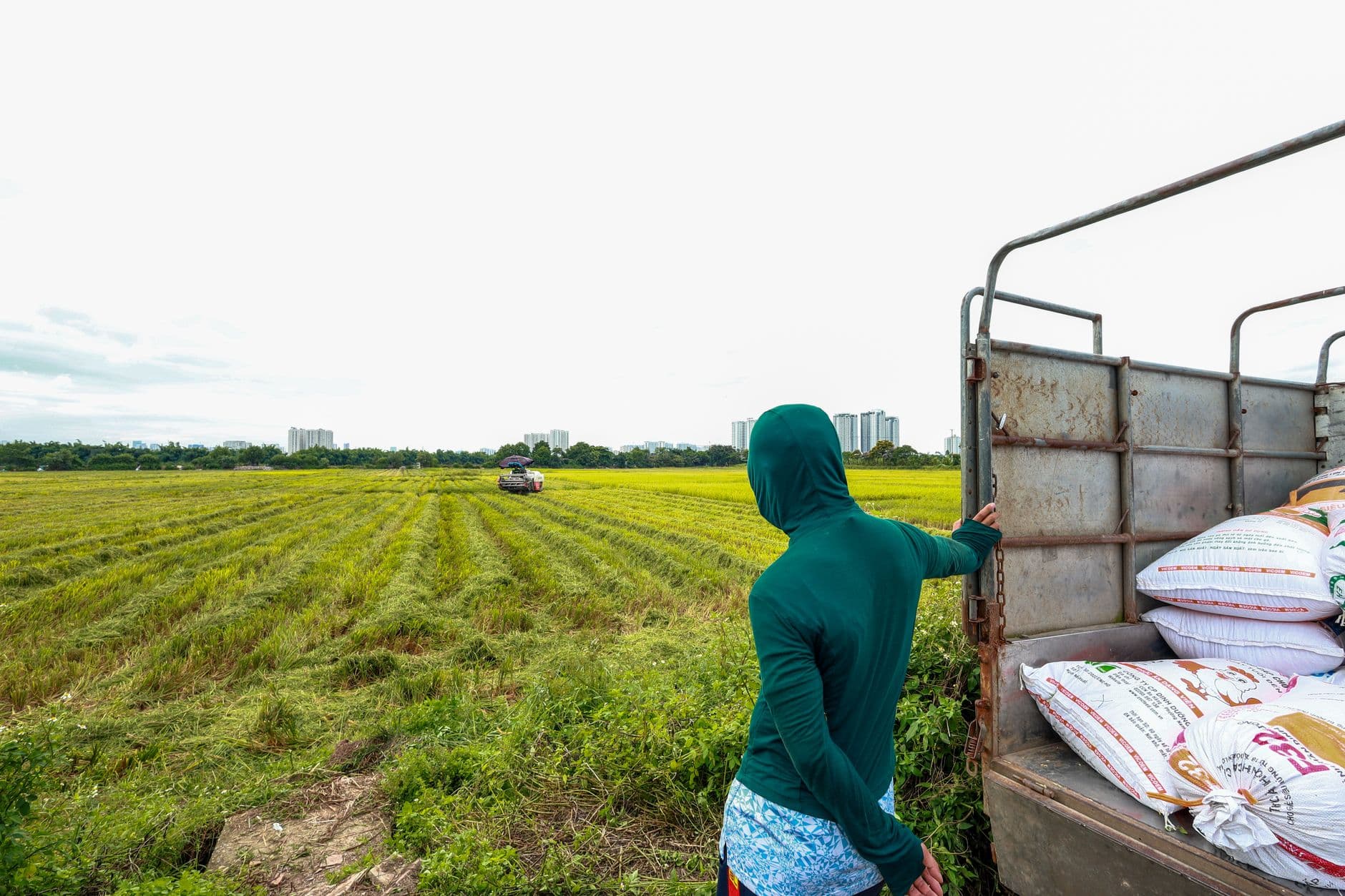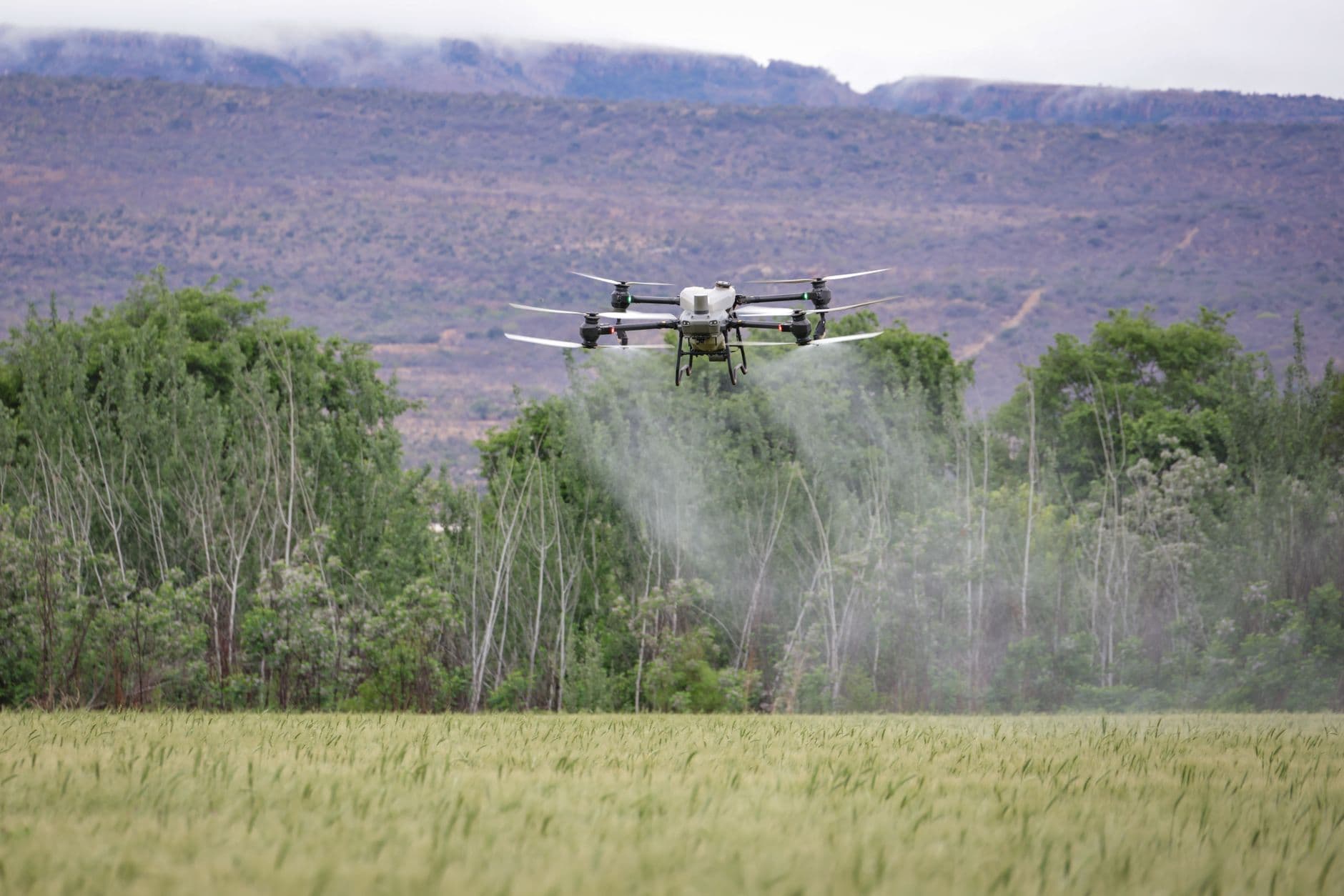
Industrial agriculture is built on a lie of perfect geometry. For a century, we have bulldozed, leveled, and planted in rigid, predictable grids solely because our machines demanded it. Standard GPS-guided tractors work brilliantly when they are driving in straight lines across a flat, barren field of wheat. But a fruit orchard is not a flat field; it is a three-dimensional obstacle course of sagging branches, shifting foliage, and delicate, high-value yields that cannot tolerate a single mechanical miscalculation.
The release of Mistral’s "Robostral" navigation model represents a pivot point in how we apply artificial intelligence to physical reality. By moving past rigid coordinate-based navigation and embracing real-time, non-linear spatial reasoning, this technology attempts to solve the "cluttered environment" problem that has kept autonomous harvesting a laboratory pipe dream. If it succeeds, it will change more than just how we harvest fruit; it will rewrite the economic and physical layout of the modern farm.
The Failure of the Two-Dimensional Farm
To understand why Robostral matters, you have to understand why traditional agricultural automation has stalled. Farmers have used automated steering systems since the early 2000s, relying on Real-Time Kinematic (RTK) GPS to achieve sub-inch accuracy. This works for planting soy, but it fails completely the moment a machine enters a vineyard or an apple orchard.
In these environments, GPS signals drop beneath dense leaf canopies. More importantly, the targets themselves are dynamic. A branch heavy with Honeycrisp apples hangs three feet lower on a Tuesday than it did on a Monday. A sudden gust of wind changes the physical boundary of a row in real time.
Standard industrial robots expect static environments where every variable is controlled. When a traditional robot encounters an unexpected obstacle—like a stray branch or a worker—it has only two options: stop entirely, stalling production, or push through, destroying both the crop and its own expensive sensors. The farm cannot be standardized like a silicon fabrication plant, which is why orchard labor has remained almost entirely manual.
Moving from Coordinates to Context
Robostral shifts the paradigm from absolute coordinates to contextual awareness. Instead of asking "where am I on the map?" the model asks "what is the physical geometry of the space immediately around me, and how is it changing?"
By processing multi-modal sensor data—combining LiDAR, depth-sensing cameras, and inertial measurement units—the model generates a continuous, probabilistic map of its surroundings. It treats the orchard not as a set of obstacles to avoid, but as a fluid volume to negotiate.
- Dynamic path planning: The system recalculates its trajectory fifty times per second, allowing a multi-jointed harvesting arm to weave between branches without touching them.
- Sensing elasticity: The model distinguishes between a rigid wooden post, which must be avoided, and a soft leaf cluster, which can be gently brushed aside.
- Predictive occlusion handling: If a camera’s view of a fruit cluster is temporarily blocked by a blowing leaf, the system uses spatial memory to predict the fruit’s location rather than stopping.
This is not just a software update; it is a fundamental shift in machine intelligence. It moves us away from brute-force automation toward a nuanced, tactile interaction with the natural world.
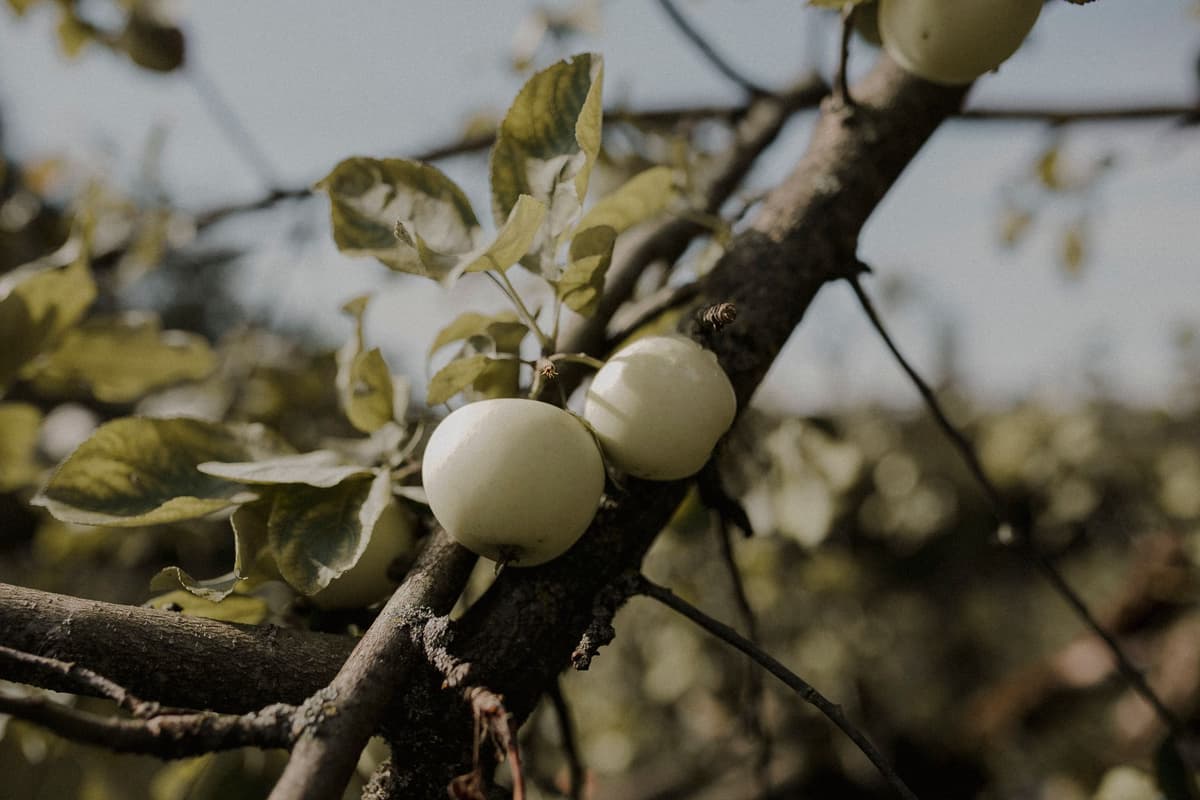
Photo by Elina Volkova on Pexels
The Brutal Economics of Specialty Crops
This technology arrives at a moment of acute existential crisis for high-value agriculture. Specialty crops—fruits, vegetables, and nuts—account for approximately 30% of US crop production value, yet they are disproportionately dependent on manual labor.
In regions like the Pacific Northwest, labor costs can consume up to 40% of an orchard’s gross revenue. The pool of available seasonal agricultural workers has been shrinking for over a decade, driven by shifting demographics and stricter border policies. Growers are facing a math problem they cannot solve: the cost of labor is rising, the availability of labor is falling, and the global market price for produce remains highly competitive.
Automation is the only viable path forward, but the barrier has always been the fragility of the product. A bruised apple is worthless. A torn grapevine takes years to replace. By proving that a machine can navigate these delicate spaces with the dexterity of a human picker, Robostral addresses the primary bottleneck preventing the automation of a $20 billion domestic fruit industry.
What This Actually Means
The implications of Robostral extend far beyond the immediate survival of orchard owners. If machines can reliably navigate complex, non-linear environments, we can finally abandon the ecological monoculture forced upon us by simplistic machinery.
We may see a return to polyculture farming, where different species of trees, vines, and ground cover are interplanted in the same space. This practice is ecologically superior—it improves soil health, reduces pest vulnerability, and conserves water—but it was abandoned because modern tractors couldn't handle the complexity. With adaptive AI navigation, diversity is no longer an engineering liability.
Ultimately, this breakthrough signals that the divide between the digital world and the physical world is closing. For years, AI’s greatest triumphs have been virtual, confined to screens and servers. By successfully tackling the chaotic, unpredictable reality of the orchard, systems like Robostral prove that intelligence is finally ready to get its hands dirty.
Quick Answers
Why can't we just use standard self-driving car technology in orchards?
Self-driving cars rely on highly structured environments with clear lanes, signs, and flat surfaces. Orchards lack these reference points and require three-dimensional navigation through soft, moving obstacles that are often inches away from the vehicle.
Will this technology immediately eliminate agricultural jobs?
No. The transition will take years due to the high capital cost of robotic hardware. Initially, these systems will supplement the shrinking seasonal labor force rather than replace it entirely.
Can Robostral handle different types of crops without reprogramming?
Yes. Because the model relies on generalized spatial reasoning and real-time geometry rather than rigid templates, it can adapt from an apple orchard to a vineyard with minimal calibration.