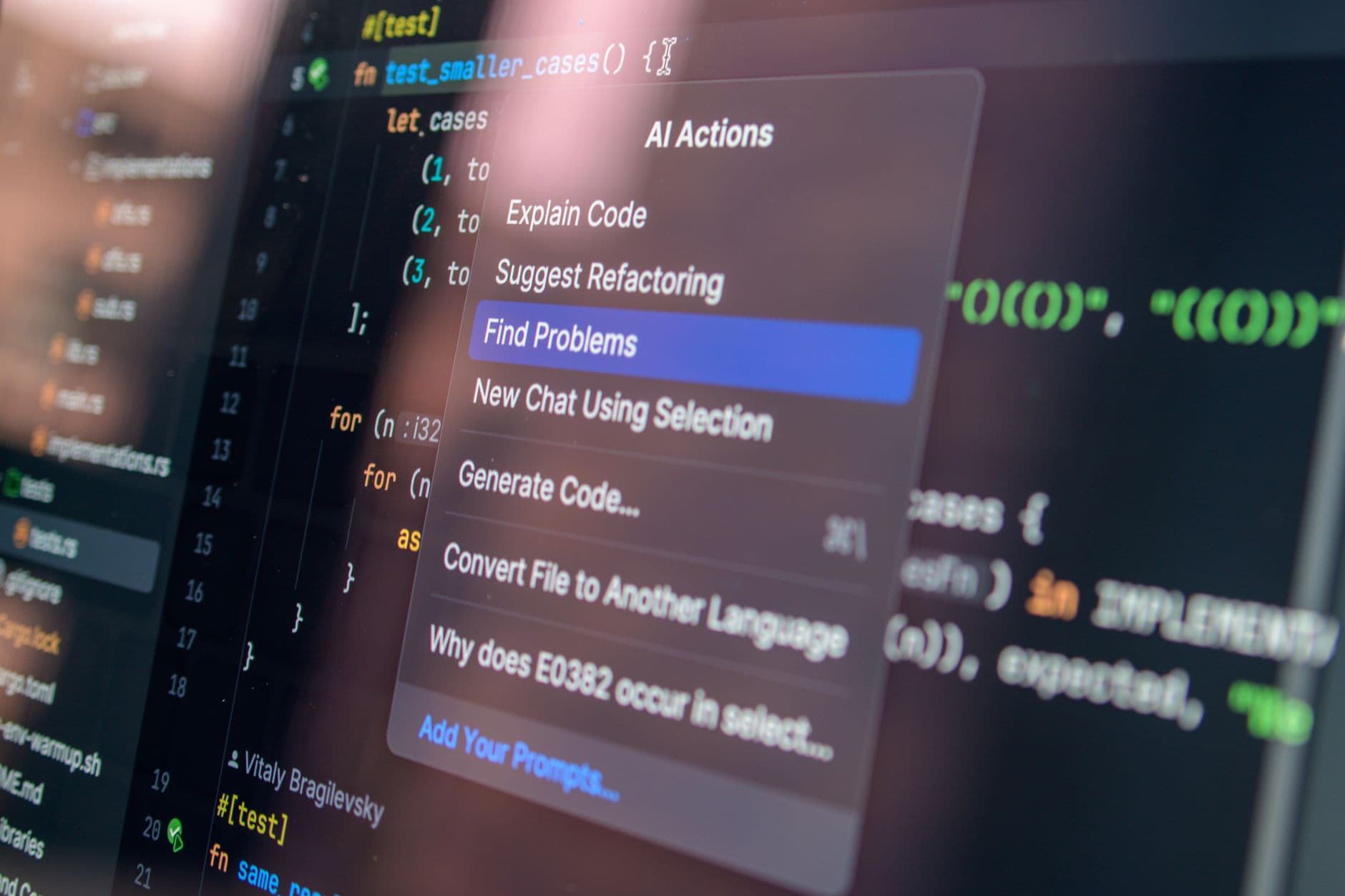
The era of the 'input-output' machine is dying. For decades, the relationship between a developer and their computer was defined by the bottleneck of the keyboard. You thought of a logic flow, you typed it out, and the machine executed it. This was a linear, manual process that treated the computer as a sophisticated typewriter. With the emergence of persistent coding agents like Claude Code and various OpenCode forks, that relationship has fundamentally fractured. We are no longer operators; we are becoming governors of autonomous systems that require a completely different hardware profile to function effectively.
This shift is not merely a software update. It is a structural transformation in how we conceive of personal computing. When an agent is tasked with refactoring a legacy codebase or hunting for a race condition across twenty microservices, it isn't waiting for your next keystroke. It is running thousands of simulations, checking documentation, and iterating in a background loop that never sleeps. Our current hardware—optimized for thin profiles and bursty, human-speed tasks—is woefully unprepared for the thermal and computational demands of 24/7 autonomous reasoning.
The Architecture of Agency
Traditional consumer hardware is designed around the 'interrupt.' You click a button, the CPU spikes to fulfill the request, and then it settles back into an idle state to preserve battery and keep the chassis cool. Coding agents invert this logic. They operate on 'persistence.' An agentic workflow requires a sustained, high-bandwidth connection between the local environment and the model's reasoning engine. This demands a shift in silicon priority toward NPU (Neural Processing Unit) sustained throughput rather than just peak GPU performance for gaming or video rendering.
We are already seeing the first ripples of this in the supply chain. Companies are beginning to prioritize 'Reasoning-per-Watt' as the primary metric for the next generation of professional-grade laptops. The goal is no longer just to make the screen brighter or the chassis lighter. The goal is to create a device that can act as a local 'agency server'—a machine that can host multiple autonomous loops without thermal throttling or draining a battery in forty-five minutes. If your laptop cannot sustain a three-hour autonomous debugging session while you are offline, it is already obsolete.
Moving Beyond the Screen-Centric Design
If the primary actor on a computer is an AI agent, the screen becomes a secondary monitoring tool rather than the primary interface. We are approaching a 'post-interface' reality where the most important work happening on your machine is invisible to you until it is completed. This suggests a future where hardware might de-emphasize the traditional 16-inch display in favor of massive increases in unified memory and localized LLM acceleration. The bottleneck is no longer how fast you can see the code; it is how much context the agent can hold in its active 'thought' process.
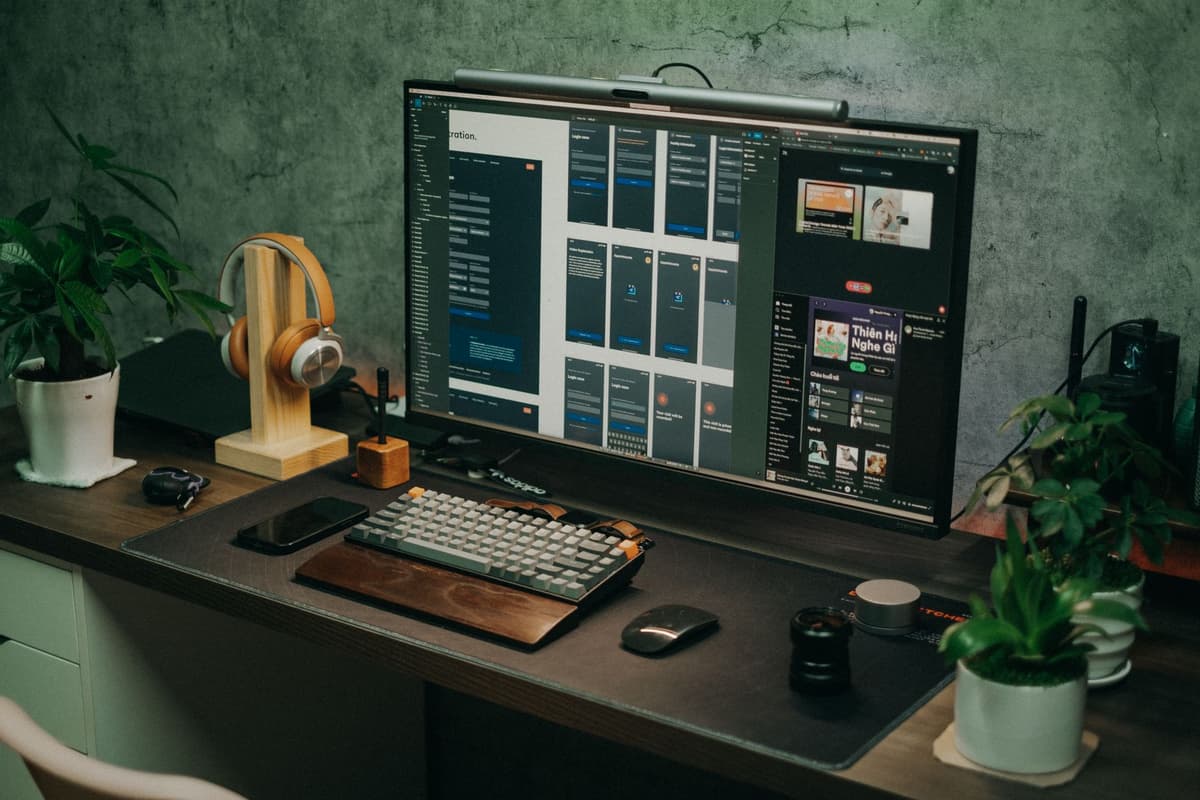
Photo by Pew Nguyen on Pexels
Consider the implications for the professional workspace. If a developer's primary tool is a persistent agent, they may not need to sit in front of a monitor for eight hours a day. They need a high-bandwidth node that lives in their bag or on their desk, quietly executing complex architectural changes. The 'laptop' may evolve into a headless brick of high-performance silicon that beams status updates to a tablet or glasses. The physical form factor is finally catching up to the fact that humans are the slowest part of the production cycle.
The High-Bandwidth Bottleneck
The most significant hurdle for this new hardware category is data gravity. An agent can only be as effective as its access to the codebase and the speed at which it can process that data. Current cloud-based agents suffer from latency and privacy concerns that make them unpalatable for enterprise-scale private repositories. This creates a massive market vacuum for 'Edge Agency'—hardware specifically built to index, encrypt, and reason over massive local datasets without ever sending a packet to a third-party server.
By 2026, the standard developer machine will likely ship with 128GB of unified memory as a baseline, not because the OS needs it, but because the local coding agent needs that space to store the vector embeddings of the entire project. We are moving away from general-purpose computing toward a world of specialized 'Reasoning Stations.' These devices will be judged by their ability to maintain 'contextual integrity'—the ability to keep the entire logic of a massive software system active in high-speed memory simultaneously.
What This Actually Means
The rise of the coding agent as a hardware category signifies the end of the 'tool' and the beginning of the 'partner.' We are moving from a world where you use a computer to a world where you manage a fleet of capabilities. This requires a mental shift in how we value our equipment. We should stop looking for devices that make our work easier and start looking for devices that can do the work in our absence.
This isn't about automation in the sense of a macro or a script. It is about the commoditization of expertise. When the hardware is built specifically to house an agent that understands the nuances of C++ or the complexities of Kubernetes better than the average senior engineer, the laptop becomes an asset in the literal sense—it produces value while you sleep. The 'Post-Interface' gadget is the ultimate realization of computing: a machine that finally stops asking us what to do and starts telling us what it has accomplished.
In the long run, the winners of the hardware wars won't be the ones with the best marketing or the sleekest hinges. They will be the ones who can provide the most stable, most powerful, and most autonomous environment for software that thinks for itself. The keyboard is becoming a vestigial organ. It is time we designed our machines to reflect that reality.
Quick Answers
Will coding agents replace the need for high-end laptops?
No, they will actually increase the demand for high-end specs, particularly RAM and NPU power, to handle the massive local processing required for autonomous reasoning loops.
Do I still need to learn to code if the hardware does it?
Yes, but your role shifts from 'writer' to 'editor' and 'architect.' You must understand the logic to verify that the agent’s output aligns with the broader system goals.
Is this just for software engineers?
While it starts with code, the 'agency server' model will eventually apply to any field involving complex digital workflows, including legal analysis, financial modeling, and scientific research.