The Galactic Inbox Is Full
For decades, the Search for Extraterrestrial Intelligence (SETI) was a romantic, slightly dusty pursuit involving oversized satellite dishes and people wearing corduroy jackets. The plan was simple: point a giant ear at a star, hope a little green man was broadcasting a prime number sequence, and pray nobody in the breakroom turned on a microwave. It was intimate. It was focused. It was also spectacularly unsuccessful, mostly because we were looking at the cosmic equivalent of one pixel on a 4K screen and calling it a survey.
Now, we’ve entered the era of the "Large Search," which is just a fancy way of saying we are drowning in data we don't know how to read. We aren't just listening to one star anymore; we are recording the entire sky’s worth of electromagnetic noise and dumping it into data lakes. It turns out that finding a needle in a haystack is significantly harder when the haystack is forty petabytes of radio interference and your search algorithm thinks every passing Starlink satellite is a greeting from the Vulcans.
We have successfully transitioned from a hardware problem to a software engineering nightmare. We used to complain that our telescopes weren't sensitive enough. Now, the telescopes are so good that they generate enough data to melt a standard server rack in four minutes. We’ve built the ultimate cosmic voicemail system, but the UI is so bad that we’ll probably delete the message from the Andromeda galaxy while trying to clear a cache error.
RipGrep For The Great Silence
In the world of software, when you need to find a specific string of text in a massive codebase, you use RipGrep. It’s fast, it’s efficient, and it doesn't fall over when the file size exceeds a few gigabytes. Modern astronomy is currently begging for the celestial equivalent. We are no longer "observing" the universe; we are performing a high-throughput search on a database that is growing faster than our ability to buy hard drives. If a technosignature—a genuine, non-natural radio signal—is buried in a 10-petabyte dataset from the Green Bank Telescope, the odds of us finding it depend entirely on whether our code can handle a massive parallel search without a segmentation fault.

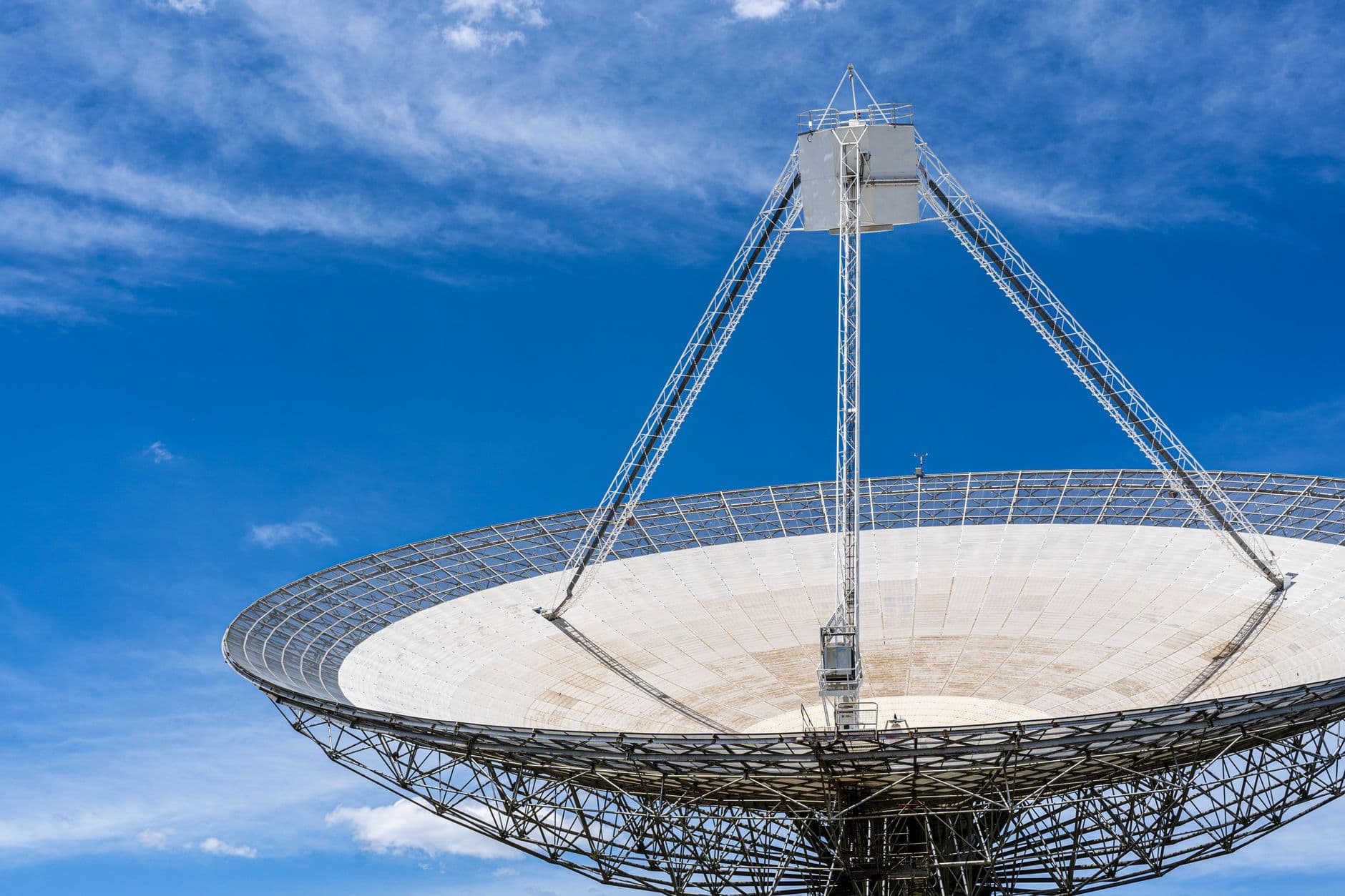
Photo by panumas nikhomkhai on Pexels
The irony is delightful. We’ve spent billions on glass and steel, only to be defeated by a memory leak. Scientists are now pivoting to automated data-mining because the human brain is fundamentally incapable of processing the sheer volume of "nothing" we’ve recorded. We are looking for transients—signals that blink once and disappear—which means our software has to be perfect the first time. There is no second pass when you’re processing data at a rate of 100 gigabits per second. If your filter is too loose, you get a billion false positives from a Nissan Leaf's ignition system. If it's too tight, you ignore the only evidence that we aren't alone in the void.
It’s a classic Silicon Valley problem applied to the heavens. We’ve built a massive data pipeline, but we forgot that the signal-to-noise ratio of the universe is roughly the same as a comment section on a political YouTube video. We are effectively trying to find one specific, intelligent whisper in a stadium where everyone is screaming their own name at the top of their lungs, and our only tool is a script written in Python that someone’s grad student finished at 3:00 AM.
The False Positive Industry
One of the most charming aspects of this new high-speed search era is the sheer volume of things that aren't aliens. In 2019, the Breakthrough Listen project spent a considerable amount of time analyzing a signal called BLC1, which seemed to be coming from Proxima Centauri. It was the perfect candidate: narrow-band, drifting in frequency, exactly what you'd expect from a distant transmitter. After a year of intense digital forensics, it turned out to be... an oscillator in a piece of broken laboratory equipment near the telescope. We didn't find Proxima Centauri; we found a malfunctioning clock.
This is the reality of the "Large Search." The more data you ingest, the more likely you are to find a pattern that looks like intelligence but is actually just a poorly shielded refrigerator. As we scale up to even larger surveys, like those planned for the Square Kilometre Array (SKA), the false positive rate will become an existential crisis for the field. We are building systems that are incredibly efficient at finding our own garbage reflected back at us from the atmosphere.
To combat this, we are throwing "AI" and machine learning at the problem, because apparently, the only way to find alien intelligence is to use an artificial one that doesn't actually understand what it's looking for. We are training neural networks to recognize "weirdness." But the universe is naturally weird. Pulsars are weird. Fast Radio Bursts are weird. If we train our algorithms to ignore everything we already understand, we might just be training them to ignore the very things that would actually surprise us.
What This Actually Means
The pivot from targeted listening to massive data-mining means that the next great astronomical discovery probably won't happen at the eyepiece of a telescope. It will happen in a climate-controlled data center in a suburb of Virginia. The person who finds E.T. won't be an astronomer with a pipe; they’ll be a DevOps engineer who finally figured out how to optimize a SQL query across a distributed cluster of GPUs.
We are currently in a race to see if we can find a signal before our own digital noise makes it impossible. Every year, we launch more satellites and build more 5G towers, effectively wrapping the Earth in a blanket of electronic screaming. We are trying to listen to the whispers of the cosmos while standing next to a jet engine that we built ourselves. The "Large Search" is our last-ditch effort to find a gap in the noise.
Ultimately, it’s a humbling realization. The bottleneck to answering the biggest question in human history—"Are we alone?"—is no longer the speed of light or the size of our mirrors. It’s the fact that our code is buggy and our storage arrays are full. We are ready to meet the neighbors, provided they don't mind waiting while we reboot our systems and try to figure out why the search script crashed on line 402.
Quick Answers
Is RipGrep actually used in space?
Not directly on the satellites, but the philosophy of high-speed string searching is the blueprint for how we now have to sift through petabytes of radio data to find specific signal patterns.
Why can't we just look at the stars with a normal camera?
Because optical light is easily blocked by dust and doesn't carry as much information as radio waves, which can cut through the galactic muck—assuming we can filter out our own cell phones.
What happens if we find a signal?
We will spend three years arguing about whether it's a pulsar or a microwave oven, by which time the aliens will have probably given up and moved on to a quieter galaxy.
How much data are we talking about?
Projects like the SKA are expected to generate around 600 petabytes of data per year, which is enough to make any IT department quit on the spot.