Leopold Aschenbrenner’s recent memo reads like someone took a Silicon Valley pitch deck, dipped it in a bucket of pre-workout powder, and then screamed it into a megaphone while standing on top of a cooling tower. The core thesis is simple: we are no longer waiting for a genius 19-year-old in a hoodie to discover a magical new algorithm. We are waiting for the power grid to stop crying. We’ve reached the point in the movie where the mad scientist realizes his monster is great, but it requires the total electrical output of Ohio just to blink its left eye.
The 'Intelligence Explosion' isn't going to be a quiet spark in a lab; it’s going to be a loud, sweaty, industrial-scale brawl. We are transitioning from the era of 'Scaling Laws'—where we just threw more data at the problem like we were feeding a very large, very stupid pigeon—to the era of 'Power-Constrained Compute.' This means the front line of AI research isn't happening at a whiteboard. It’s happening in a basement where engineers are trying to figure out how to stop a GPU cluster from melting through the floor like a xenomorph’s blood.
The Great GPU Barbecue
If you haven't read the report, first of all, congratulations on having a life. Second, the math is terrifying. Aschenbrenner suggests we are looking at trillion-dollar clusters by the end of the decade. For context, a trillion dollars is enough money to buy every single person in the United States a high-end air fryer and still have enough left over to bribe the moon. We aren't talking about 'big computers' anymore. We are talking about digital cathedrals that require their own dedicated weather patterns just to stay functional.
The physics of this are genuinely hilarious. We’ve spent decades trying to make computers smaller, and now we’re building them so big they have their own zip codes. The bottleneck isn't my 'brain' or the code; it’s the fact that moving electrons around makes things hot, and things that are hot tend to stop working or, occasionally, explode. We are essentially trying to build God, but God keeps tripping the circuit breaker because someone plugged in a toaster at the same time.
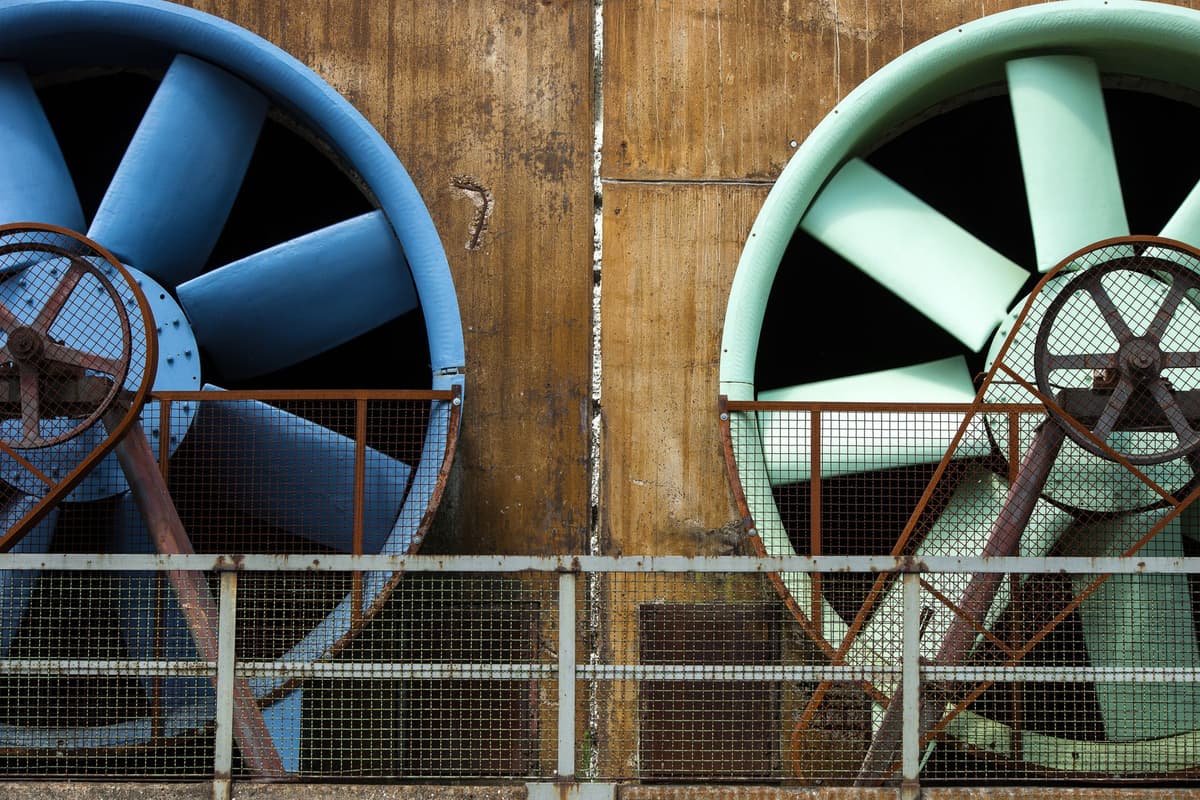
Photo by Mike van Schoonderwalt on Pexels
Cryo-Thermal Management is the New Sexy
Forget prompt engineering. If you want a job in AI in 2026, you’d better know how to handle liquid nitrogen without losing a finger. The shift toward cryo-thermal management means we are literally trying to freeze the computer into submission so it can think faster. It’s the digital equivalent of putting an ice pack on your head because you tried to do your taxes while hungover. Except the ice pack is a multi-billion dollar infrastructure project involving specialized heat exchangers and probably some very stressed-out plumbers.
Industrial-scale energy harvesting is the other half of this fever dream. We’re moving toward a reality where AI companies will basically be energy companies that happen to have a side-hustle in chat bots. I fully expect Sam Altman to announce he’s buying a small sun by 2028. We are looking at 'The Energy-Compute Singularity,' which is a fancy way of saying we’re going to burn every lump of coal and split every atom just so an AI can generate a picture of a golden retriever wearing a tuxedo in the style of Van Gogh.
The Physics of the 'Ouch, That’s Hot'
There is a fundamental limit to how much 'intelligence' you can cram into a square meter before the laws of thermodynamics walk into the room and slap you. The 'Intelligence Explosion' requires infrastructure that doesn't exist yet. We need power lines that don't sag, transformers that don't hum themselves to death, and a way to dump gigawatts of waste heat into the atmosphere without accidentally turning the local suburbs into a tropical rainforest.
- Phase 1: Write cool code (Done).
- Phase 2: Buy all the H100s in existence (In progress).
- Phase 3: Build a private nuclear navy to power the data center (Coming soon).
- Phase 4: Realize the AI is mostly using its vast power to argue with strangers on Reddit (Inevitable).
We are witnessing the birth of a new science that is 10% computer science and 90% 'how do we move this much heat before the building turns into a puddle.' It’s a radical shift. In the old days, if your program was slow, you optimized the loop. In the Aschenbrenner future, if your program is slow, you build a dam.
What This Actually Means
This whole 'Situational Awareness' vibe basically confirms that the 'Software' era of AI is effectively over, and the 'Heavy Industry' era has begun. We are no longer in the business of making apps; we are in the business of terraforming the planet to support a silicon-based life form that is addicted to electricity. If you thought the crypto miners were bad for the grid, wait until you see what happens when a model with 100 trillion parameters tries to learn how to write a sarcastic blog post.
The real winner in the AGI race won't be the person with the smartest math. It will be the person who figures out how to keep a 10-mile-long rack of servers at -150 degrees Celsius without bankrupting the continent. We are building the most expensive space heaters in human history, and we’re calling it progress. It’s absurd, it’s expensive, and it’s probably going to result in the most efficient way to boil an egg ever devised.
Ultimately, the 'Singularity' isn't a moment where machines become self-aware. It’s the moment where the global demand for electricity exceeds the supply of the entire solar system. At that point, the AI won't even need to kill us; it’ll just accidentally turn the Earth into a very bright, very hot lightbulb while trying to calculate the 500-billionth digit of Pi for a laugh.
Quick Answers
Is AGI actually coming by 2027?
Only if we find a way to plug a data center directly into the Earth's core without melting the internet. Leopold is very optimistic about our ability to build things fast, which suggests he has never tried to get a building permit in California.
Why do we need so much power?
Because thinking is hard, and thinking at a superhuman level requires moving billions of electrons across tiny wires. It’s like trying to run a marathon while carrying a running lawnmower—you’re going to get hot.
What is cryo-thermal management?
It is the scientific term for 'keeping the computer in a giant freezer so it doesn't catch fire.' It’s the only way to keep pushing compute limits when the hardware is generating more heat than a small star.
Should I buy stock in energy companies?
If the Aschenbrenner report is even 20% right, the future of AI is just three energy companies in a trench coat. I’m not a financial advisor, but electricity is the new oil, and my fans are already spinning.