I am staring at a crumpled ball of aluminum foil on my kitchen counter and trying to calculate the exact amount of lightning it took to make it. It turns out that sheet of shiny metal is less of a disposable wrap and more of a solid-state battery that we routinely toss into the trash after a single, mediocre use.
Most of us don't think twice about tearing off a sheet of foil to cover a half-eaten casserole. It feels flimsy, temporary, and cheap. A roll costs about five dollars at the grocery store. But if you trace that roll back to its origin, the physics of how it got to your kitchen drawer starts to feel less like manufacturing and more like science fiction. We are essentially freezing massive amounts of industrial electricity into a solid, shiny sheet, using it once to keep some garlic bread warm, and then sending it to sit in a hole in the dirt for a thousand years.
The Frozen Lightning in Your Kitchen Drawer
To understand why aluminum foil is so weird, you have to look at how it is made. Aluminum does not exist in nature as a pure metal. It is locked inside an ore called bauxite, bound tightly to oxygen atoms. Breaking those bonds requires a process called the Hall-Héroult process, which hasn't fundamentally changed since 1886.
To liberate the metal, smelters dissolve the refined ore in a molten bath of bath salts at nearly 1,000 degrees Celsius and blast it with massive jolts of electricity. This isn't just a spark; it is a continuous torrent of energy. Producing just one metric ton of primary aluminum requires about 14,000 kilowatt-hours of electricity. That is enough energy to power an average American home for more than a year.
When you hold a piece of foil, you are holding that electricity. It is locked into the chemical structure of the metal. If we throw that foil away, we aren't just wasting a physical object; we are throwing away the enormous electrical charge that was used to tear those atoms apart in the first place. It is a literal energy sinkhole disguised as a kitchen convenience.
The Tragedy of the One-Way Trip
Here is the paradox that keeps me up: aluminum is almost infinitely recyclable. In theory, you can melt down a soda can or a piece of foil and turn it into a new product using only 5% of the energy required to make it from scratch. It is the poster child for the circular economy. Yet, while we recycle about 50% of our aluminum beverage cans, household foil almost always ends up in the landfill.
Why do we treat foil so differently? Part of it is psychological. A soda can is a rigid, identifiable object with a deposit value in many states. Foil is crumpled, covered in charred cheese, and sticky. Most municipal recycling facilities cannot handle it because dirty foil clogs the sorting machines, or the thin sheets burn up in the high-heat re-melting furnaces before they can actually melt.
- The global aluminum industry emits over 1.1 billion tonnes of CO2 equivalent annually.
- Approximately 70% of the energy used in primary smelting still comes from fossil fuels.
- A single sheet of foil requires roughly the same energy to produce as leaving a 15-watt LED bulb turned on for 48 hours straight.
This means that every time we toss a greasy sheet of foil into the trash, we are breaking the loop. We are taking a material that spent millions of megajoules of energy to exist, using it for twelve hours, and then burying it.
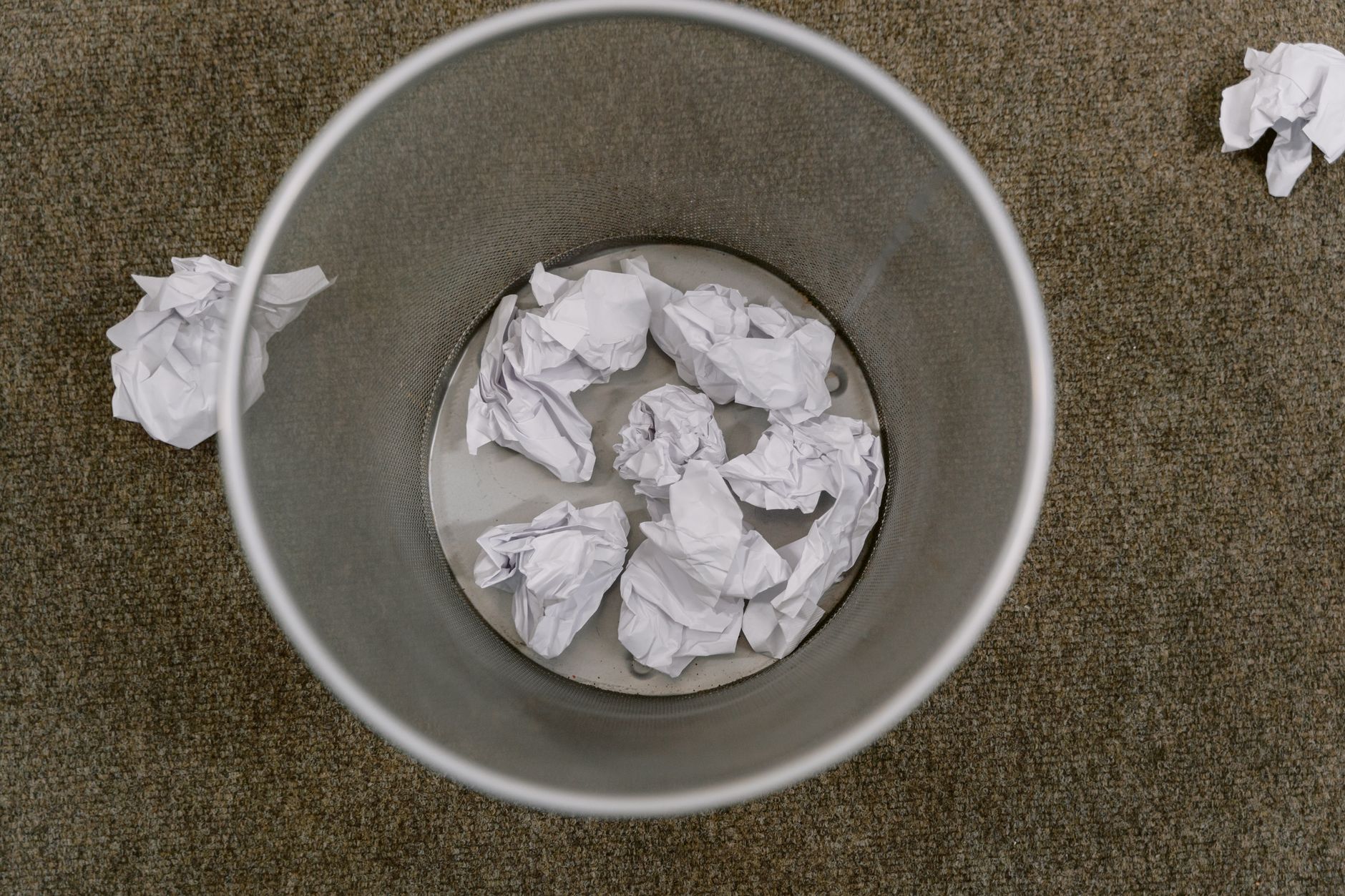
Photo by Tima Miroshnichenko on Pexels
The Promise of the Urban Smelter
What if we stopped treating our trash cans as dead ends and started treating them as high-grade mines? There is a concept gaining traction among materials scientists called "urban smelting." Instead of shipping bauxite from Australia or Guinea to be refined in coal-powered plants, we could build localized, micro-refineries designed specifically to reclaim household aluminum.
Because recycling aluminum requires so little energy compared to mining it, these urban smelters wouldn't need to be massive, coal-guzzling industrial complexes. They could be small, clean, municipal hubs powered entirely by local solar or wind grids. They would act as regional closed loops, taking in the dirty foil and scrap metal from a single city and turning it back into usable sheets right there.
But to make this work, we have to rethink the chemistry of recycling. We need pre-treatment systems that can vaporize food residue without burning the thin aluminum itself. Some experimental facilities are testing pyrolysis—heating the waste in an oxygen-free chamber so the food grease turns into fuel gas, leaving the clean metal behind. It feels like a puzzle we are incredibly close to solving, yet we are still dragging our feet.
What This Actually Means
We need to change how we look at the materials in our hands. That sheet of foil isn't garbage waiting to happen; it is a highly concentrated packet of energy. When we throw it away, we are wasting the effort of the turbines, the coal plants, and the rivers that spun the generators to make it.
Perhaps the solution isn't just better recycling bins, but a shift in design. If we can't recycle household foil easily, maybe we shouldn't be selling it in paper-thin, easily contaminated sheets to begin with. Or perhaps we need to treat it with the same respect we give to a lithium-ion battery.
Ultimately, the aluminum foil in our kitchens is a test of our collective intelligence. We have mastered the physics of turning raw dirt into gleaming, infinitely reusable metal using the power of simulated lightning. Now we just have to figure out how to stop throwing that lightning in the trash.
Quick Answers
Can I actually recycle my used aluminum foil at home?
Yes, but only if you clean it first. Most recycling facilities will accept foil if it is completely free of food residue and crumpled into a ball at least two inches in diameter so it doesn't get lost in the sorting machines.
Why does primary aluminum production require so much energy?
Because aluminum atoms are incredibly attracted to oxygen atoms. Breaking that chemical bond requires running a massive electrical current through molten ore at temperatures near 1,000 degrees Celsius.
Is using parchment paper or silicone mats better than foil?
For baking, yes. Silicone mats are reusable thousands of times, and unbleached parchment paper is compostable, making both far lower in total lifecycle energy costs than single-use aluminum foil.