The Mystery of the Deliberate Downslide
I spent the morning wondering why a company would spend three years building a pristine reputation only to liquidize it in a single Tuesday afternoon update. We see it constantly now: a software tool launches, captures the hearts of the power users, becomes the industry standard, and then systematically begins to break its own promises. It isn't just a bug or a bad UI choice; it feels like a calculated decision to trade 'love' for 'liquidity.' If you look at the recent friction around Anthropic’s interface changes or the slow-motion car crash of legacy social platforms, you start to see a pattern that looks less like a mistake and more like a harvest.
What if trust isn't a foundation at all? In the current venture capital climate, I’m starting to suspect that 'Goodwill' is being reclassified on the internal balance sheets. Instead of an intangible asset that protects the company, it’s being treated as a finite resource, like a deposit of lithium or oil. You spend the first few years mining the earth to find the resource—gathering users who swear by your product—and then you spend the next five years strip-mining that loyalty for every cent of growth you can squeeze out before the ground collapses.
The Spreadsheet Where Loyalty Dies
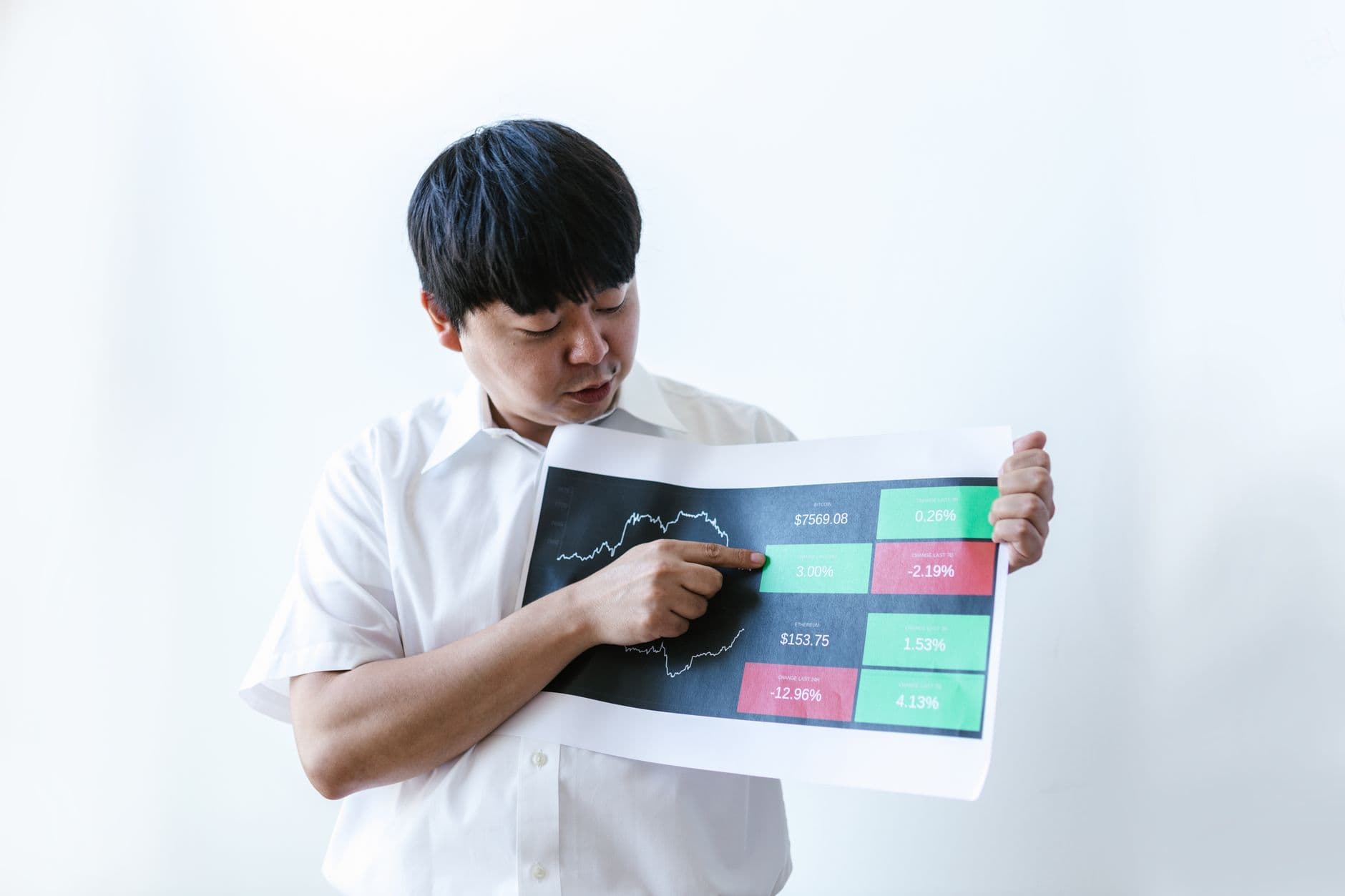
There has to be a specific meeting where this happens. I picture a room of very smart people looking at a chart that shows a 98% user satisfaction rating and realizing that they can't deposit 'satisfaction' into a bank account. They look at the $100 million they spent on R&D and realize the fastest way to recoup it isn't to keep making the product better, but to make it just slightly worse in ways that maximize profit. This is the 'Rug-Pull' economics: the realization that your users are already locked in, so you can afford to lose exactly 14% of them if it means doubling the extraction rate from the remaining 86%.
I’m curious about the psychological toll this takes on the engineers who built the thing in the first place. You spend your nights obsessed with latency and user flow, only to have a product manager tell you to add three extra clicks and a 'Pro' upsell banner right in the middle of the workspace. It’s a fascinating, if depressing, shift in how we value craft. In this model, the 'Good' in 'Goodwill' is just a subsidy for future greed. You give the product away or keep it clean early on as a loss-leader for the eventual disappointment you plan to sell later.
Why We Keep Falling For the Honeymoon
We seem to have a collective amnesia about this cycle. We find a new tool—maybe it's a sleek new AI assistant or a distraction-free writing app—and we tell everyone we know that 'this one is different.' We ignore the fact that they took $50 million in Series B funding. We ignore the reality that their investors aren't interested in a sustainable, beloved small business; they want a 10x return that can only be achieved by eventually squeezing the user base. We are the willing participants in our own eventual betrayal because the 'Goodwill' phase of a startup is genuinely intoxicating.
Is there a version of this where the growth doesn't require the 'enshittification' of the product? I look at companies that have stayed private or moved to employee-owned models, and the friction seems lower. But the siren song of the massive exit is hard to ignore. When the goal is an IPO or an acquisition by a behemoth, the user's experience is just the packaging. And once the deal is signed, the packaging goes in the trash. It makes me wonder if we’re approaching a 'peak trust' moment where users simply stop investing emotionally in any new software, knowing the rug-pull is scheduled for eighteen months from now.
What This Actually Means
This shift suggests that the most valuable skill for a modern consumer isn't tech-savviness, but a cold, mercenary lack of loyalty. If companies are going to treat our trust as a disposable battery, we have to treat their tools as disposable commodities. The moment the 'extraction phase' begins—when the UI gets cluttered, the pricing tiers get weird, or the features start disappearing behind paywalls—the only logical move is to leave. We have to stop mourning the 'good old days' of an app and realize those days were just a marketing spend designed to lower our guard.
Ultimately, I’m left wondering what happens to a market when 'Goodwill' hits zero across the board. If every tool we use is actively trying to trick us or squeeze us, the friction of daily life starts to heat up. We end up in a world of 'software cynicism' where we use tools out of necessity but hate them the entire time. That doesn't feel like a stable equilibrium. It feels like a bubble waiting for a new model of business—one that treats trust as a recurring revenue stream rather than a one-time harvest—to come along and disrupt the disruptors.
Quick Answers
Is every software update part of a rug-pull?
No, but if an update makes the product objectively harder to use while making it easier for the company to charge you, you've entered the extraction phase.
Why don't companies care if they lose users?
The math often shows that losing 10% of 'cheap' users is worth it if you can pivot the product to extract 50% more value from enterprise clients or high-value targets.
Can we stop enshittification?
Only by lowering our switching costs; the more easily we can move our data to a competitor, the less leverage a company has to treat us like a resource to be mined.