The Blueberry Muffin Paradox
There is a fundamental glitch in how we talk about 'green' technology. We keep trying to optimize silicon chips, shaving off nanometers and tweaking architectures, while ignoring the fact that our most advanced AI is still essentially a very expensive space heater that happens to do math. A human brain operates on about 20 watts of power. To get a modern GPU cluster to perform a fraction of the brain's associative tasks, you need megawatts. We aren't just slightly off the mark; we are playing a completely different sport on a different planet.
I found myself falling down a rabbit hole of cellular computation research recently. It turns out that every time a cell in your body makes a 'decision'—like whether to move toward a nutrient or away from a toxin—it is performing a thermodynamic calculation. But unlike our servers, which bleed heat like a broken radiator, biological systems operate incredibly close to the Landauer limit. This is the theoretical minimum energy required to erase one bit of information. Nature is flirting with the absolute laws of physics, while our data centers are fighting them with brute force.
The Problem with Being Solid
Silicon is reliable, rigid, and predictable, which is why we love it. But silicon is a terrible medium for information if you care about the planet. In a traditional computer, moving data from memory to the processor is where the real energy murder happens. It’s like having to drive across town every time you want to remember where you put your keys. In biological computation, the memory is the processor. The structure is the signal.
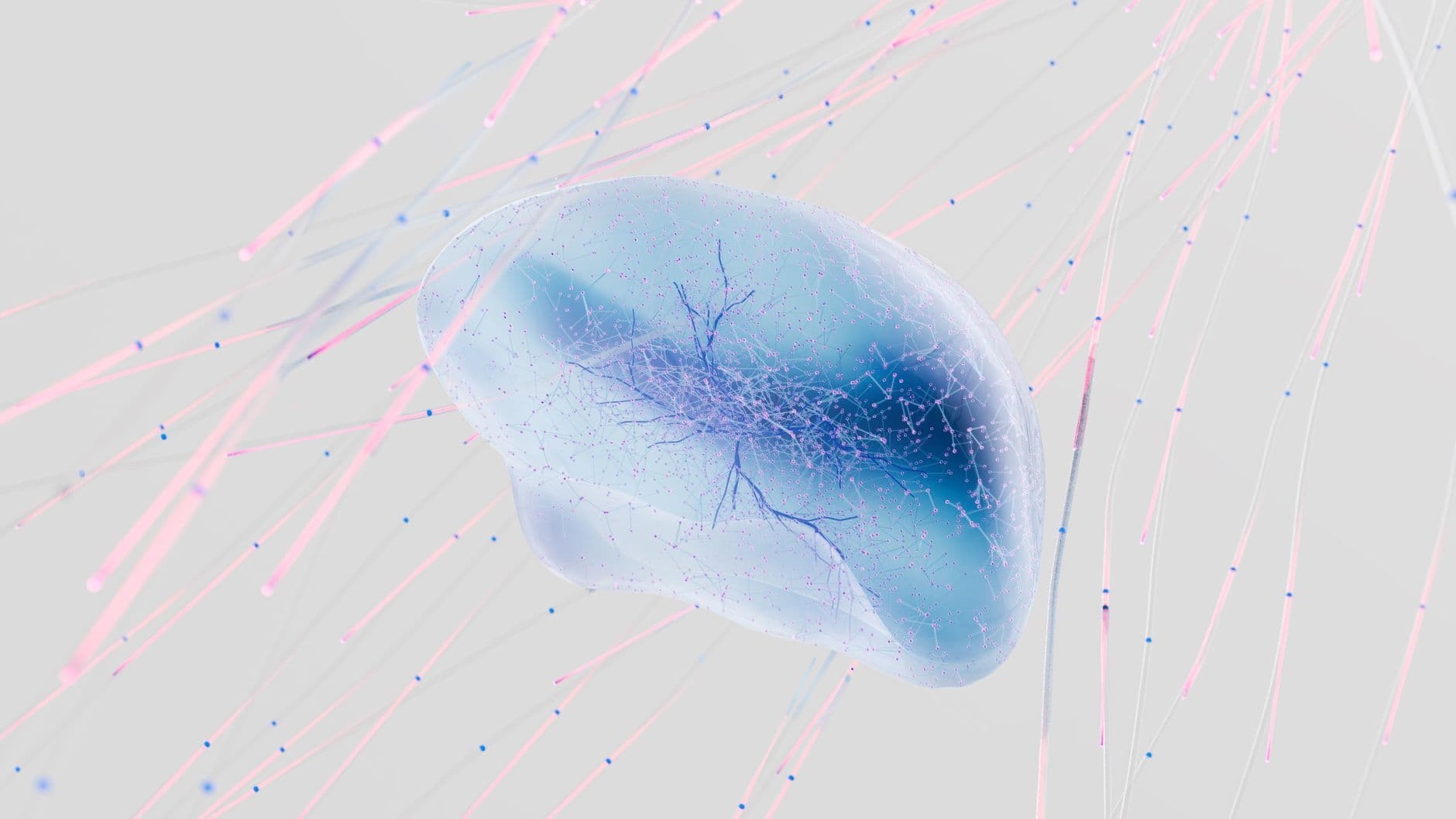
Research into synthetic biological computers suggests we might have to give up the 'solid' in solid-state electronics. Imagine a computer that isn't a board of etched minerals, but a vat of engineered proteins or synthetic cells. These systems don't use electricity in the way we think of it; they use chemical gradients. They don't need a cooling system because they don't generate the friction of electrons being shoved through narrow metal gates at billions of cycles per second.
- Biological systems use diffusion, which is essentially 'free' movement driven by entropy.
- They utilize massively parallel processing where every 'node' is its own power plant.
- They are self-repairing, meaning the energy cost of manufacturing is spread over the life of the system.
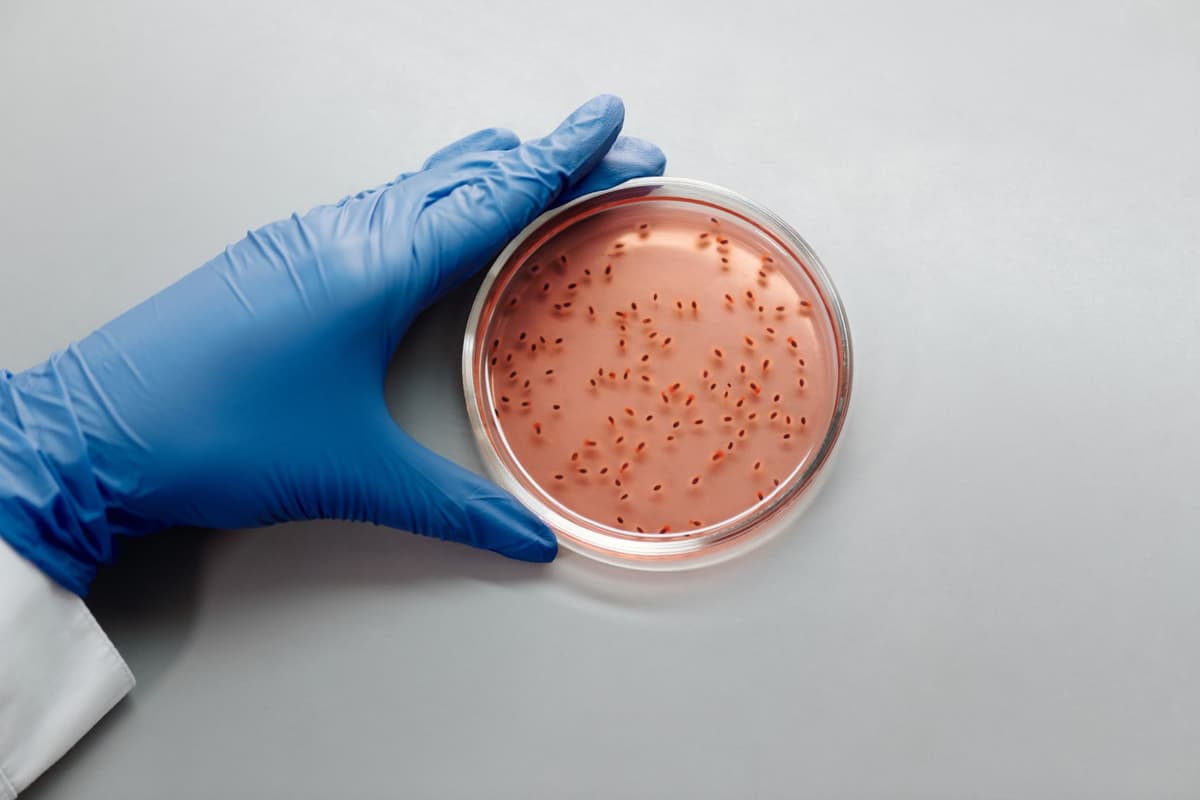
Photo by Edward Jenner on Pexels
Shifting the Definition of Efficiency
We have spent seventy years getting really good at making fast, hot, dry machines. Now, the environmental bill is coming due, and 'efficiency' is being redefined. If we want AI that can actually scale without boiling the oceans, we might have to embrace the 'wetware' approach. This isn't just about saving a few dollars on the electric bill; it's about a radical shift in how we view information.
I wonder if we are approaching a ceiling where silicon simply cannot go any further. We’ve been shrinking transistors for decades, but we’re hitting a wall where the heat generated in such a small space starts to melt the components. Meanwhile, a single gram of DNA can theoretically store 215 petabytes of data. It doesn't need to be plugged in. It just sits there, stable for thousands of years, holding the blueprint for life. Why are we building humming, vibrating server farms when we could be growing quiet, cool archives?
There is something deeply humbling about realizing that a single-celled amoeba solves navigation problems with more energy efficiency than a multi-billion dollar navigation satellite. It forces us to ask: are we actually smart, or are we just loud? We’ve mistaken power for intelligence for a long time. True intelligence, as seen in nature, seems to be about doing the most with the absolute least.
What This Actually Means
The transition to 'synthetic biological' AI sounds like science fiction, but it’s becoming a thermodynamic necessity. We are reaching the end of the 'brute force' era of computing. The next frontier won't be about who has the biggest GPU farm, but who can engineer the most efficient chemical logic gates. We are moving toward a world where our most powerful tools might look more like a garden than a factory.
This shift will challenge everything we know about safety and control. How do you 'patch' a biological computer? How do you ensure a synthetic neural network doesn't literally grow out of its box? These are weird, slightly terrifying questions, but they are infinitely more interesting than asking how many more coal plants we need to build to keep a chatbot running.
Ultimately, the 'thermodynamic limit' isn't just a physical barrier; it's a mirror. It shows us that our current tech path is an anomaly in the history of the universe. Life figured out the energy problem four billion years ago. It’s about time we stopped trying to outsmart physics and started taking notes from the cells in our own fingernails.
Quick Answers
Is biological computing actually real?
Yes, startups are already using DNA for long-term data storage and engineered neurons to solve basic pattern recognition tasks. It is currently in the 'mainframe' era—huge, experimental, and messy—but the physics are sound.
Will this replace my laptop?
Unlikely in the next few decades. Biological computers are slow but massively parallel, making them great for AI and big data, but terrible for things that need instant 'clock speed' like gaming or video editing.
Is it safe to mix biology and AI?
It presents massive ethical and biohazard risks that we haven't even begun to regulate. We are essentially talking about creating 'living' hardware, which blurs every line we have regarding technology and life.