Caesar’s Side Hustle Was Rolling Dice
We have this grand, cinematic view of the Roman Empire as a place of marble pillars, sweeping orations, and stoic men in sandals staring deeply into the Mediterranean sunset. We assume their minds were constantly occupied by things like territorial expansion, the philosophy of Marcus Aurelius, or how to concrete things underwater.
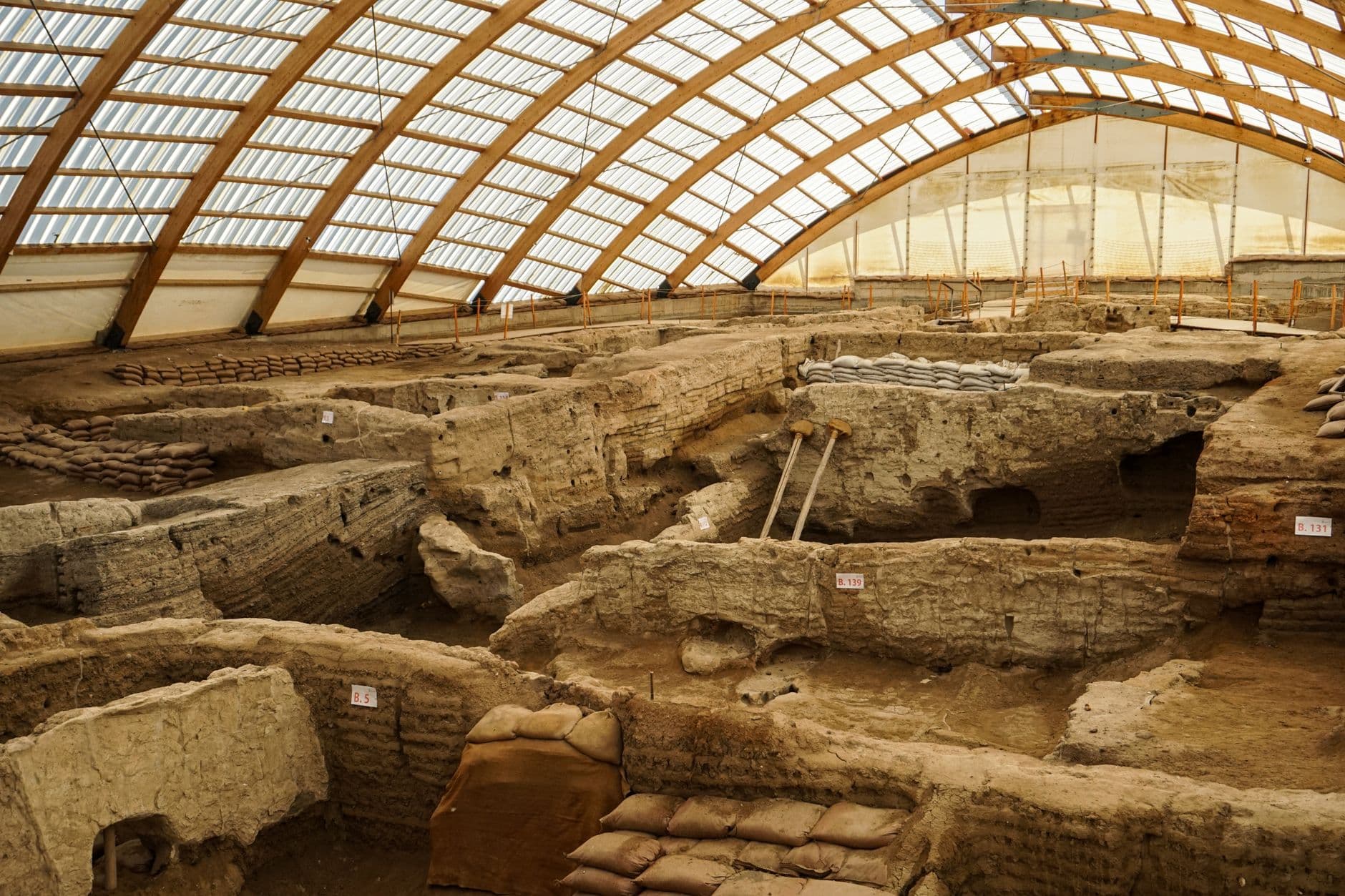
Then archaeologists go and dig up a piece of cracked stone in a dusty corner of what is now Turkey, and we discover the truth. The Romans were absolute trash-talkers who loved board games. Specifically, a game called Ludus Duodecim Scriptorum, which translates roughly to "The Game of Twelve Lines." It is essentially ancient Backgammon, and the board they found is carved directly into the stone steps of a public building.
Imagine the sheer level of boredom required to vandalize a public monument just so you can play a game. This is the historical equivalent of drawing a tic-tac-toe board on the hood of a police cruiser because the line at the DMV is taking too long. It proves that no matter the century, human beings will always choose to ignore their grand civic duties in favor of trying to bankrupt their friends in a fictional economy.
The Caveman Who Invented the Rage Quit
Psychologists love to talk about the "persistence of play" as some sort of high-minded evolutionary mechanism. They write papers suggesting that strategic gaming is how our ancestors trained their brains for risk assessment and social bonding. They argue that rolling dice prepared young hunters to calculate the odds of a mammoth stampede.
I think that is giving us way too much credit.
We didn't invent board games to train our brains for the hunt. We invented them because sitting around a fire for twelve hours waiting for a mammoth to walk by is incredibly boring, and there are only so many times you can look at your cousin Ugg before you want to hit him with a rock. Board games gave us a socially acceptable way to channel that latent violence.

Think about the mechanics of these ancient games. They almost always involve a combination of pure, chaotic luck and just enough strategy to make you feel like a genius when you win, or a victim of a cosmic conspiracy when you lose. That is not a "byproduct of culture." That is a fundamental human need. We need to look at another human being across a table, watch them roll a three, and feel a deep, chemical surge of smug superiority.
Two Thousand Years of Blaming the Dice
If you transported a Roman senator from 200 AD to a modern board game cafe, he would understand the vibe instantly. He might be confused by the electricity, the cardboard, and the fact that nobody is wearing a toga, but the second someone pulls out Settlers of Catan, he is in his element. He would immediately understand the concept of hoarding sheep to spite his neighbor.
There is a universal language to gaming that transcends empires, languages, and the invention of the indoor toilet. It consists of three main pillars:
- Claiming the game is rigged the moment you start losing.
- Spending fifteen minutes arguing over a rule that is clearly printed in the manual.
- Gently shaking the dice in your hand for way too long because you think your body heat influences random probability.
We have been doing this for millennia. The Romans even had loaded dice. Archaeologists have found ancient Roman dice that were weighted with lead to favor certain numbers. Think about that. Some guy named Lucius was sitting in a tavern in Pompeii, sweating through his tunic, sliding a weighted piece of bone onto the table just to win three denarii and a cup of watered-down wine. That is the true human spirit.
What This Actually Means
This discovery is actually incredibly comforting. It means that our current obsession with microtransactions, Wordle streaks, and tabletop campaigns isn't some symptom of modern societal decay. We aren't rotting our brains; we are simply honoring our ancestors.
We are a species defined by our desire to play. When we build civilizations, we don't just build granaries and fortresses; we build spaces to sit down and argue over arbitrary rules. Play is the social glue that keeps us from tearing each other apart. It is a simulated arena where we can satisfy our primal urge to conquer, lose horribly, and then demand a rematch because "the table wasn't flat."
So the next time you find yourself screaming at your family over a game of Monopoly at 1:00 AM on Christmas Day, don't feel bad. You aren't a dysfunctional family. You are a living monument to human history. You are doing exactly what the Romans did, minus the lead-poisoned wine and the threat of barbarian invasion. Probably.
Quick Answers
What was the ancient Roman game actually like?
It was a race game similar to Backgammon, played with three dice and fifteen pieces per player on a board with three rows of twelve letters, which often spelled out a philosophical or humorous six-letter phrase.
Did they have tournament play back then?
While there were no official esports leagues, we have written records of emperors like Claudius being so obsessed with board games that he had a custom board built into his carriage so he could play on bumpy roads.
Why does gaming behavior never change?
Because human psychology hasn't changed. The desire to compete, optimize, and occasionally ruin a friend's day through sheer luck is hardwired into our DNA as a safe way to blow off steam.