We are about to witness the most beautiful game played on the most expensive, invisible digital fence ever constructed. The 2026 FIFA World Cup, spanning 16 cities across the United States, Canada, and Mexico, is being sold to us as a tri-national celebration of unity. It is a lovely story, assuming you define unity as the seamless, automated sharing of your facial geometry across three federal databases.
In reality, the tournament is serving as a massive, high-velocity testing ground for "Border-as-a-Service." The goal is simple: replace the inconvenient physical hassle of international borders with a frictionless, data-driven cloud. Because nothing says "welcome to the stadium" quite like a high-resolution iris scan conducted by a private defense contractor.
The Cloud Border Is Free, With In-App Purchases
For decades, the physical border was a reliable, if clunky, piece of theater. You stood in a hot line, handed a paper book to a bored official in a booth, and hoped they did not look too closely at your passport photo from 2012. The 2026 World Cup is officially retiring this analog relic in favor of a "North American Trusted Traveler" zone.
Under this new paradigm, the border is no longer a line on a map. It is an ambient digital cloud that hovers over your entire journey. By integrating biometric data, pre-clearance kiosks, and real-time flight manifests, the three host nations are effectively moving the border to the departure gate—or even to your smartphone.
This is not happening out of the goodness of bureaucratic hearts. Managing the logistics of an estimated 6 million fans traveling between three massive countries is a nightmare. The solution is to turn border security into a premium subscription model. You give up your biometric autonomy, and in exchange, you get to bypass the queue. It is the ultimate VIP experience, brought to you by homeland security.
Soccer As A Trojan Horse For Defense Tech
Historically, governments have had to wait for major geopolitical crises to push through invasive surveillance infrastructure. Fortunately, FIFA has provided a much friendlier pretext. It is remarkably easy to convince the public to accept facial recognition cameras at every turnstile when the alternative is missing kickoff.
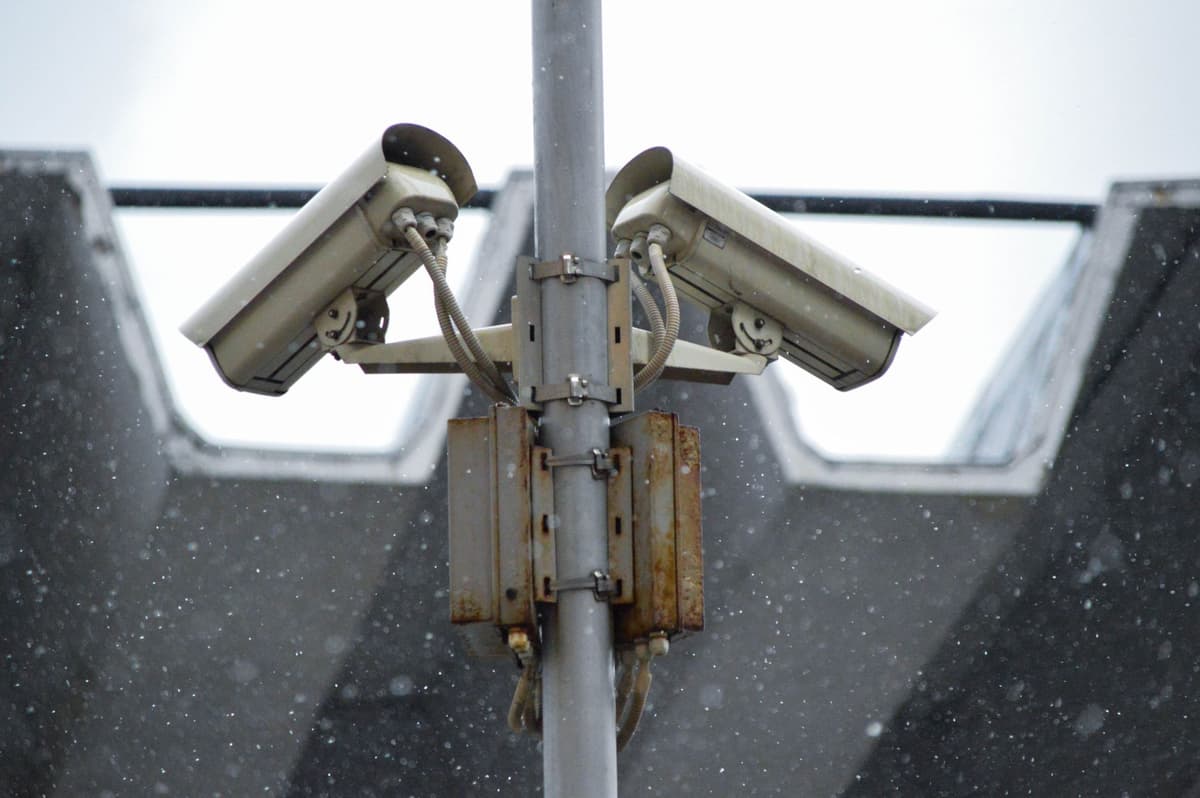
Photo by Спиридон Варфаламеев on Pexels
This is where the "Trusted Traveler" concept becomes truly ambitious. The pilot programs launching for the tournament are designed to link US Customs and Border Protection, Canada's CBSA, and Mexico's INM into a unified data-sharing ecosystem. Your digital identity will be verified, tracked, and logged as you move from Vancouver to Monterrey.
We are told this is about convenience. And it will be incredibly convenient for the agencies who have spent years trying to figure out how to track human movement across the continent without the public noticing. By the time the final whistle blows in July 2026, the digital architecture for a pan-American surveillance corridor will be fully operational, paid for by your ticket fees.
The EU Model, But With More Database Queries
Proponents of this digital shift love to compare it to the European Union's Schengen Area. They paint a picture of a borderless North America where people and commerce flow freely. It is a beautiful vision, provided you do not look at the fine print.
The European Union achieved frictionless travel by dismantling internal borders and relying on a shared legal framework. North America is doing the exact opposite. We are keeping the borders, keeping the national anxieties, and simply layering an incredibly complex network of algorithms on top of them.
Instead of a borderless zone, we are getting a highly-conditional access zone. If your data matches the correct parameters, the digital gate swings open. If there is a glitch in the cloud—or if you happen to share a name with someone on a watch list—you will discover that a digital border is much harder to argue with than a human guard. You cannot reason with an algorithm that has decided your face is a security threat.
What This Actually Means
Ultimately, the 2026 World Cup is not just a sports tournament; it is a live-fire exercise in geopolitical restructuring. The physical fences are not going away, but they are being relegated to secondary status. The real border of the future is the one constructed from data points, facial scans, and predictive analytics.
Once this infrastructure is in place, it will not be dismantled when the teams go home. The "temporary" security measures put in place for major sporting events have a funny habit of becoming permanent fixtures of daily life. The biometric turnstiles you use to watch a match in 2026 will likely be the same ones you have to pass through to catch a domestic flight in 2028.
So, as you prepare to cheer on your country, take a moment to appreciate the incredible technological achievement on display. You are not just a fan sitting in a stadium. You are an active participant in a multi-billion-dollar pilot program to see how much personal data a human being will trade to watch twenty-two people kick a ball around a field.
Quick Answers
Will I need a passport for the 2026 World Cup?
Yes, but your passport will increasingly be linked to biometric profiles. The goal is to make physical documents secondary to facial scans and pre-clearance data.
Is this digital border actually secure?
It is secure for the databases holding your information, but it introduces massive new privacy risks. A single data breach could compromise the biometric identities of millions of travelers across three countries.
Can I opt out of the biometric tracking?
Technically yes, but doing so will likely involve standing in incredibly long, slow-moving lines designed to make you regret your commitment to privacy.